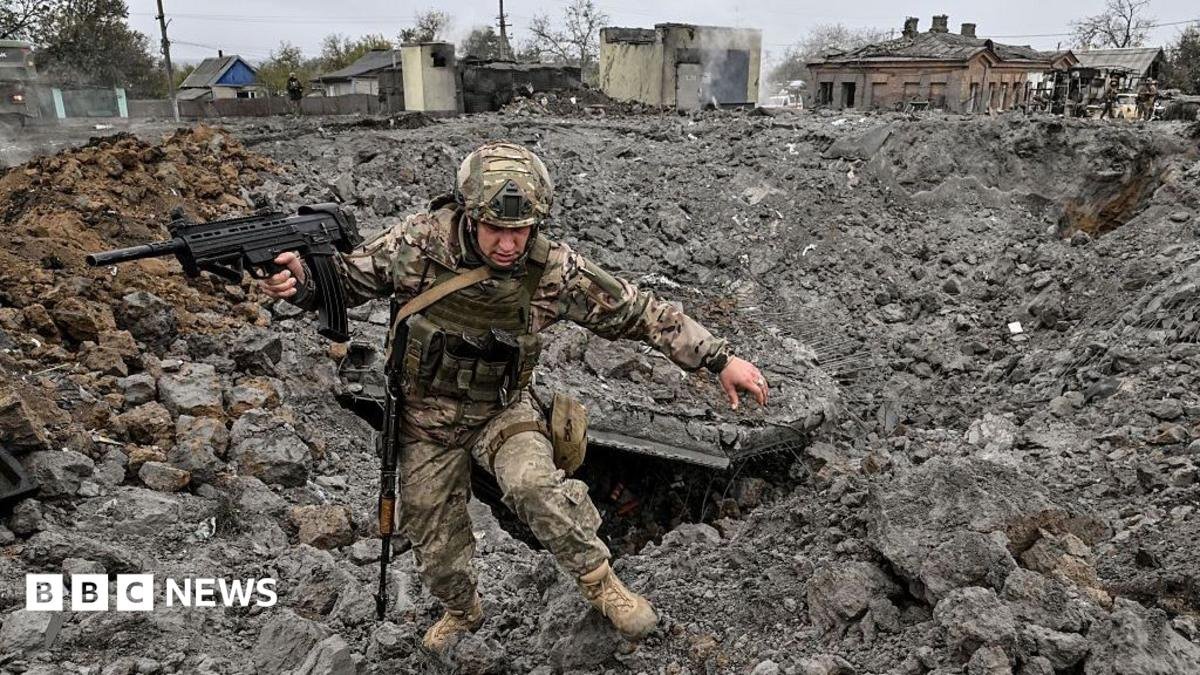
As the fifth anniversary of Russia's full-scale invasion of Ukraine approaches, senior officials from Moscow, Kyiv, and Washington are set to meet in Abu Dhabi for the first trilateral talks aimed at ending the war since February. The discussions come amid a deadly Russian strike on a village in Zaporizhzhia last week that killed at least 40 people, underscoring the urgency of finding a diplomatic solution.
Private Flexibility on Eastern Regions
US officials have revealed that Moscow and Kyiv are privately showing "a little bit of flexibility" regarding who would control Ukraine's eastern regions in a postwar scenario. However, their public positions remain far apart, particularly on the issue of Donetsk, which is mostly occupied by Russia. Moscow demands that Ukraine relinquish the parts of Donetsk it still holds, while Kyiv insists on freezing the contact line to maintain control over those areas, which it considers vital for its future security.
Jared Kushner, Donald Trump's son-in-law and part of the US delegation alongside peace envoy Steve Witkoff, said the talks would focus on addressing the "postwar security concerns" of both Russia and Ukraine. "An important part of this process is encouraging all parties to begin thinking seriously about what comes after the war," Kushner wrote on X.
Security Architecture Key to Progress
A US official speaking on the eve of the talks acknowledged that the Donetsk issue and the broader territorial dispute cannot be resolved without discussions about a new "security architecture." "They will not solve the Donetsk issue and the territorial issue until they know what the security architecture is going to be after the war," the official said. "And keep in mind, we're not going to be able to finalise one without the other."
For Ukraine, a postwar security architecture may include assurances that allies will come to its aid if attacked again. For Russia, it could mean its longstanding ambition to see NATO roll back from eastern Europe, a prospect that alarms Europeans. The proposed framework includes security consultations, crisis communications hotlines, and "reciprocal de-escalation measures," as well as the potential re-activation of the NATO-Russia Council, which has been largely paused since 2022.
European Inclusion Sought
European leaders, who have been largely excluded from peace talks, are pushing to be involved in the process. European Commission President Ursula von der Leyen urged on Monday to include NATO allies and EU members in any "meaningful discussions about Europe's security architecture." Ukrainian President Volodymyr Zelensky has repeatedly stated that Kyiv wants Europe to be part of the talks. The US official said the Americans would propose moving into a multilateral format bringing the Europeans into the discussion, though acknowledging that "the Russians have a bad taste in their mouth with the Europeans."
Since the start of his second term, US President Donald Trump has spearheaded several rounds of talks to end the conflict, albeit with little success. His increasingly conciliatory approach towards Moscow has fuelled deep unease in Kyiv and across the European Union. After meeting Kremlin envoy Kirill Dmitriev in Washington last week, Trump touted a forthcoming "big, beautiful agreement" on Ukraine which "might involve all of Europe."
Skepticism in Kyiv
Many in Ukraine are skeptical that this would result in a fair peace. Ukrainian MP Oleksandr Merezhko, head of the foreign affairs parliamentary committee, told the BBC he believes Trump wants "a quick deal at the expense of Ukraine," which will certainly be rejected by Kyiv. Merezhko argued that the only way to make Putin start real negotiations is by putting greater pressure on Russia through sanctions and deep strikes. "While Putin has a war machine up and running, he has no incentives to negotiate," he said, also criticizing recent moves by Trump, such as his deal to buy diesel from Russia, as something that "only encourages Moscow to continue the war."
Moscow's delegation in Abu Dhabi will include Kremlin aide Vladimir Medinsky, deputy foreign ministers Sergei Ryabkov and Mikhail Galuzin, spy chief Igor Kostyukov, and army general Yury Zhigarlovsky. Kyiv is sending several senior officials who have been part of previous negotiating teams, including Foreign Intelligence Service head Rustem Umerov, Volodymyr Zelensky's chief of staff Kyrylo Budanov, and MP Davyd Arakhamiya.
Away from Abu Dhabi, Russia continues to pummel Ukraine with deadly bombardments and strikes on energy infrastructure, viewed in Kyiv as proof Moscow wants to corner Ukraine into accepting a deal on Russia's terms. Kushner was cautious to point out that the Abu Dhabi talks could at most "build momentum toward the next phase of negotiations." "This is an extraordinarily difficult and complicated conflict," he wrote on X, adding the US was "approaching these discussions with determination and realism."