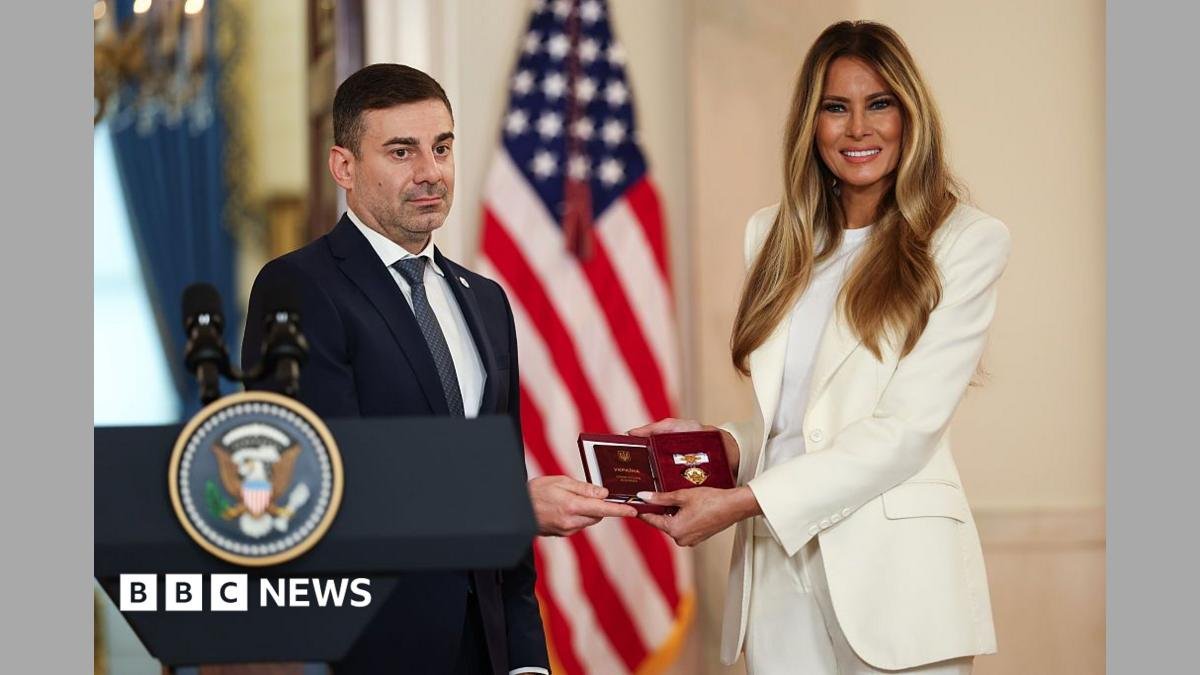
In a rare and highly symbolic gathering at the White House, US First Lady Melania Trump welcomed senior delegations from both Russia and Ukraine, using the occasion to press for a more durable ceasefire in the war-torn region of Kherson. The meeting followed a fragile six-day truce that allowed hundreds of civilians to flee the Russian-occupied town of Oleshky, where residents had been trapped under constant bombardment and worsening hunger.
A Truce That Saved Lives
The ceasefire, which both Moscow and Kyiv credited Trump with helping to broker, permitted the evacuation of families who had endured years of hardship. For the first time since 2022, people in Oleshky and nearby areas of Kherson walked familiar streets without the fear of explosions, the First Lady told her guests. She described how she had reviewed demining plans, aerial imagery, evacuation routes, and hospital access during the truce, underscoring the quiet but significant role she played in facilitating the humanitarian pause.
"The lives of innocent people must transcend the division of war," Trump said. "I hope Oleshky inspires greater peace."
An Unusual Diplomatic Scene
The White House event brought together Ukraine's human rights ombudsman Dmytro Lubinets and his Russian counterpart Yana Lantratova, alongside Ukrainian MP Davyd Arakhamia and Kremlin special envoy Kirill Dmitriev. The encounter was notable for occurring outside the formal framework of US-brokered peace talks, which have struggled to yield results since last year. Both sides conveyed the gratitude of their presidents to the First Lady, and she handed personal letters to Dmitriev and Arakhamia for delivery to Vladimir Putin and Volodymyr Zelensky.
Dmitriev, a businessman who has previously represented Moscow in negotiations, thanked Trump for "saving and touching so many lives" and presented her with a framed drawing by an 11-year-old evacuee from Oleshky. He also praised her efforts to reunite children separated from their families by the conflict, including those allegedly abducted by Russia.
Arakhamia described the Oleshky truce as the "biggest de-escalation since 2022" and said it was creating momentum for both sides to learn the mechanics of keeping peace. He acknowledged that the political track remained complex but said Ukrainians were asking the First Lady to "keep going and find new missions and de-escalate more."
Symbols of Peace and Lingering Questions
At the close of the event, guests viewed two historic artifacts chosen by Trump as symbols of peace: an 18th-century medicine chest removed from the White House when the British set it ablaze in 1812, and a cup given in 1899 to the French ambassador for his role in ending the Spanish-American war. The White House noted that former adversaries can ultimately forge strong alliances.
Yet the precise nature of Melania Trump's involvement in the ceasefire remains unclear. A source in the Kherson regional government told the BBC that groundwork for the Oleshky evacuation had been underway for nearly a year, and that at some point other individuals became involved and began taking credit for progress already made. Those directly involved in the negotiations were eventually barred from speaking publicly about the matter.
Ukrainian President Zelensky, speaking after the White House meeting, said the truce proved a simple truth: "When Putin wants the fighting to stop, it stops." A source close to US officials suggested that despite outward praise, the person who made the ceasefire possible was essentially Putin, and that the move was designed to hand a diplomatic win to Donald Trump ahead of midterm elections.
Ukrainian political analyst Dmytro Levus said Russia's position had not changed, and that Moscow agreed only because of American pressure. As Kherson enjoyed its first six days of peace in years, the rest of Ukraine continued to suffer. This week alone, drone and missile attacks killed and injured civilians across the country, including a strike on an aid distribution centre in Zaporizhzhia that left more than 40 dead, with others still feared buried under rubble.
The White House gathering may not resolve the broader conflict, but for the families who escaped Oleshky, the brief silence of guns offered a rare glimpse of what peace might one day look like.