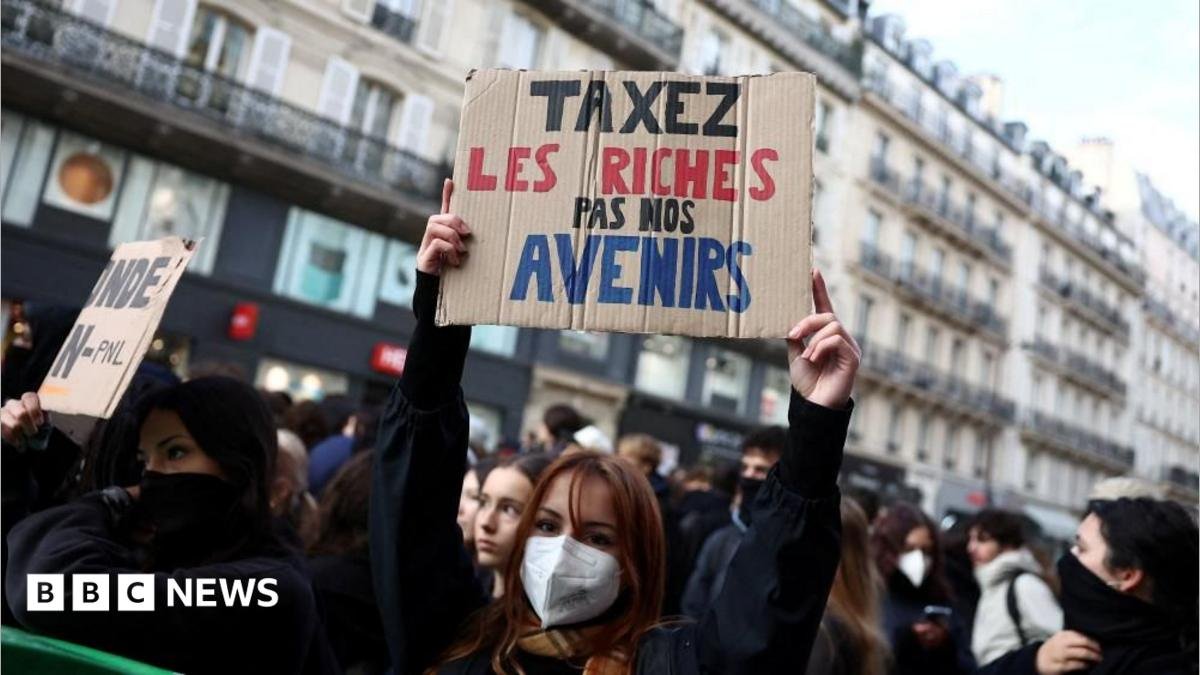
France is on high alert as hundreds of thousands of protesters are expected to take to the streets on Thursday in a nationwide day of strikes and demonstrations. Five major unions have joined forces, uniting public and private sector workers in a push for higher wages and better-funded public services.
A Growing Movement
What began in September as high school students protesting poor conditions and resources in education has snowballed into a broader movement. It now includes the "yellow vest" movement and workers from various sectors, all voicing discontent over the cost of living and stagnant wages.
Authorities anticipate between 500,000 and 700,000 demonstrators across the country, with tens of thousands expected in Paris alone. One union leader has dubbed the day "a great day of convergence," as diverse groups converge on common demands.
Security Measures and Concerns
Interior Minister Laurent Nuñez announced that 70,000 police and gendarmes will be deployed, promising an "extremely firm response" to any violence. More than 250 separate actions are planned, and disruptions have already been reported in schools, hospitals, and public transport.
Workers have been called to halt production at oil refineries, and France is expected to import more electricity than it produces on Thursday due to disruptions at nuclear plants. The government has sought to appease public anger over rising prices by releasing 10 million barrels of diesel from strategic reserves and promising reforms to the unpopular Parcoursup university admissions platform.
Union Demands
The coalition of unions is urging workers, pensioners, and young people to join the strikes to intensify pressure on the government. They are demanding a rise in the minimum wage, currently at €12.31 per hour, and a net increase of €100 a month for all workers.
"The time has come to take the mobilisation to the next level; the strike must take over," said Sophie Binet, a union leader. Marylise Léon, head of the CFDT union, expressed hope that 800,000 people would turn out.
March Route and Past Violence
Union leaders have complained that recent marches were kept away from central Paris due to violence on 17 October, which led to over 2,000 stores being looted and historic buildings set on fire. Thursday's march will be allowed through the centre of Paris, but not along the route proposed by unions between Place de la Bastille and Place de la Concorde, which would have taken protesters near the National Assembly, the Élysée Palace, and the prime minister's residence.
Instead, the march will follow a route from Place de la République to Place de la Nation. The CFDT union complained that court approval for the route came only on Wednesday evening, making organisation more difficult.
The last big mobilisation at the weekend passed with relatively little violence, and the interior minister said the police deployment would be on a similar scale on Thursday. Nuñez cited three potential risks: radical left "black blocs" groups, looting, and wildcat marches without union authorisation.
As France braces for a day of disruption, all eyes are on the streets to see if the movement can maintain its momentum and force the government to respond to the growing demands for economic justice.