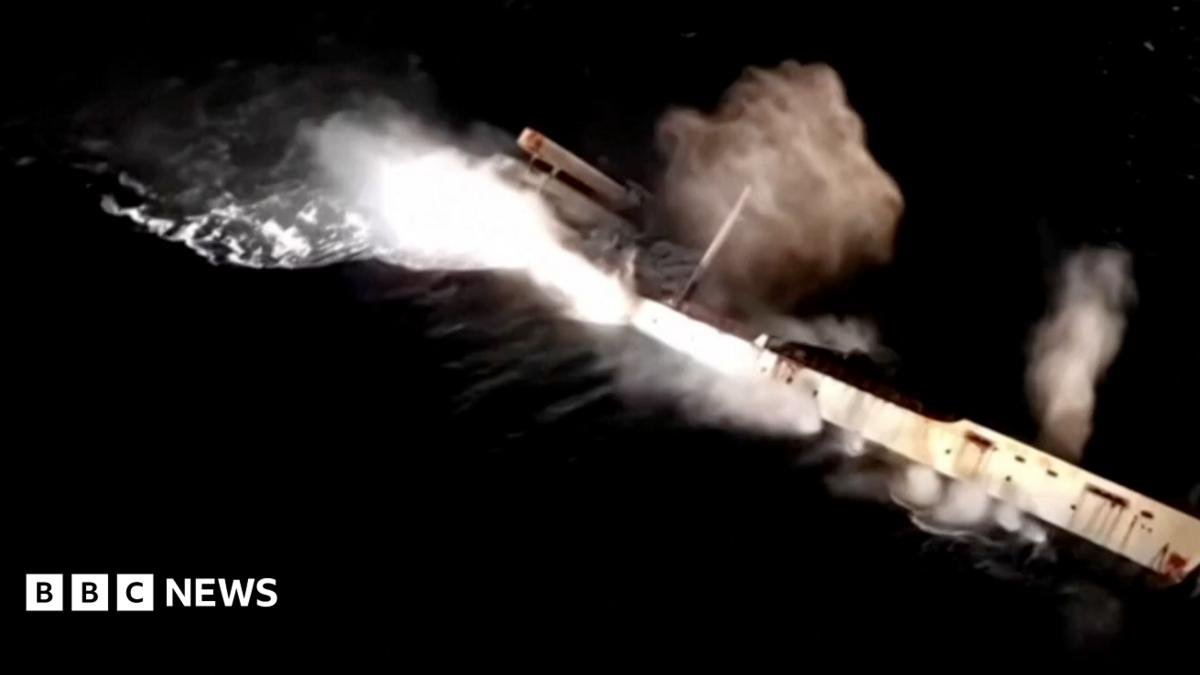
In a poignant maritime event, the storied ocean liner SS United States slipped beneath the waves off the coast of Florida on Wednesday night, culminating a years-long effort to transform the vessel into the world's largest artificial reef.
A Storied Vessel's Final Journey
The SS United States, a symbol of mid-20th-century American engineering and elegance, had been out of service for decades. For 30 years, it remained docked in Philadelphia, a silent witness to a bygone era of transatlantic travel. After extensive preparations, the ship was towed to Florida, where it was deliberately sunk to serve as an underwater habitat for marine life and a premier destination for diving enthusiasts.
The sinking process, which took several hours as the ship slowly submerged, was carefully orchestrated to ensure the vessel settled upright on the ocean floor. The result is a massive artificial reef that is expected to attract a diverse array of fish and other marine organisms, boosting local biodiversity and providing a new eco-tourism attraction.
From Grand Liner to Underwater Haven
Launched in 1952, the SS United States was renowned for its speed and luxury, holding the Blue Riband for the fastest transatlantic crossing by a passenger liner. Its conversion into an artificial reef marks a new chapter for the ship, one that shifts its role from a mode of transport to a cornerstone of marine conservation.
Local officials and environmental groups have hailed the project as a win-win for the economy and the environment. The reef is anticipated to draw divers from around the world, generating significant revenue for coastal communities while providing a thriving ecosystem for underwater life.
As the sun set on Wednesday, the SS United States completed its final voyage, descending into the depths to begin a new legacy beneath the waves.