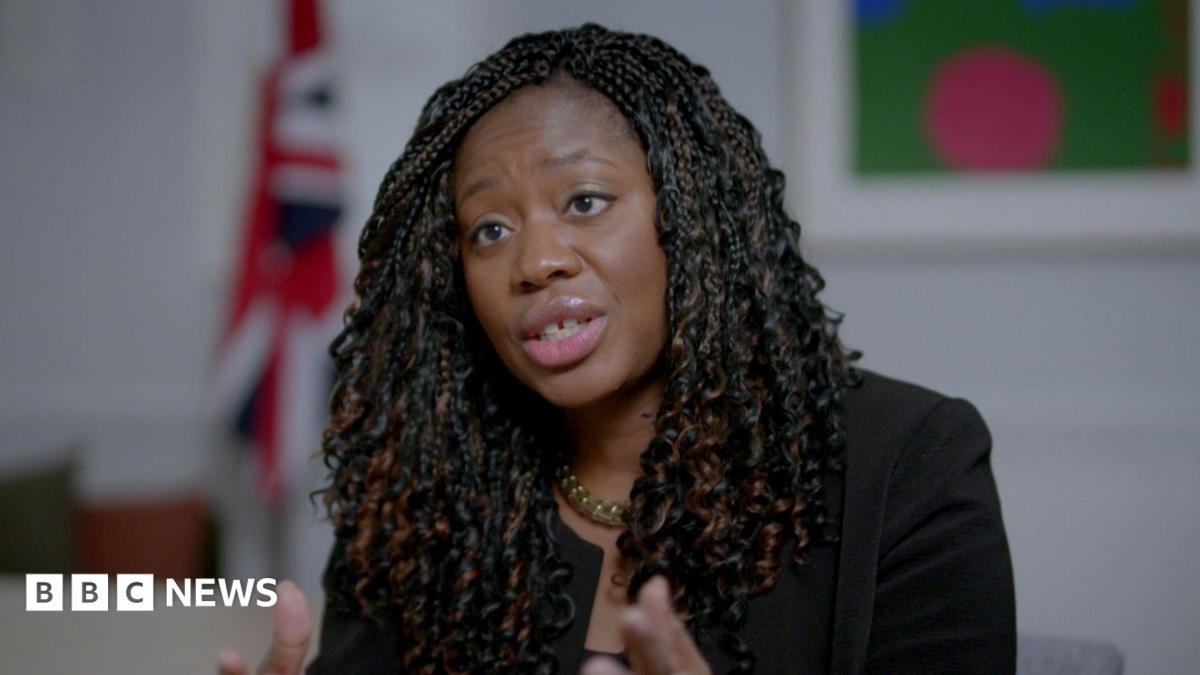
Energy Secretary Miatta Fahnbulleh has declared that making energy affordable is her "overriding objective," emphasizing that reducing household bills is essential to sustaining public backing for climate policies. In an interview with BBC Panorama, she argued that the government's push for cleaner power will ultimately help lower energy costs.
However, Fahnbulleh acknowledged that the drive to cut carbon emissions is currently "under pressure" as public discontent grows over rising energy prices in recent years. Her comments come as ministers prepare for a predicted surge in energy bills in January, expected to be the largest increase in four years.
Political Pressure Mounts
The Labour government has faced increasing political pressure over its climate ambitions since taking office. Reform UK has risen in opinion polls, while the Conservatives under Kemi Badenoch have abandoned their previous commitment to achieving net zero by 2050. Both opposition parties have criticized public subsidy schemes for renewable energy, claiming they have driven up consumer costs.
UK households already pay some of the highest electricity rates in Europe. Bills have climbed due to subsidies but also because of high gas prices, driven up by international conflicts.
When asked about her main task, Fahnbulleh told Panorama: "With the cost of living biting, affordability is my overriding objective, without a doubt." She argued that Labour's push for greener electricity is "one of our routes to delivering affordability."
"The drive to clean power is about decoupling our dependence on global fossil fuel markets," she added. "Ultimately if we have homegrown renewables, nuclear, that's the way in which we will drive bills in the long term."
Nevertheless, she conceded that struggles over energy affordability have contributed to the consensus on climate action being "under pressure." "People want to blame net zero for that. Now, I don't believe that's the case," she said. "But I'm very clear that part of the way in which we build and maintain public consent is that we've got to show that this transition, which we have to do on climate grounds, is good for people's pockets."
Climate Impacts and Policy Tensions
The UK experienced a record number of heatwaves this summer and suffered successive damaging wildfires, which the Met Office has said were made 130 times more likely by climate change. Last month, while hosting the UK's first summit on wildfires, Andy Burnham acknowledged that due to climate change "the summer we've just had is likely to be a more regular situation going forward." But he has also vowed to lead a "cost of living government" and reindustrialize the economy.
This has led some in Westminster to speculate that he could downgrade climate action to help reduce energy costs in the short term. His government has dismayed some green activists by diverting funding from the energy department to help meet defense funding targets, including money previously earmarked for energy efficiency schemes. Last month, the government approved drilling at the Jackdaw gas field, prompting criticism from campaigners, although ministers argue it will minimize imports of higher-emission fuels. A decision is pending on whether production can begin at Rosebank, the UK's largest known untapped oil field, located off the coast of Shetland.
In her interview, Fahnbulleh insisted that reducing carbon emissions "absolutely is a priority," pointing to this summer's droughts as evidence of the need to tackle global warming. However, she conceded that Labour's target for 95% of electricity generated in Britain to come from clean power sources by 2030 is a "stretch."
On Monday, it was reported that the government is considering weakening the electric vehicle mandate requiring car manufacturers to phase out production of petrol and diesel cars by 2035. This could prove a blow to both the country's climate targets and the UK's claim to be providing leadership on the issues, just as ministers head to Turkey for COP31, the UN's climate summit.