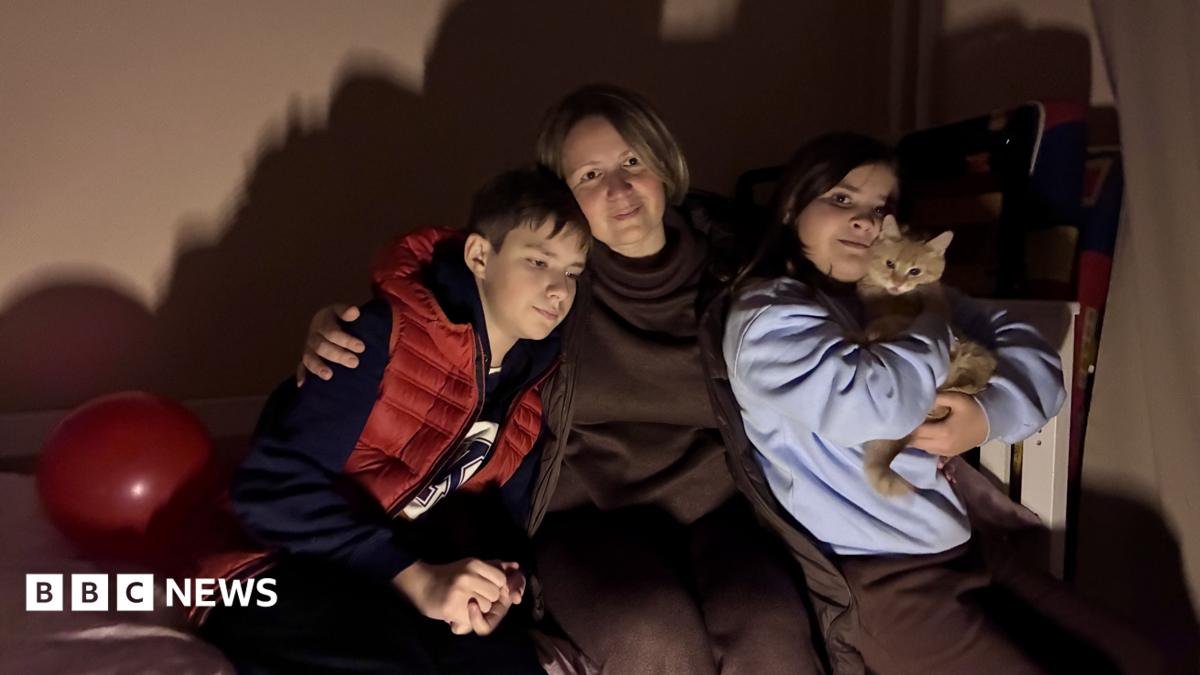
In the heart of Kyiv, single mother Daryna Kulchytska navigates the daily struggle of raising two children amid rolling blackouts. Her seventh-floor apartment, once a haven, now oscillates between brief spells of electricity and prolonged darkness. "The last few days it was only four or five hours we had power, but it's not at the same times. For two hours we have electricity, then for eight hours we don't," she says, her voice tinged with exhaustion.
A City in Shadows
Since October, planned power cuts have become a way of life across Ukraine, a direct consequence of Russia's intensified assaults on the nation's energy infrastructure. Kyiv has been particularly hard hit, with metro services and trolleybuses grinding to a halt, and entire neighborhoods enveloped in darkness. Officials warn that if power cannot be maintained for at least four hours daily, life for millions will become unsustainable. Some families now endure outages of up to 20 hours.
For Daryna's children, twelve-year-old Kyryll and younger sister Olena, the disruption is a daily reality. "There's no light, no water, no heat, no electricity. And no fun. All the fun got sucked out with the electricity," Kyryll says, his English polished from two years in the US. "We have a lot of board games. We have a whole shelf, but we've played them like a hundred thousand times already."
The Fight to Keep the Lights On
The scale of destruction is evident at one of Ukraine's largest power stations, reduced to a tangle of twisted metal and shattered pipes after a recent ballistic missile strike. The facility, which cannot be named for security reasons, was knocked completely offline. Volodymyr Kovalenko, a 25-year veteran at the plant, was in the control room when the missiles struck at 3am. "It was a very powerful attack. We'd never experienced anything like it," he recalls. "We'd had strikes before, but this time it was particularly severe."
Repair efforts are constantly interrupted by air raid sirens, sometimes every 15 to 30 minutes. During our four-hour visit, there were seven alerts, forcing workers to down tools and seek cover. "It's very difficult," says Vadym Bobyr, who leads the recovery effort. "You've mentally prepared yourself to do a particular job, and then the air raid siren goes off, and you have to get out as quickly as possible."
Despite the challenges, the workers remain resolute. "It's emotionally difficult, because we've already repaired all this, got it running again, and now it's happened all over again. It hurts, but we keep working and getting things done," Bobyr adds.
A Race Against Winter
Maxim Timchenko, CEO of DTEK, Ukraine's largest private energy company, says Russia has doubled the power and scale of its attacks compared to last year. "What is different is the scale of attacks and the different types of weapons used," he says. "They've doubled in power and in scale." He estimates that rebuilding the damaged plant will take until at least next summer, as workers, under constant threat, can only manage one or two productive hours per day.
President Volodymyr Zelensky insists Ukraine still has enough generating capacity to meet demand, but the challenge lies in transmission, with power lines and substations heavily damaged. Russia's use of "waiter drones" that cling to pylons and detonate on command further complicates repairs.
As winter deepens, many Ukrainians are fleeing the capital or leaving the country altogether. Daryna admits she is torn between staying close to friends and family and seeking safety elsewhere. The strain is taking a toll on her mental health, and she worries about the impact on her children, especially Olena, who suffers from nightmares.
Yet, like many Ukrainians, Daryna remains defiant. "I don't want to live without light. But actually people in Ukraine say, OK, without light, but without Russians. Yes, we're scared, we're scared a lot. But better for us to be without power, but without Russians."