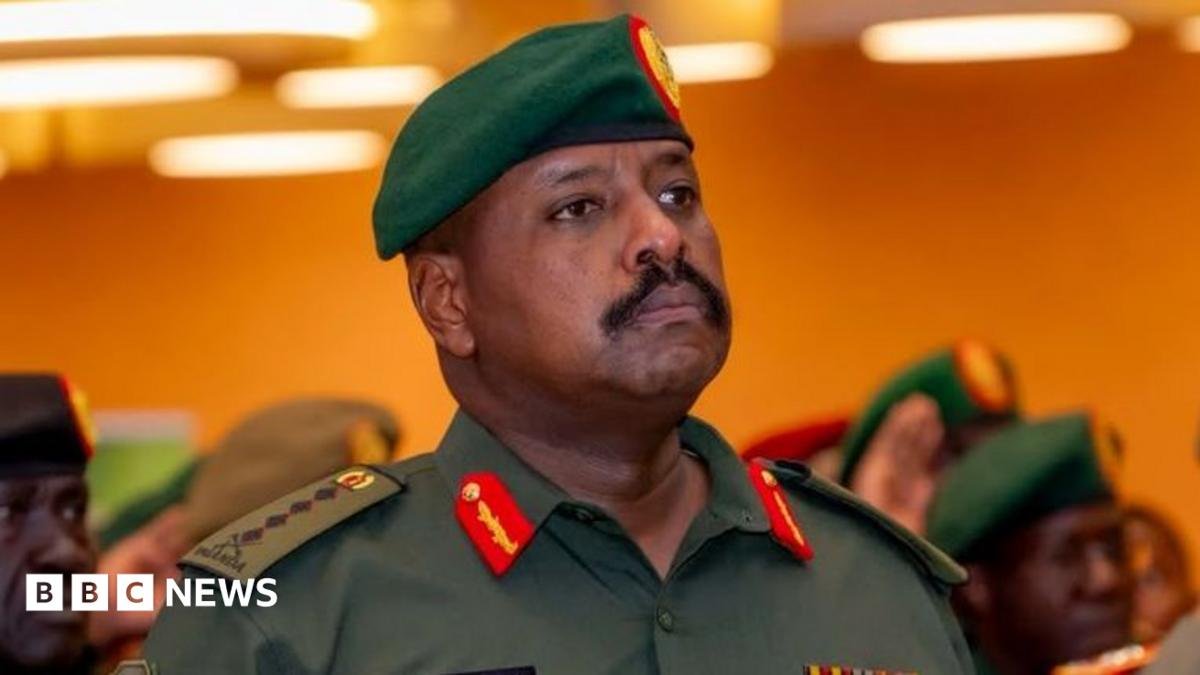
In Uganda, the arrest of senior military officers and a public threat against the vice-president have intensified speculation about the political succession in a country ruled by the same leader for nearly four decades. At the centre of the storm is Gen Muhoozi Kainerugaba, the president's son and the powerful army chief, whose apparent presidential ambitions are testing the limits of military and political loyalty.
A Military Crackdown
Over the past 15 months, at least a dozen generals and senior officers have been detained under Gen Kainerugaba's command, rattling the upper echelons of the Uganda People's Defence Force. The arrests range from accusations of corruption and treason to more opaque charges. Among those caught in the net is Lt Gen Peter Elwelu, a former deputy army chief, who was detained in early November over allegations of plotting to destabilise the eastern Teso region. His demotion was announced by Gen Kainerugaba on social media, a move that raised legal eyebrows given that military regulations do not provide for such action via Twitter.
The crackdown has not spared former intelligence chiefs. Maj Gen James Birungi, once head of defence intelligence, was arrested in August 2025 on charges including treason and terrorism, but later released after the army chief declared he had forgiven him. Similarly, Maj Gen Abel Kandiho was detained in September over allegations of providing false intelligence, and Brig-Gen Charles Bakahumura was also arrested but subsequently freed. The military insists these arrests are part of an anti-corruption drive, but critics see a political motive.
Political Undertones
Dr Gerald Bareebe, a Ugandan-born political scientist at York University in Canada, argues that the arrests are linked to the so-called "Muhoozi Project" - the plan to position Gen Kainerugaba as President Yoweri Museveni's successor. "Senior officers believed not to support the project have been arrested, detained or charged with corruption and treason," he told the BBC. Bareebe contends that the charges are often politically motivated, reflecting growing divisions within the military over the succession question.
The ruling National Resistance Movement (NRM) has denied reports that its leadership rejected a proposal to back Gen Kainerugaba as the next president. Party Secretary General Richard Todwong Awany confirmed a meeting on 10 November to discuss various issues but dismissed claims of a vote against the general as "completely false." However, sources told AFP that a vote was abandoned after several members spoke against the proposal, while other reports suggest most members supported the general's potential presidency but questioned his readiness for civilian leadership.
Threat to the Vice-President
The political temperature soared when Gen Kainerugaba took to X (formerly Twitter) to threaten Vice-President Jessica Alupo, demanding to take her job and questioning her loyalty. "Whoever is in that office should prepare to hand it over soon," he wrote in posts that were later deleted. He also warned that the government would operate "on military terms" if he became his father's deputy. The following day, his account, which had nearly 1.4 million followers, became inaccessible. Alupo has yet to respond publicly.
Government spokesperson Allan Kasujja dismissed talk of a succession fallout as "hogwash," but the incident has fuelled concerns about the army chief's growing influence over civilian politics. Security analyst Freddie David Egesa says the arrests reflect investigations by multiple security agencies rather than an army-led purge, and that detaining senior officers helps protect witnesses. But Bareebe sees a broader purge targeting those perceived as anti-Muhoozi, pointing to divisions between the elite Special Forces Command (SFC) - loyal to the president's son - and other army commanders.
The Succession Question
President Museveni, 82, has ruled Uganda since 1986 and was sworn in for a seventh term earlier this year. Gen Kainerugaba, 52, has indicated he intends to run for president in 2031, when his father's current term ends. He leads the Patriotic League of Uganda, a political movement mobilising support for his leadership. However, recent developments suggest that a father-to-son transfer of power may be more complicated than anticipated. At the NRM meeting, one official reportedly urged Museveni to retire his son from the military and give him a civilian role to gain administrative experience. Some party officials reportedly consider Gen Salim Saleh, Museveni's younger brother, better suited for civilian leadership, though there is no indication he is interested.
Bareebe suggests that Museveni's reluctance to move his son out of the military reflects the importance of retaining control of the army during any transition. "The underlying calculation appears to be that, so long as Muhoozi controls the SFC, he can use it to capture power even in the event of a contested transition," he says. The military has been central to Museveni's hold on power, making the loyalties of senior commanders particularly important as succession questions intensify.
The succession debate is unfolding against a backdrop of sustained pressure on the opposition. Veteran politician Kizza Besigye remains in detention on treason charges he denies, while Bobi Wine, who came second in this year's presidential election, has gone into exile in the US after being threatened by Gen Kainerugaba. The government defends its security operations as lawful and necessary to maintain stability. But the arrests, the threats, and the competing accounts of divisions within the ruling party have intensified questions about how Uganda's next political transition might unfold, and what role the first family will play.