The Catholic Church in Uganda has renewed its call for a united front against human trafficking, bringing together government officials, security agencies, faith leaders, and civil society organisations under one roof to confront what many describe as a hidden crisis threatening human dignity.
A Call for Collective Responsibility
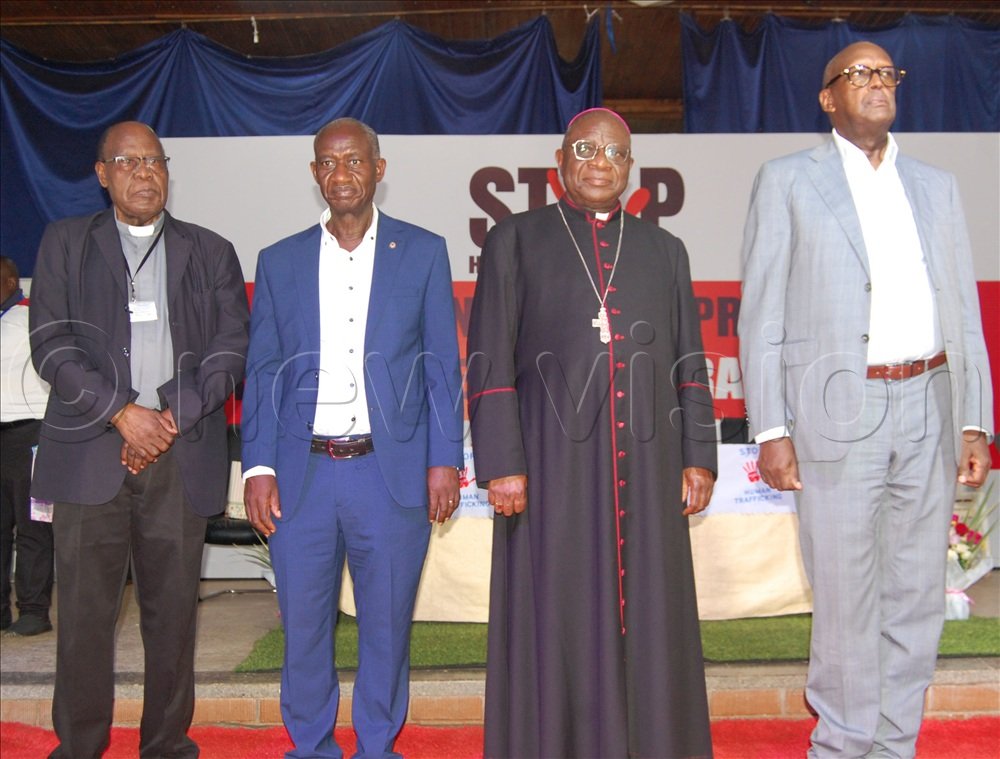
During the annual National Day of Prayer and Awareness on Human Trafficking, held at the Sharing Youth Centre in Nsambya, Kampala Archdiocese's Archbishop Paul Ssemogerere urged Christians and all people of goodwill to recognise that trafficking and modern slavery remain real and present dangers within Ugandan communities.
The archbishop stressed that safeguarding human dignity must be at the heart of any effort to combat the vice. He noted that peace is not simply the absence of conflict but is rooted in the recognition that every person is created in the image of God.
"We must listen and respond to the cries of the victims of human trafficking. We must not keep quiet," Ssemogerere said, calling for survivors to be treated with compassion and for dignity to be placed above exploitation.
Internal Trafficking in Focus
The archbishop specifically lamented the internal trafficking and exploitation of young children from the Karamoja sub-region, appealing to the government to intensify efforts to end the practice.
Alfred Avuni, Executive Director of the John Paul II Justice and Peace Centre, delivered the keynote address, reminding Ugandans that trafficking is not only an international problem but also a domestic one. He cited figures from the Ministry of Internal Affairs showing 1,002 reported trafficking cases in 2025, of which 555 involved children and 447 were adults. However, he warned that many more cases remain hidden due to fear and intimidation.
Government Pledges Stronger Systems
Commissioner of Police Julius Twinomujuni, who coordinates the Prevention of Trafficking in Persons at the Ministry of Internal Affairs, assured the public of the government's commitment to regulating labour migration despite existing challenges. He listed unemployment, the absence of bilateral agreements with some countries, globalisation, and the digital and artificial intelligence revolution as factors that complicate the fight.
He cautioned young people, particularly candidates, to be wary of individuals who lure them with job offers and scholarships. "People take advantage of your vulnerability and ambitions. They are skilled at using social media, radio, digital platforms, WhatsApp and TikTok," he said, urging vigilance and information sharing.
Twinomujuni also called for legislation to regulate cryptocurrency and for foreign nationals' SIM cards to be registered before activation.
Restructuring for Accountability
Gender, Labour and Social Development Minister Lt. Gen. (rtd) Henry Tumukunde revealed that the government has begun restructuring its systems to tackle trafficking. A screening committee comprising eminent Ugandans has been established to vet labour exporting companies.
"Our systems will help us to know who qualifies to export labour and whether they meet the moral standards required," he said. Tumukunde also announced plans to invest heavily in training young Ugandans, providing travel documents, and registering them so they do not need to seek support elsewhere.
He thanked the Catholic Church for partnering with his ministry, describing it as a positive development, and assured the archbishop that the government would prevail over the internal trafficking of Karimojong children just as it defeated terrorism.
Col. John P. Murray of the Salvation Army, Uganda Territory, echoed the need to protect the dignity of every person as a foundation for peace and freedom.
The event was organised by the Catholic Church in partnership with the John Paul II Justice and Peace Centre, Mwagale Foundation, St. Bakhita Anti-Human Trafficking Network Uganda, the Salvation Army, and the ministries of Gender and Internal Affairs. Hundreds of learners from various schools and child-care organisations attended.