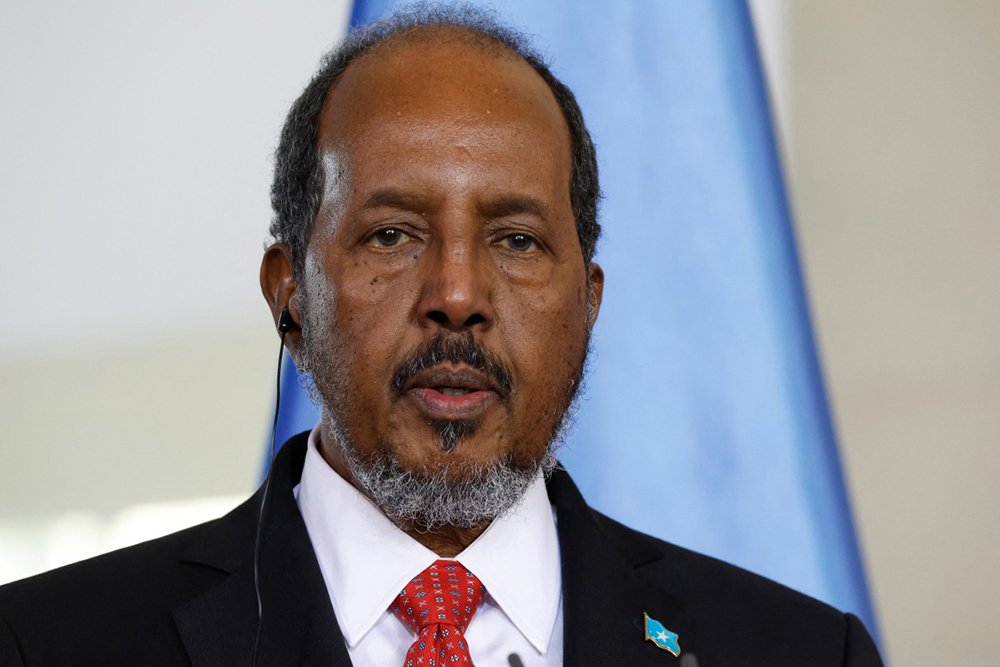
Somalia's fragile political landscape has been pushed to the brink after opposition figures accused President Hassan Sheikh Mohamud of deploying troops to detain the Supreme Court's chief justice. The dramatic move reportedly came in response to a tribunal ruling that declared an extension of the president's term unlawful.
The allegation, which has not been independently verified, has intensified an already volatile standoff in Mogadishu, where political rivalries have repeatedly spilled over into violent confrontations.
A Judiciary Under Siege?
Images circulating in Somali media purported to show military personnel inside the court's compound, lending visual weight to opposition claims. The government has not issued a detailed response to the accusations, and the president's office has yet to confirm or deny the arrest.
The controversy centers on a court decision that rejected the legality of extending the president's tenure. Mohamud's administration has argued that constitutional amendments approved by parliament permit him to remain in office beyond the end of his original mandate in May, allowing time to prepare for nationwide democratic elections scheduled for April and May 2027.
Opponents, however, view the reforms as a calculated power grab. They point to the president's declaration of a "transition period" that granted him an additional year in office as evidence of an erosion of democratic norms.
A Nation at a Crossroads
Former Prime Minister Ali Khaire issued a stark warning about the implications of the standoff. "Somalia stands at a dangerous juncture. The dismantling of our judiciary is a direct threat to the rule of law," he said. He urged Somalis across all sectors of society to mobilize in defense of the country's constitutional order.
The crisis arrives at a precarious moment for the Horn of Africa nation. Somalia is already grappling with a deadly insurgency waged by Al-Shabaab, and the political infighting has begun to strain relationships with international partners who have backed the government's security efforts.
Mohamud has framed his reform agenda as a historic shift away from the clan-based system in which elders select representatives, positioning the 2027 elections as the country's first fully democratic vote. Yet the path to those polls now appears increasingly uncertain as institutions meant to safeguard the process, including the courts, become entangled in the political fray.
With the judiciary's independence in question and the opposition calling for public resistance, Somalia's leaders face mounting pressure to de-escalate tensions before the crisis undermines both domestic stability and international confidence.