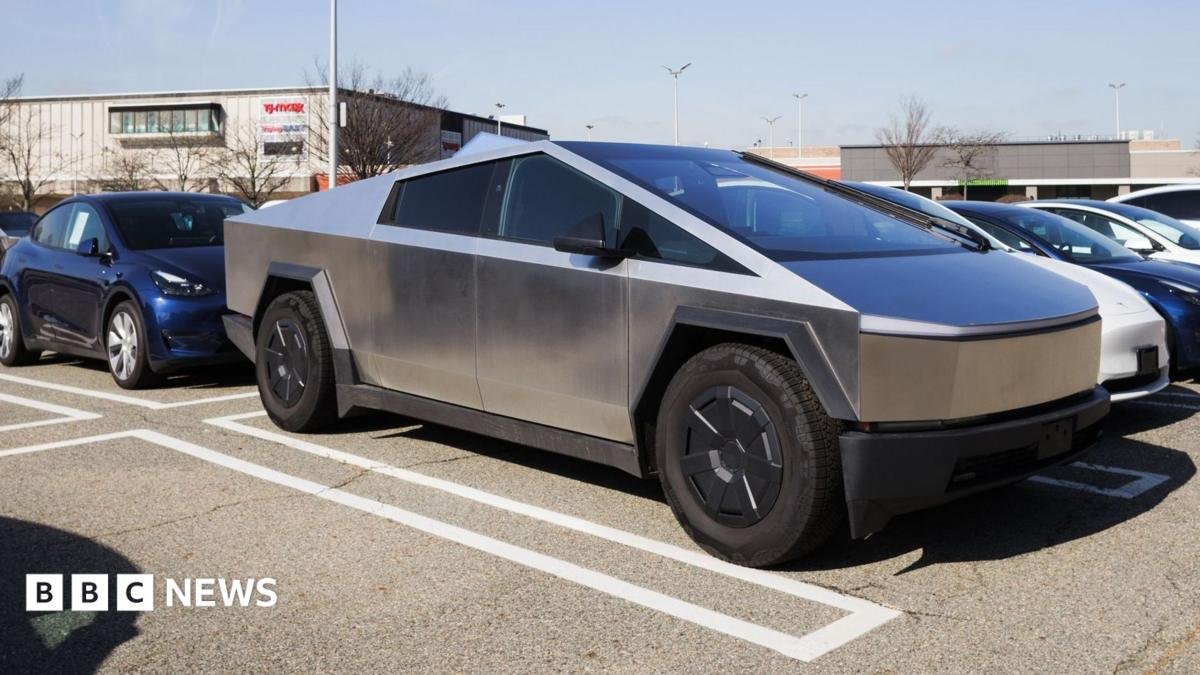
Tesla's polarizing Cybertruck appears to be approaching a crossroads. Chief Executive Elon Musk has confirmed that production of the angular electric pickup is "winding down" at the company's facility in Austin, Texas, as the automaker redirects resources toward its self-driving Cybercab program.
The announcement raises immediate questions about the future of a vehicle that has divided opinion since it first rolled off the line. Musk did not indicate whether manufacturing might be relocated to another plant or halted altogether. The Cybertruck is currently assembled exclusively at Tesla's Texas base, meaning any halt would leave the model without a production home.
A Divisive Debut
When the Cybertruck launched in 2023, it arrived with considerable fanfare and a design that seemed pulled from a science fiction film. Supporters celebrated its unconventional stainless steel body and futuristic styling as a bold departure from conventional pickups. Critics, however, were less generous, with many describing the vehicle as visually unappealing and impractical.
That split reaction has followed the truck throughout its short life. Beyond aesthetics, the model has faced a series of practical setbacks, including weaker than expected sales, persistent quality concerns and several high-profile recalls. For a company that built its reputation on pushing boundaries, the Cybertruck has become a case study in the risks of betting big on an unorthodox concept.
Pivot to Autonomy
Musk's decision to wind down Cybertruck output reflects a broader strategic shift at Tesla. The company is increasingly channeling its ambitions into autonomous driving, with the Cybercab at the center of that vision. The two-seater robotaxi, unveiled with much anticipation, represents Tesla's bet that the future of personal transport lies in self-driving fleets rather than individually owned vehicles.
Whether that gamble pays off remains to be seen. Regulators in several markets continue to scrutinize autonomous technology, and public trust in driverless systems is far from settled. Still, the move signals that Tesla is willing to retire a struggling product line in favor of what it sees as the next frontier.
What Comes Next
For now, Cybertruck owners and prospective buyers are left with uncertainty. Dealers and reservation holders will be watching closely for clarity on whether the model will continue in any form. The truck's dedicated following may mourn its retreat, while skeptics may view the development as vindication of their doubts.
What is clear is that Tesla is entering a new phase, one in which the company's identity is tied less to the vehicles on the road today and more to the software and autonomy it hopes will define tomorrow. The Cybertruck, once a symbol of Musk's willingness to defy convention, may soon become a footnote in that transition.