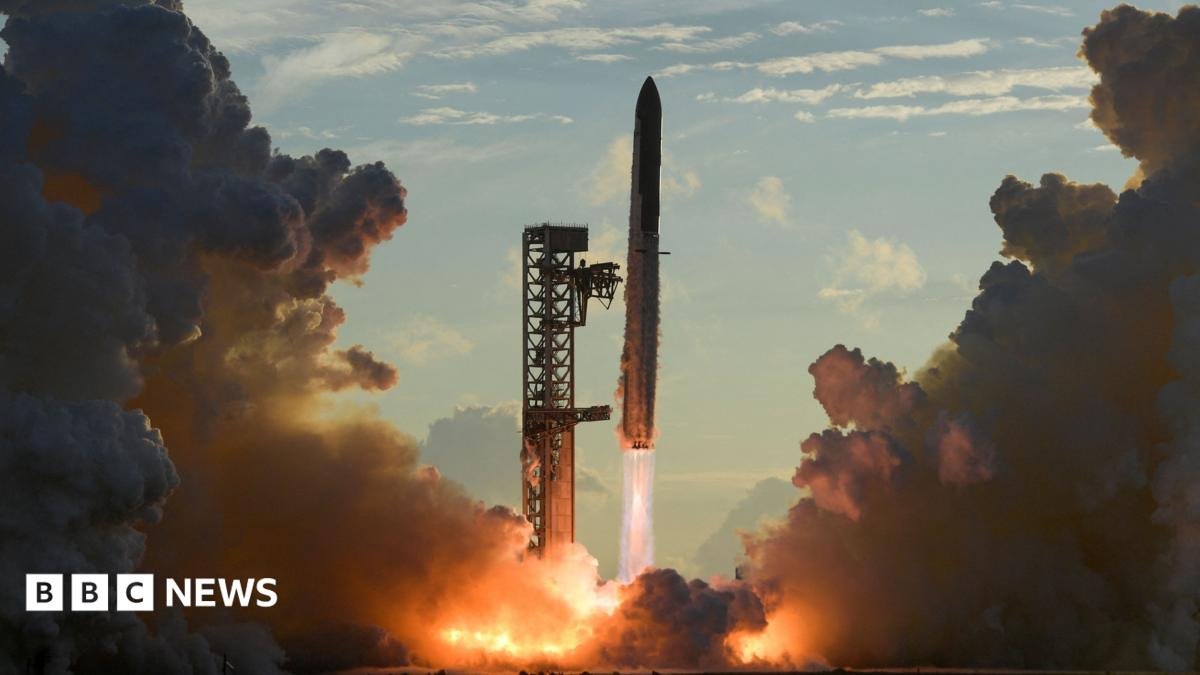
SpaceX is set to make history on Friday with an audacious attempt to catch both the booster and the upper stage of its massive Starship rocket as they return to Earth. The company will use the mechanical arms, nicknamed 'chopsticks,' on its launch tower to grab the rocket parts mid-air, aiming for the first full recovery of a rocket that has been to space.
A Leap Towards Reusability
If successful, this feat would mark a significant step towards making Starship fully reusable, a long-held ambition of SpaceX CEO Elon Musk. The 124-meter-tall rocket, the tallest and most powerful ever flown, is scheduled to lift off from the Starbase launchpad in Texas at 16:45 local time (22:45 GMT), with a 75-minute launch window.
The lower section, known as the Super Heavy booster, has already been caught three times in previous test flights. However, the upper stage, called the Ship, has never been grabbed by the chopsticks; it has instead splashed down in the ocean. This time, SpaceX will attempt to catch the Ship about 22 and a half hours after liftoff, following its deployment of 26 Starlink satellites and 14 orbits around Earth.
Nasa's Artemis Programme
Nasa will be watching closely, as Starship is slated to play a crucial role in its Artemis programme, which aims to return astronauts to the Moon. SpaceX has a contract to convert the Ship into a lunar lander for the Artemis III mission, currently planned for summer 2027. However, the pace of Starship's development has been slower than intended, and the mission timeline is ambitious.
Blue Origin, owned by Jeff Bezos, also has a contract to provide a lander for Artemis III. But the company suffered a setback earlier this year when its New Glenn rocket exploded, destroying its launchpad in Florida. A return to flight has been delayed to early 2027.
Economic Implications
Professor Malcolm Macdonald, President of the Royal Aeronautical Society, said: 'A successful double catch would be visually spectacular, but full reusability has the potential to fundamentally change the economics of accessing space. One successful flight will not prove that model, but it could mark an important transition: from demonstrating that Starship can fly, to demonstrating how Starship could operate.'
SpaceX has already revolutionized launch costs with its Falcon 9 rocket, which now flies more than a hundred times a year. Reusing the entire Starship could further drive down costs and increase access to space.
As the world watches, the outcome of this test flight could shape the future of space exploration and America's race with China to return humans to the Moon.