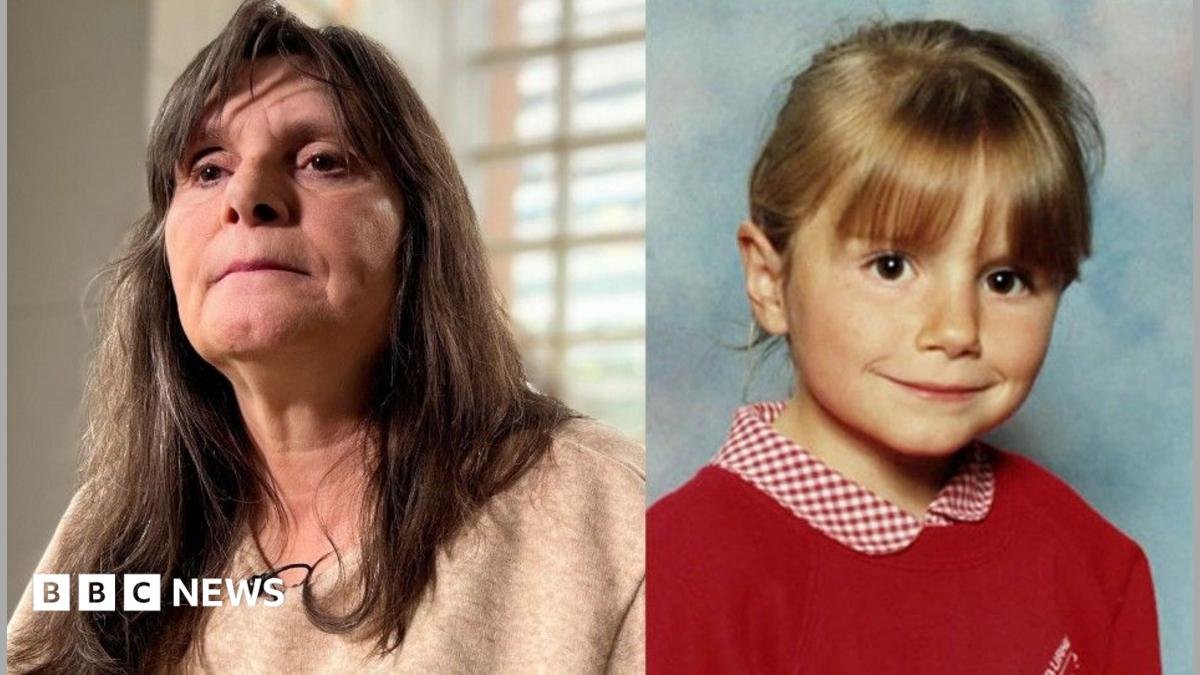
Sara Payne, the mother of murdered schoolgirl Sarah Payne, has spoken about her determination to prevent her daughter's killer from occupying her thoughts, as she seeks to reshape public perceptions of crime victims.
Sarah was just eight years old when she was abducted in July 2000 while playing with her siblings near her grandparents' home in West Sussex. Her body was discovered 17 days later, following one of the most extensive searches in UK history. Roy Whiting, a convicted sex offender, was sentenced to life imprisonment in December 2001 for her murder.
In an interview with BBC South East, Sara explained that while circumstances vary, individuals always retain the power to choose their response. "You have to choose which path you're going to take," she said. "I chose not to allow him to live in my head."
She continued: "I don't have anger. I don't have aggression. I don't want to bring back hanging or any of those things. I just want to go forward in a humane way and be human."
Sara, who lived in Hersham, Surrey, at the time of Sarah's death, noted that society often holds a stereotypical image of victims. "People can have this image of victims in their head," she said. "Not everybody reacts in the way that the textbook says."
Her comments come ahead of the release of a new BBC podcast series titled Sarah Payne: Unforgotten, which uses archive material and fresh testimony from family members, detectives, journalists, and politicians to recount the murder investigation. The series also examines Sara's long campaign for Sarah's Law, legislation enacted in 2011 that allows parents, guardians, or carers to ask police whether someone with access to their child has a history of child sexual offences.
Sara explained that she fought for the law because she found it unjust that sex offenders could complete their sentences and then remain anonymous. "Victims... don't get to just move on with their lives," she said. "They have to deal with the aftermath."
More than 25 years after Sarah's murder, Sara described much of that period as "a bit of blur". "I feel a bit removed from it to be honest," she said. "It's almost become a story in my head too."
Yet she added that an "overriding memory" was the friendships she formed and strengthened during that time, bonds that have endured. "[You find] out who your true friends are," she said.
Sara also recalled thinking her daughter would be watching television during the search. "[Sarah] needed to see that I was coming for her," she added.
When she learned her daughter was dead, Sara said the "world was taken out from under" her. The news was being reported at the same time she was being told. "It wasn't what I expected," she continued. "I'd convinced everyone around me that she was coming home."
Sara said she tries not to think about what her daughter, whom she described as "very similar" to herself, would be like now. "She was really a special little girl," she added.