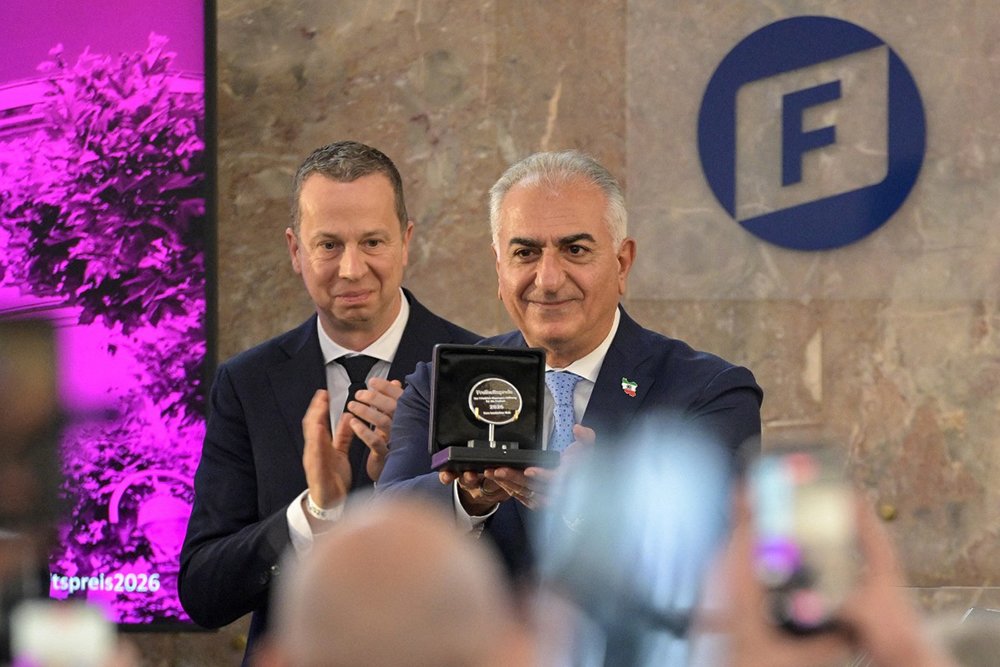
FRANKFURT, Germany - Reza Pahlavi, the son of Iran's deposed shah, was awarded a "Freedom Prize" in Frankfurt on Saturday, an honor presented to the Iranian people. The ceremony, however, has sparked controversy, with critics questioning its legitimacy.
According to police estimates, approximately 18,000 demonstrators gathered to greet Pahlavi, many chanting in support and waving pre-revolutionary Iranian flags. The prize was organized by the Friedrich Naumann Foundation, an organization affiliated with Germany's liberal Free Democratic Party (FDP).
Speaking at St. Paul's Church, a site renowned for hosting Germany's first elected parliament in 1848-1849, Pahlavi addressed the crowd. "Iran is a country not waiting to be taught democracy; this is a country being prevented from practising it," he declared. He further emphasized the determination of the Iranian people, stating, "A people ready to die for the right to vote is willing to exercise the right to vote." His remarks were met with applause.
The event has drawn mixed reactions. Supporters view Pahlavi as a symbol of resistance against the current Iranian government, while critics argue that awarding such a prize to a figure associated with the former monarchy is inappropriate and undermines the democratic aspirations of the Iranian people. The Friedrich Naumann Foundation has defended its decision, stating that the prize is intended to honor the Iranian people's pursuit of freedom and democracy.
Pahlavi, who has lived in exile since the 1979 Islamic Revolution, has been an outspoken critic of the Iranian regime. He has advocated for a secular, democratic Iran and has called for international support for the Iranian people's struggle for freedom. His presence in Frankfurt attracted a large crowd, reflecting the ongoing polarization within the Iranian diaspora and the broader international community regarding Iran's political future.
The ceremony took place amid heightened tensions between Iran and the West, with ongoing disputes over Iran's nuclear program and human rights record. The "Freedom Prize" award to Pahlavi is seen by some as a political statement against the Iranian government, further complicating diplomatic efforts.
As the event concluded, the debate over the prize's legitimacy and its implications for Iran's future continues. While Pahlavi and his supporters celebrate the recognition, critics remain skeptical of honoring a figure tied to a regime that was itself authoritarian. The international community watches closely, as the struggle for democracy in Iran remains a deeply contested and complex issue.