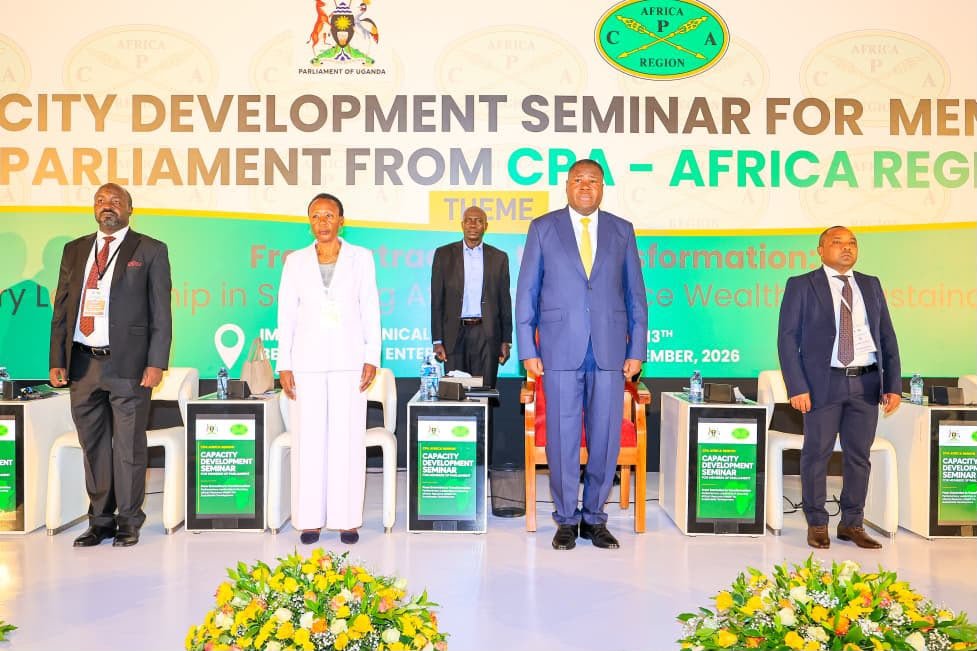
Speaker of Parliament Jacob Marksons Oboth has challenged African legislators to take the lead in ending the continent's long-standing dependence on exporting unprocessed materials, arguing that economic sovereignty depends on it.
Speaking on November 10 at the opening of the Commonwealth Parliamentary Association (CPA) Africa Region Capacity Development Seminar in Entebbe, Oboth told delegates that Africa's central problem is not a shortage of wealth but a persistent failure to convert that wealth into tangible prosperity for its citizens.
A Call for Legislative Action
The five-day seminar, running from 9 to 13 November 2026 at the Imperial Botanical Beach Hotel, is held under the theme "From Extraction to Transformation: Parliamentary Leadership in Securing Africa's Resource Wealth for Sustainable Development." It brings together lawmakers from South Africa, Rwanda, Nigeria, Tanzania, Zambia and Uganda.
In his address, the Speaker warned that shipping raw materials abroad leaves the continent's development challenges unresolved. He noted that while African nations extract and export commodities, the processing, manufacturing, employment and profits largely accumulate in wealthier countries.
"Exporting raw materials does not solve our development challenges as a continent," Oboth said. "Africa will not secure economic sovereignty unless its legislators take the lead in making sure our raw materials benefit our own people, not only the rich countries."
He stressed that reversing this trend requires strong legislation in each country, positioning parliaments as the key institutions capable of designing policies that keep more of the value chain on African soil.
Why Value Addition Matters
The push for value addition reflects a growing consensus among African policymakers that the continent must move up global supply chains. Processing minerals, agricultural produce and other resources locally could create jobs, boost industrial capacity and increase export earnings.
- Local processing can generate employment for young people entering the labour market.
- Manufacturing adds value to exports, raising the revenue earned from the same raw materials.
- Stronger domestic industries reduce vulnerability to global commodity price swings.
- Coordinated legislation across countries could strengthen Africa's negotiating position in international trade.
The seminar offers a platform for legislators from across the region to share experiences and explore how parliamentary leadership can drive the shift from extraction to transformation. Delegates are expected to discuss model laws, regional cooperation and strategies for holding governments accountable on resource management.
Oboth's remarks come as African leaders increasingly call for fairer terms in global trade and greater control over their natural resources. Whether parliaments can translate that ambition into enforceable laws remains the test ahead.