Harry Kane now stands alone as England's most-capped men's player and its record goalscorer, yet pinning down exactly where those milestones place him among the Three Lions' finest is a far more slippery exercise. The debate stretches back to the earliest days of the game and hinges on more than raw ability. It is also about longevity, unforgettable moments and the hold a player has on the national imagination.
Ballon d'Or winners like Stanley Matthews, Kevin Keegan and Michael Owen all have a case, as do gifted technicians such as Glenn Hoddle, Chris Waddle and John Barnes. Had an England manager ever truly unlocked the best from Paul Scholes, Steven Gerrard and Frank Lampard, midfielders of that calibre would demand inclusion too. But greatness in an England shirt requires talent plus impact, the kind of contribution that lingers in the memory and endures across years.
The case for the modern icons
David Beckham was the face of the national team for a generation and backed up the celebrity with substance on the pitch. He carried England at times, most famously curling in a 93rd-minute free-kick against Greece to send his country to the 2002 World Cup, and he recovered from the vicious fallout of his red card against Argentina in 1998 to become a global ambassador for the English game.
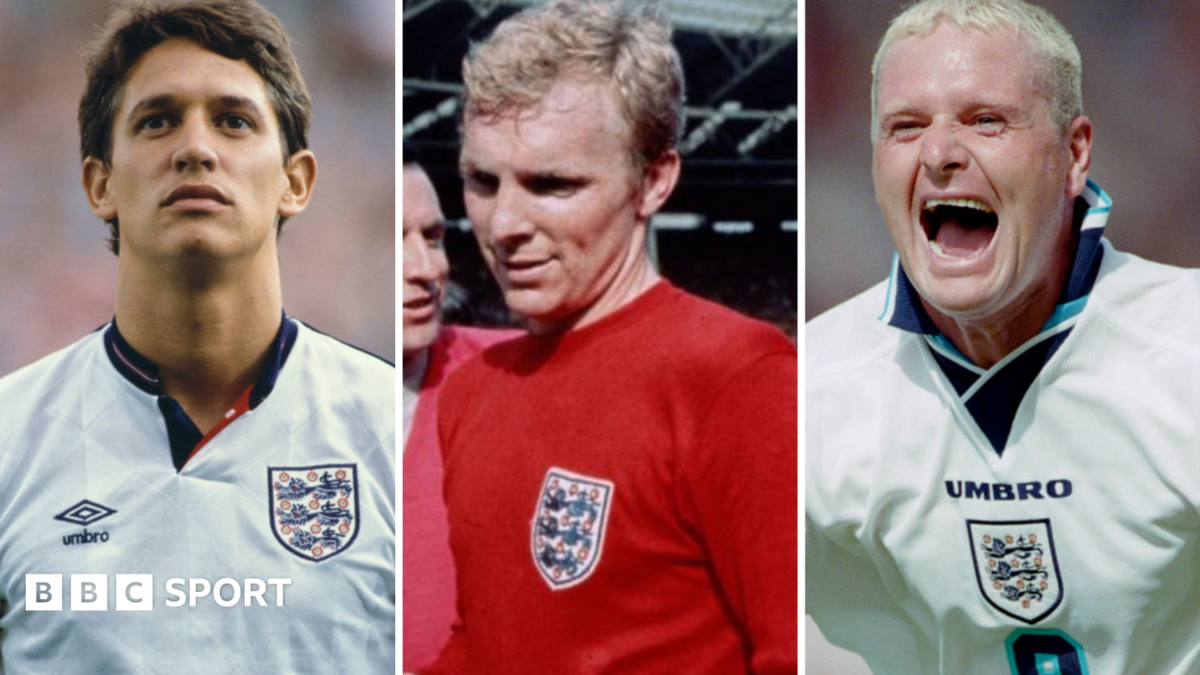
Then there is Paul Gascoigne, a flawed genius the public adored. Fans cried with him in 1990, marvelled at his solo goal against Scotland and begged him to conjure something in the Euro 96 semi-final against Germany. At his peak he was captivating, a cultural phenomenon as much as a footballer.
Wayne Rooney announced himself as an 18-year-old at Euro 2004 and, though injuries and suspensions interrupted his tournament record, he finished with 53 goals from 120 caps and a complete all-round game. Jude Bellingham, still only 23, has already delivered the kind of moments nations remember, including a last-gasp overhead kick against Slovakia and a stunning solo strike against France, and his 61 caps suggest the bulk of his story is still to be written.
The captain and the record scorer
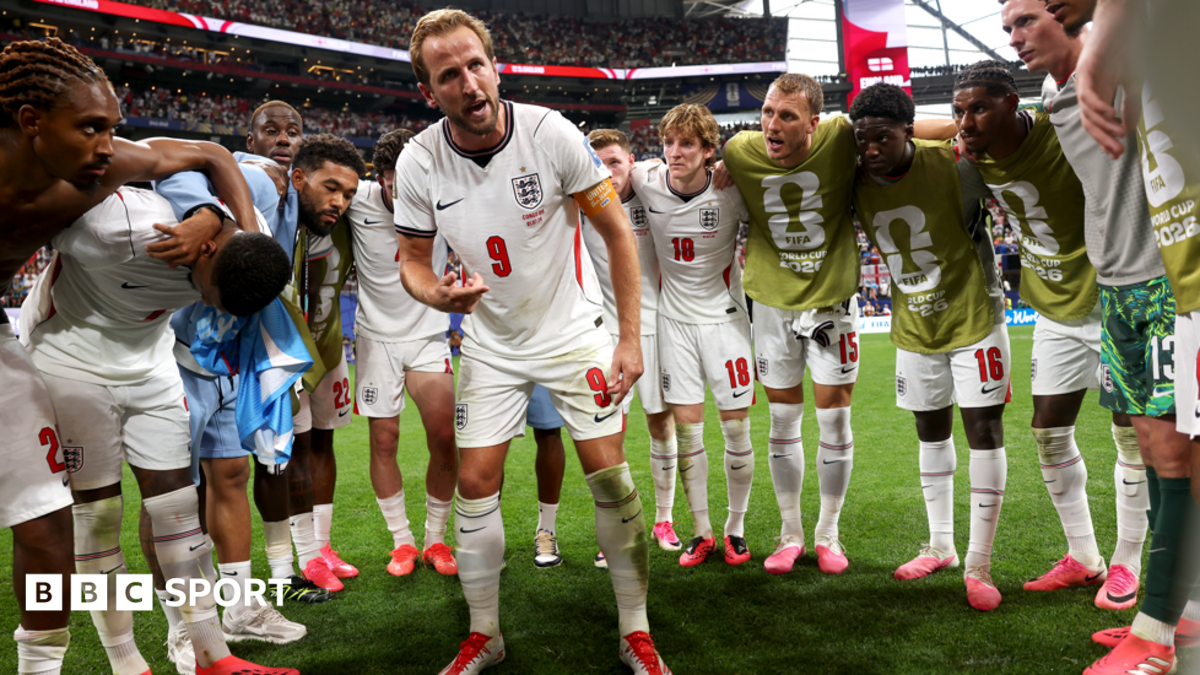
Kane's importance to this England side is hard to overstate. Since scoring 79 seconds into his debut against Lithuania in 2015, he has rewritten the record books, passed Rooney's benchmark with room to spare and won the Golden Boot at the 2018 World Cup. He has led England to two World Cup semi-finals and back-to-back European Championship finals, coming closer to a major trophy than any captain since Bobby Moore.
Moore himself would slot neatly into the modern game: composed under pressure, elegant in possession, flawless in timing. His tackle on Jairzinho at the 1970 World Cup and his shirt swap with Pele remain among sport's most reproduced images. Pele called him the greatest defender he ever faced, and it was Moore who lifted the World Cup in 1966 at just 25.
Sir Bobby Charlton's 49-goal record stood for 55 years until Rooney broke it. A Munich air disaster survivor, he was central to England's 1966 triumph, scoring three times on the run to the final and winning the Ballon d'Or that year. Gary Lineker, who knew a thing or two about scoring, called him simply England's greatest ever player.
Other names in the frame
- Gordon Banks, the 1966 winner whose save from Pele in 1970 is among the most iconic stops in history.
- Gary Lineker, Golden Boot winner in 1986 and scorer of 48 goals in 80 England games.
- Billy Wright, the first man to reach a century of caps and a captain on 90 occasions.
Any list of ten inevitably leaves out figures like Geoff Hurst, whose hat-trick in 1966 remains the most recognisable performance in English history, and Jimmy Greaves, whose tournament was cut short by injury. The debate, like the game itself, never truly ends.