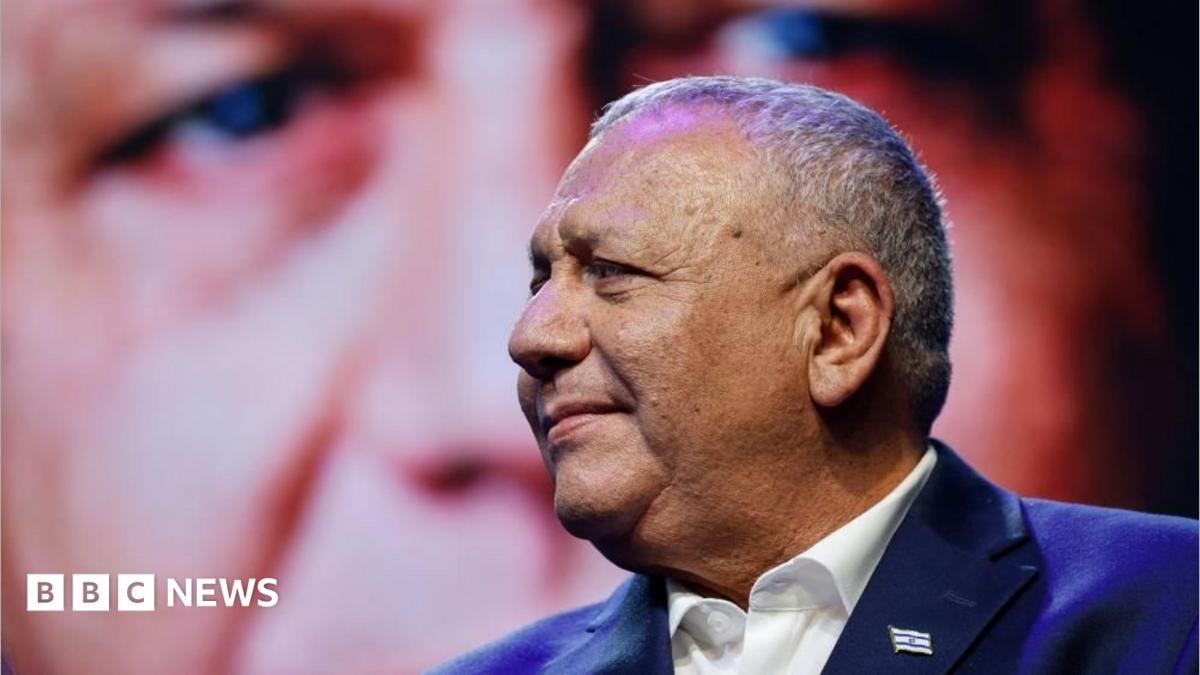
Israel's President Isaac Herzog has tasked opposition leader Gadi Eisenkot with forming a new coalition government, following last week's inconclusive parliamentary elections. The decision comes after consultations with all political parties, as neither Eisenkot's bloc nor Prime Minister Benjamin Netanyahu's bloc secured a majority in the 120-seat Knesset.
A Path to National Emergency Government
Eisenkot, a former military chief, now has 28 days to assemble a coalition, with the possibility of a 14-day extension. In a post on X, he wrote: "Now is the time to form a national emergency government. I will do everything to ensure we are worthy."
No party in Israel has ever won an outright majority, making coalition-building a perennial challenge. In the recent election, Netanyahu's right-wing Likud party and its far-right and ultra-Orthodox Jewish allies secured 53 seats, while Eisenkot's centrist Yashar party and three other Jewish opposition parties in his bloc won 48.
Arab Parties Emerge as Kingmakers
Two Arab-led alliances, the United Arab List and the Joint List, together won an unprecedented 19 seats, fueled by a surge in Arab voter turnout. This positions them as potential kingmakers. However, all but one of the Jewish parties had pledged before the polls not to work with them to form a government.
Herzog's office said that after consulting all parties during the week, he would give Eisenkot the first chance to form a government. The president informed both Eisenkot and Netanyahu of the decision. According to the statement, Eisenkot received 67 recommendations for the premiership, while Netanyahu received 46.
Three Possible Scenarios
The president has broad discretion to pick someone they believe has the best chance of building a coalition and is not obligated to choose the leader of the party with the most seats. The election results implied three possible options: a national unity administration involving both Netanyahu and Eisenkot, a right-wing coalition involving Netanyahu and defectors from Eisenkot's bloc, or an Eisenkot-led government supported by the Arab parties.
Eisenkot and every member of his bloc bar one have previously refused to enter government with Arab parties, but there has been speculation that an agreement could be reached. During his consultations, Herzog said that to prevent another round of elections and to build a stable government, he expected "factions and their representatives to understand that, in the current reality, not every commitment and promise can be fulfilled."