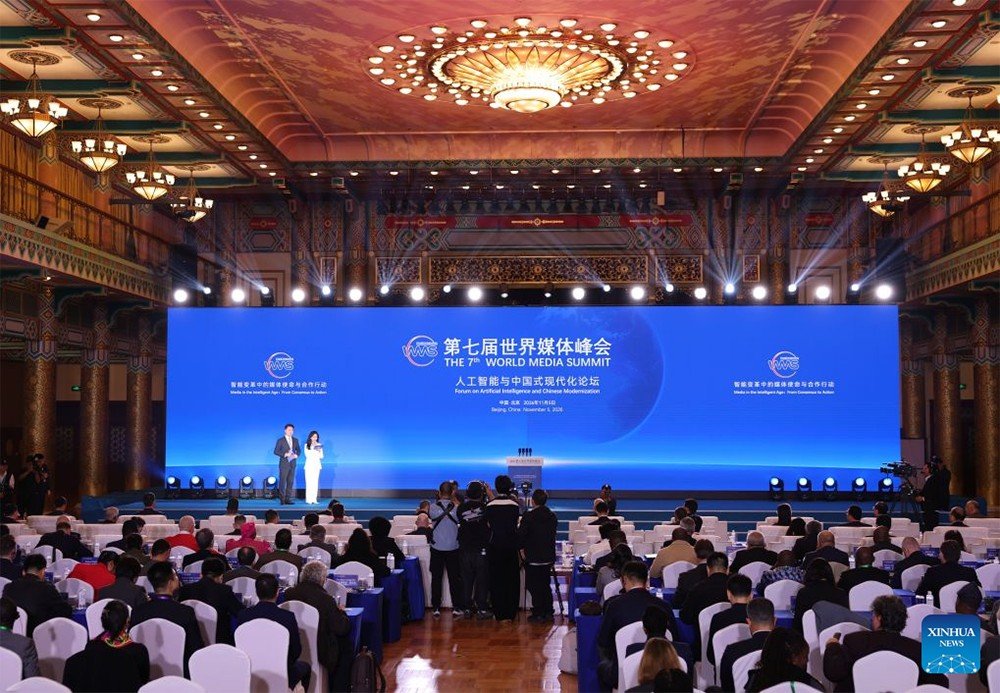
In an era where artificial intelligence is reshaping industries, media leaders from around the world gathered in Beijing for the 7th World Media Summit to discuss how to harness intelligent technologies while preserving journalistic integrity. The sub-forum, titled 'Artificial Intelligence (AI) and Chinese Modernization,' brought together representatives from media, think tanks, government departments, and international institutions to explore the challenges and opportunities presented by AI in the newsroom.
Embracing AI for Accurate and Trustworthy Reporting
Participants called on media organizations to leverage AI to deliver reporting that is accurate, fair, authoritative, and trustworthy. The event, held from November 5 to 9, focused on the theme of 'AI Plus' and aimed to build a new consensus on global communication governance. Huo Xiaoguang, vice president of Xinhua News Agency, noted that mainstream media worldwide are undergoing major transformations in the face of AI. He emphasized that China's mainstream media are implementing systematic reforms to secure new competitive advantages in the evolving communication ecosystem. Xinhua is committed to working with all parties to safeguard media credibility, promote inclusive sharing of technological achievements, and enhance mutual understanding among civilizations.
AI's Impact Cannot Be Ignored
Bayo Onanuga, Nigerian president's special adviser on information and strategy and spokesman for the president, stressed that the profound impact of AI, much of which is positive, can no longer be ignored. 'Unless we are willing to return to the Stone Age, we must face this trend and take it seriously,' he said. His remarks underscored the global recognition that AI is not a fleeting trend but a fundamental shift in how information is produced and consumed.
The sub-forum also showcased innovative applications of AI in media. The world's first bionic humanoid robot news anchor made its official debut, captivating attendees and hinting at a future where AI and human journalists might collaborate more closely. Additionally, a signing ceremony was held for the Xinhua News Agency AI Industry Alliance (Beijing Base), and a research project on mobile news image technology and authenticity standards was launched. These initiatives reflect a proactive approach to ensuring that AI enhances rather than undermines the credibility of news.
Global Participation and Future Directions
The 7th World Media Summit, co-hosted by Xinhua News Agency and the People's Government of Beijing Municipality, attracted nearly 500 delegates from almost 330 mainstream media outlets, think tanks, government departments, and international organizations across 112 countries and regions. The diverse attendance highlighted the global nature of the challenges and opportunities posed by AI in media. As the summit concluded, participants left with a shared commitment to build consensus, foster dialogue among civilizations through openness and inclusiveness, and ensure that intelligent technologies help make media reporting more accurate, fair, authoritative, and trustworthy. In a world where misinformation can spread rapidly, the role of AI in upholding journalistic standards has never been more critical.