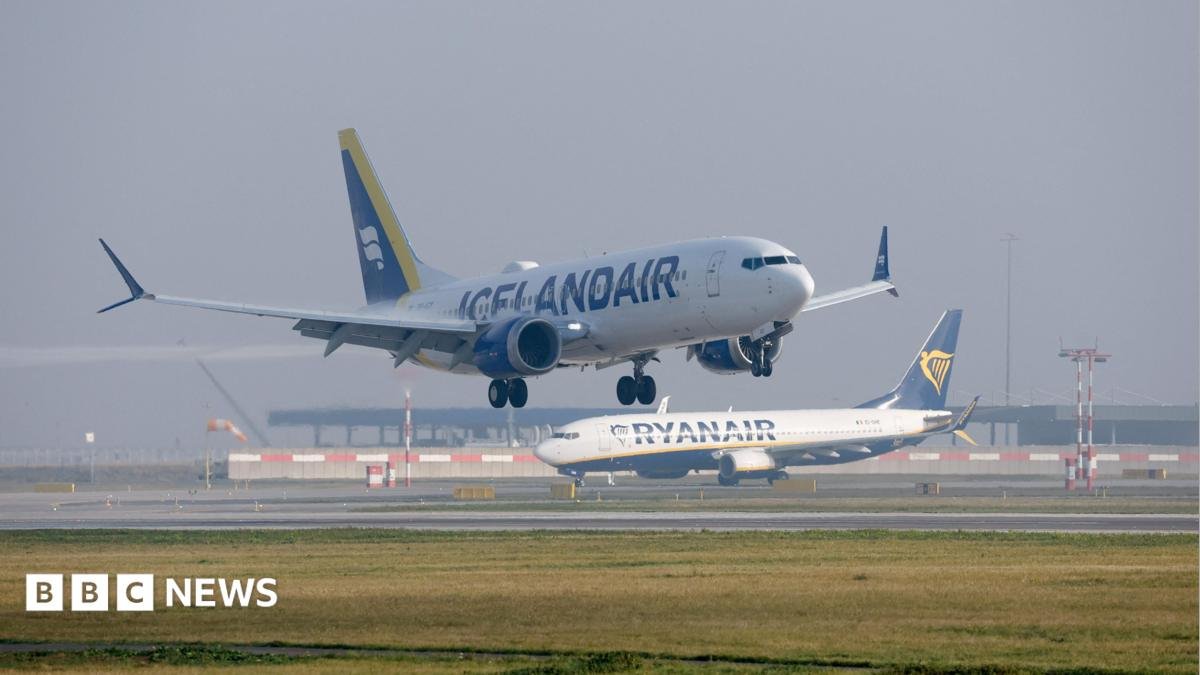
Over the past four days, a wave of more than 30 bomb threats has disrupted flights across Europe, affecting a dozen airlines and forcing emergency responses. Although all threats have proven to be hoaxes, they have triggered significant security measures, including military escorts and mid-air inspections, highlighting the vulnerability of the aviation sector to such disruptions.
Airlines on High Alert
The threats, received via phone calls and emails, have led to rerouted flights, emergency landings, and extensive searches. An Aer Lingus flight, for instance, was forced to land at a military base 1,000 kilometers from its destination after running low on fuel. These incidents, while hoaxes, have caused considerable operational challenges for airlines.
According to Marco Chan, a former commercial pilot and aviation expert at Kingston University, airlines follow strict protocols for every threat, regardless of credibility. "They have a triage system, but follow the same protocols for each until they are absolutely sure there is no threat," he explains. "That could involve a mid-air inspection, but definitely a search once the plane has landed. Passengers might not even know there is an issue until they are told to disembark. It can cause disruption, but that is a small price to pay when safety is at stake."
Financial and Operational Impact
While the disruption has been limited to a few thousand passengers, the financial cost to airlines is notable. However, Paul Mason, an aviation security expert, points out that diversions are a routine part of aviation. "The number can sometimes run to over a hundred planes daily, for things like technical issues, medical emergencies, even the weather," he says. "They far outweigh the few which have been diverted due to hoaxes. So airlines are well equipped at dealing with the unexpected."
Passengers are unlikely to receive refunds, as the incidents are not the airlines' fault. The more pressing concern is the random nature of the threats and the absence of credible intelligence about the perpetrators.
Who Is Behind the Threats?
Aside from emails suggesting an extremist misogynist group claimed responsibility for some incidents (a claim denied by its founder), there are few leads. Paul Mason, who has 20 years of military experience, believes the incidents bear the hallmarks of hybrid warfare. "It does feel co-ordinated," he says. "Russia has said it's got nothing to do with it, but it could be proxies. It's a very easy way to create disruption and chaos, with plausible deniability. That's the problem. Someone can have an opinion on who is behind it, but if the perpetrators are using sophisticated technology, it will be very hard to trace them."
He also warns that individuals who copy the threats could face severe consequences. Under the Aviation Security Act 1982, intentionally communicating false information that endangers an aircraft is a serious criminal offense, with a maximum sentence of life imprisonment. "Someone might think it's a laugh and very easy to do, but unless they are very sophisticated, they are highly likely to be traced. And find themselves facing prison," Mason adds.
Preventive Measures and Deterrence
Airports and airlines have limited ability to prevent threats, given the vast range of potential sources. However, the harsh penalties are intended to deter potential offenders. As the industry grapples with this spate of hoaxes, the focus remains on maintaining safety and minimizing disruption while authorities work to identify those responsible.