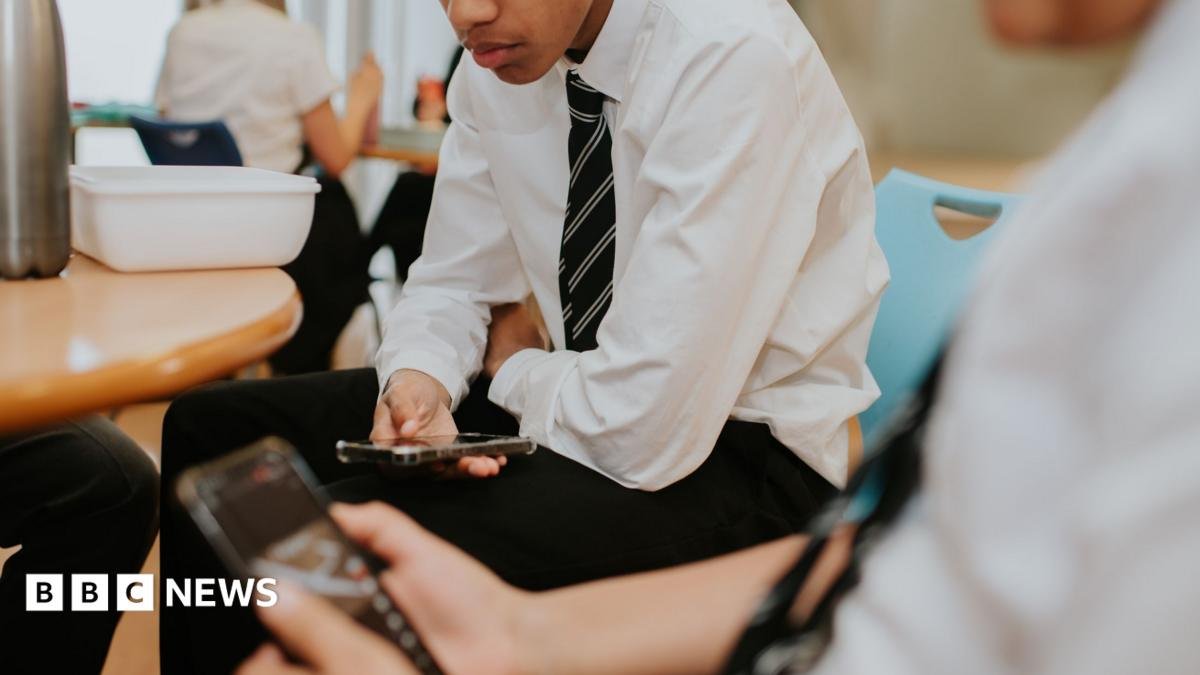
In a significant tightening of school rules, pupils in England will no longer be allowed to keep their mobile phones on them at any point during the school day, under updated government guidance set to take effect from September 2027. The move strengthens existing statutory guidance that already makes schools and trusts legally responsible for ensuring a phone-free environment throughout the day.
From 'No See, No Hear' to Full Ban
The current guidance, which came into force in June, allows some schools to operate a "no see, no hear" policy, where phones can remain in pupils' bags as long as they are not visible or audible. However, ministers now say the revised guidance will go further, requiring phones to be stored away entirely, whether in lockers, sealed pouches, or collected at the start of the day.
Education Secretary Lucy Powell emphasised the government's clear message to families: "School is for learning and friendship, not scrolling." She added that access to phones "risks pulling children away from their learning and from each other."
Schools to Decide Implementation
While the guidance sets a stricter standard, schools will retain flexibility in how they enforce it. Some have already invested in lockable pouches or secure lockers, while others collect phones at the start of the day or prohibit them from school grounds altogether. The new rules are designed to ensure consistency across the country.
Unions Warn of Funding Gaps
Head teachers' unions have welcomed the clarity but caution that implementing the stricter measures will come at a cost. Paul Whiteman, general secretary of the NAHT school leaders union, noted that phones can be an "unhelpful distraction" and raise safety issues, but said the more robust measures would require additional funding.
Pepe Di'Iasio, general secretary of the Association of School and College Leaders, echoed that concern: "School leaders cannot simply make mobile phones disappear. If all schools are expected to have lockable pouches or other secure storage facilities for every pupil, the cost involved will be very significant indeed. This is not feasible unless the government puts in the funding required."
Support from Campaigners and Officials
Children's Commissioner for England, Dame Rachel de Souza, welcomed the strong action to stop phones distracting pupils and disrupting the school day. Charlotte Ashton, co-founder of campaign group Generation Focus, said "no see, no hear" policies were not working, with pupils still "TikToking in the toilets." She added: "Ultimately, we need to get to a point where it's not normal for every single child to have a personal internet-enabled device in their pockets with them 24/7."
Shadow Education Secretary Laura Trott said she was "delighted that Labour have finally listened to us and agreed to properly ban smartphones in schools." She also welcomed a review of safety standards around technology used in schools, which the government announced alongside the new guidance.
Devolved Approaches Across the UK
Education is devolved, so approaches vary. Scotland plans to introduce a law restricting personal phone use in schools and has launched a consultation. Wales recently voted against a national statutory ban, though schools are encouraged to restrict phones. Northern Ireland's Education Minister Paul Givan has launched a consultation on whether to ban phones by law.
The school phone rules are separate from the UK's upcoming ban on social media for under-16s, due in March, which will bar access to platforms like Instagram, Snapchat, and TikTok.