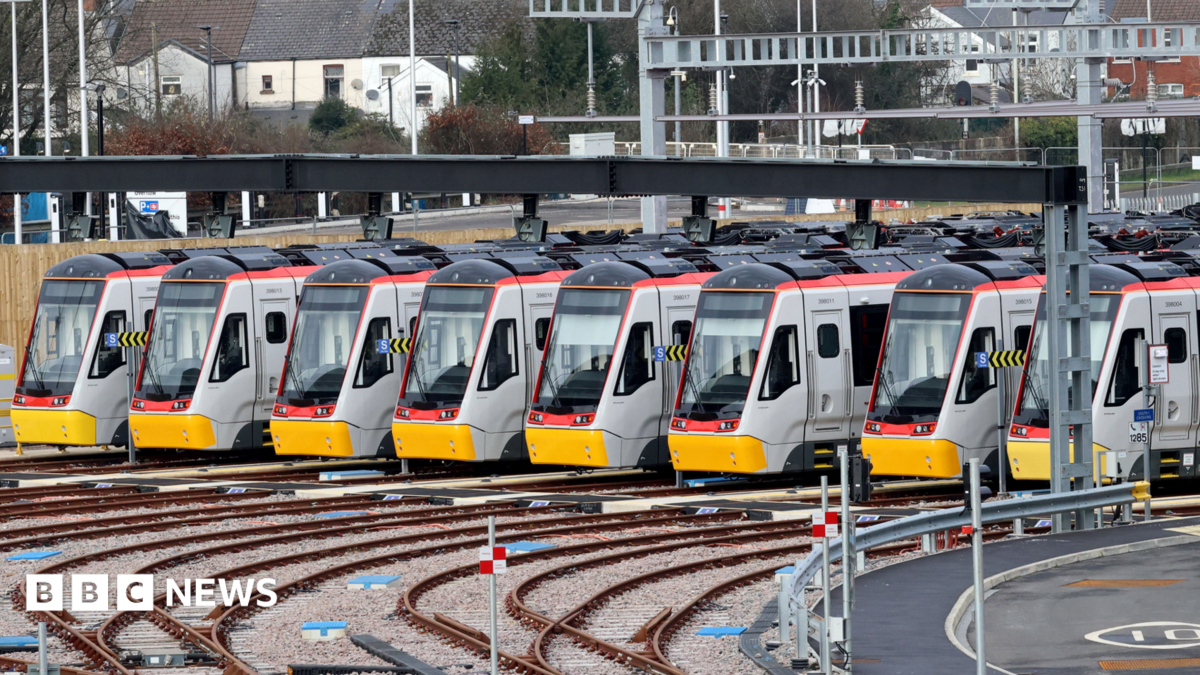
A fleet of publicly funded trains, costing over £200 million, remains largely unused more than three years after the first vehicle was delivered. The tram-trains, central to the South Wales Metro project, were initially promised to be fully operational by 2022, but Transport for Wales (TfW) now says full service may not be achieved until the end of 2027.
Delays and Testing Challenges
Data obtained by the BBC shows that fewer than half of the 36-strong fleet have passed rigorous statutory testing. Only 16 of the three-carriage units have completed the necessary safety checks, with 20 still awaiting scrutiny by the rail regulator. TfW chief executive James Price insists he wants trains that work "100% well, 100% of the time" before full deployment.
The Class 398 Citylink multiple units were ordered from Swiss manufacturer Stadler in 2018, and the first arrived in Wales in March 2023. Some have been stored at TfW's new £100 million depot near Cardiff for up to three and a half years. Six tram-trains, each worth about £8 million, are currently in passenger testing across the valleys network, but have been temporarily removed from service due to software issues and "teething problems."
Impact on Passengers
Commuters have been told that the doubling of services from two to four trains an hour between Cardiff and Aberdare, Merthyr Tydfil and Treherbert will not begin until the end of 2027, five years later than originally promised. Passengers on those routes have had new Class 756 trains since 2024, but the tram-trains are seen as the final piece of the £2 billion South Wales Metro project.
"It's definitely frustrating," said Price. "Everyone would want something to work first time, wouldn't they? It's frustrating but not unexpected." He explained that the delay in delivering the tram-trains was partly due to the earlier arrival of the Class 756 units, which allowed testing to be pushed back. "The key thing for me was getting new trains into service and maximising value for money," he added.
Technical Hurdles and Expert Concerns
The tram-trains are designed to run on both urban streets and rail, and are controlled by a single software package that automates many functions. Price admitted that software issues have been the biggest challenge. "Trains are not a mass-produced vehicle and you only experience problems when you bring them into service," he said. "The good thing when automation is fully working, any improvements we make with the trains can be delivered through software rather than hard engineering."
However, rail expert Gareth Dennis believes the tram-trains may be too complicated. "It's a pretty ambitious project," he said. "The challenge of having such complicated trains trying to do everything to reduce the cost of the infrastructure requires a lot of stuff to be working on the train. All of that has to be tested to make sure it always works." Dennis also expressed concerns that the tram-trains are being delivered as part of cutting corners, such as not fully electrifying the overhead wires.
Political and Public Reaction
Opposition politicians have criticised the delays. Jason O'Connell, Reform's shadow transport minister, said: "Taxpayers deserve to know what has gone wrong, how delays have turned into years and the costs are spiralling out of control." The Welsh government, however, maintains that TfW has already delivered "transformative improvements on the valleys network" and remains on target to complete the full rollout by the end of next year.
TfW says the South Wales Metro will cut journey times from the top of the valleys to Cardiff to 50 minutes and will feature level boarding, tap-in tap-out ticketing and multi-coloured lines. The operator claims the project has saved about £400 million by using on-board batteries for non-electrified sections instead of full overhead electrification. Once the tram-trains are fully operational, the Class 756 trains will move to the Bridgend-Rhymney line.
As the fleet sits idle, questions remain about whether the ambitious project can overcome its technical and logistical hurdles to deliver the promised turn-up-and-go service.