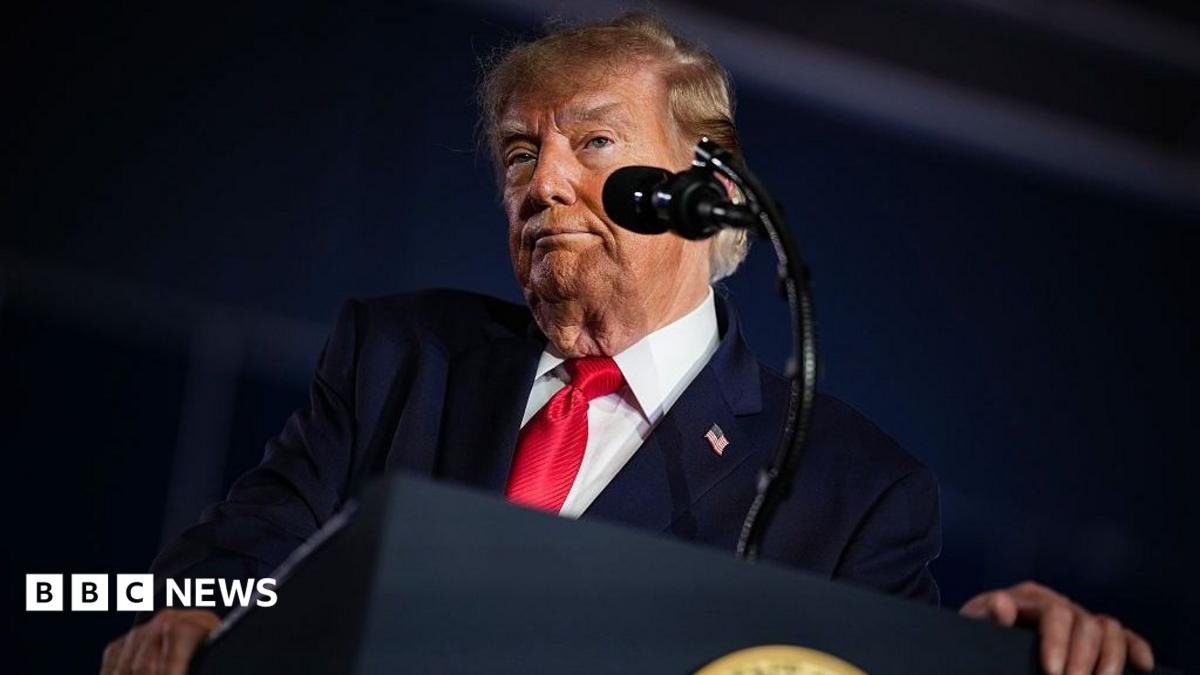
Donald Trump has always traded in superlatives, so there is a certain political irony in the sheer scale of the defeat delivered to him by a decisive majority of American voters. Yet, do not expect him to fade quietly into the political twilight of his career. Losing both chambers of Congress curtails his ability to dictate, manoeuvre, and disrupt domestic affairs. However, as president of the United States and commander-in-chief of its armed forces, he retains broad powers to wield America's military might.
A Predictable Unpredictability
Predicting Donald Trump's actions and oscillations is never easy. As president, he has turned policy U-turns into weapons. Some things, though, are constants. One is his contempt for those he regards as losers, and his determination never to be seen as one. The president might be tempted to blot out the electoral rout of the midterms by taking actions abroad. He might try to make moves that he can boast about as the decisive and victorious moves of a strong president, undiminished by an election that he insists, despite all evidence, was only lost because he was not on the ballot paper.
Eyes on Iran
In the weeks leading up to the midterms, the deployment of US forces and Trump's own often belligerent statements ramped up talk that the US was getting ready to go back to war with Iran. On the eve of the elections, the US carried out a limited bombing raid on an Iranian island in the Gulf. Before he was hospitalised with a stroke, US Senator Chris Murphy, a Democrat, attended a classified briefing about potential military options for renewed war with Iran. Without going into detail, he condemned the plans as "insane", warning that they would trigger a "devastating escalation". There has been speculation that the Americans have plans to bomb civilian infrastructure. Not only would that likely constitute a war crime, it might also be answered by devastating Iranian strikes on equivalent targets on US allies in the Gulf. Its list of potential targets could start with the United Arab Emirates, which is as close to Israel as it is to the US.
The regime in Tehran watches political developments in the US closely. It has not concealed its satisfaction that the consequences of its blockade of the Strait of Hormuz have become a domestic political issue in the US. Tehran is aware of the damage caused to Trump and the Republicans by the sustained rise in the prices of everything from petrol and diesel to agricultural fertilisers, caused by the war and its attacks on shipping in the Strait of Hormuz. The Speaker of Iran's parliament, Mohammad Bagher Ghalibaf, posted a warning on social media. He said: "Conscience or the cost of living, Americans said NO TO WAR, and we endorse this message. If the US govt betrays their public will to serve international paymasters and blackmailers, it will learn our NO comes with a Nightmare."
Netanyahu's Push
Benjamin Netanyahu, now acting prime minister of Israel after its election last week and manoeuvring hard to form a new government, has repeated that he wants to bring down the Islamic regime in Tehran. Reports in Israel and the US say that he is pushing Trump to go back to war. Netanyahu does not have the seats to form a new government with his outgoing coalition. But if a major war restarted and was sustained, and if Israelis came under direct fire, he could have new options of forming a unity government that he would use his considerable political skills to dominate.
Ukraine and Russia
The other major conflict to which Trump might turn his attention is between Ukraine and Russia, which has now lasted longer than the First World War. Before the elections, he dropped sanctions against Moscow to buy Russian diesel. He might decide to prolong and deepen sanctions relief in the hope of somehow easing the economic pressure on American consumers. He has not been noticeably concerned about the deadly pressures on Ukrainian civilians who have been targeted by Russian ballistic missiles, now getting through in greater numbers because Ukraine's appeals for more US-made interceptors, funded by European allies, have not been answered in the way Ukraine needs and wants. The Kremlin spokesman said Russia hoped that the election results would not impact what it called Trump's "peace-making efforts".
Donald Trump has consistently tried to force Ukraine's President Volodymyr Zelensky into making territorial concessions to Russia to produce an agreement that would amount to capitulation for Kyiv. Trump would add it to his improbable list of wars solved and stopped. Smarting from electoral defeat, Trump might attempt to redouble pressure on Zelensky to accept the concessions that he has repeatedly rejected.
It is safe to say Donald Trump will continue building monuments to himself in Washington DC. Beyond that, it is worth repeating that predictions of his next moves at home and abroad risk being wrong. But it is certain that he is not going to sit in a presidential rocking-chair and wait out his time in the White House. Throughout his time as president, Donald Trump has relished his power and been determined to use it. That is not going to change, and there is every chance that he wants to show that if he can no longer shake America, he can shake the world.