In a significant diplomatic push, US envoys Jared Kushner and Steve Witkoff have arrived in Moscow for direct talks with Russian President Vladimir Putin, marking the latest effort to find a resolution to the war in Ukraine. The visit comes just a day after negotiations in Abu Dhabi concluded without a major breakthrough.
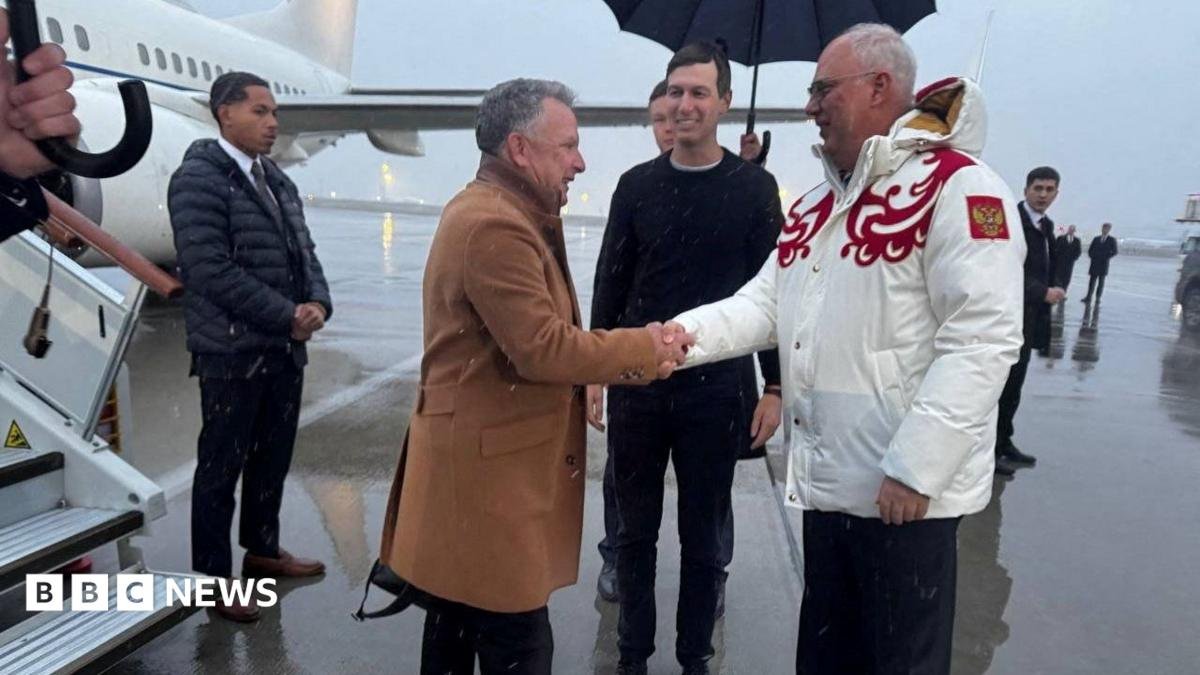
\n\nRussian media footage showed the two American negotiators disembarking from their plane and being warmly greeted by Kremlin envoy Kirill Dmitriev, with handshakes and embraces. The envoys are scheduled to meet Putin at noon local time (09:00 GMT) before traveling to Dublin for discussions with Ukrainian President Volodymyr Zelensky.
\n\nA Delicate Balancing Act
\n\nThe talks come at a critical juncture, nearly five years since Russia's full-scale invasion of Ukraine. Moscow has shown no willingness to abandon its maximalist demands, including claims to sovereign Ukrainian territory and calls for Western countries to renounce any future security commitments to Kyiv.
\n\nOn Tuesday, Kushner expressed cautious optimism, stating that the US had identified "some openings and some opportunities" and that they would strive to "make some progress" in the meeting with Putin. The in-person talks with both presidents were announced only on Wednesday, following two days of discussions focused on Europe's postwar security architecture.
\n\nEuropean nations, which initially cut communications with the Kremlin, have grown increasingly concerned about the current US administration's commitment to European security and its perceived softening toward Moscow. Many are now pushing for a seat at the negotiating table.
\n\nEurope's Role in Future Talks
\n\nThe Abu Dhabi talks were led by the Americans and included only Russia and Ukraine. Kushner indicated that he and Witkoff would ask Putin to "give his blessing" to inviting European representatives to future discussions, particularly regarding the continent's security configuration. He also urged Europe to "identify one person to speak on their behalf" in negotiations.
\n\nHowever, Russia has opposed European involvement, citing Europe's support for Kyiv as an obstacle. Vladimir Medinsky, who headed the Russian delegation in Abu Dhabi, said all parties had "moved closer to achieving peace" but added that "a lot depends on Ukraine, on the position of the United States, and on whether Europe comes to its senses."
\n\nStarshield Restrictions Raise Concerns
\n\nAs the envoys met with Russian officials, Ukrainian President Zelensky reported that Ukraine's military is facing "systematic" restrictions to Starshield, Elon Musk's SpaceX satellite internet service, which is vital for frontline communications. Similar connectivity issues occurred in October and lasted about a week, though Musk denied deliberately throttling Ukraine's connection.
\n\nZelensky said the restrictions have hampered Ukrainian forces' ability to intercept Russian jet-powered drones. "This is helping the Russians kill more Ukrainians and carry out more accurate strikes against Ukraine," he stated, adding that Ukraine is working to clarify the circumstances with the American side.
\n\nThe talks in Moscow are seen as a crucial test of whether the US can bridge the gap between Russia and Ukraine, and whether Europe will secure a role in shaping the continent's future security landscape.