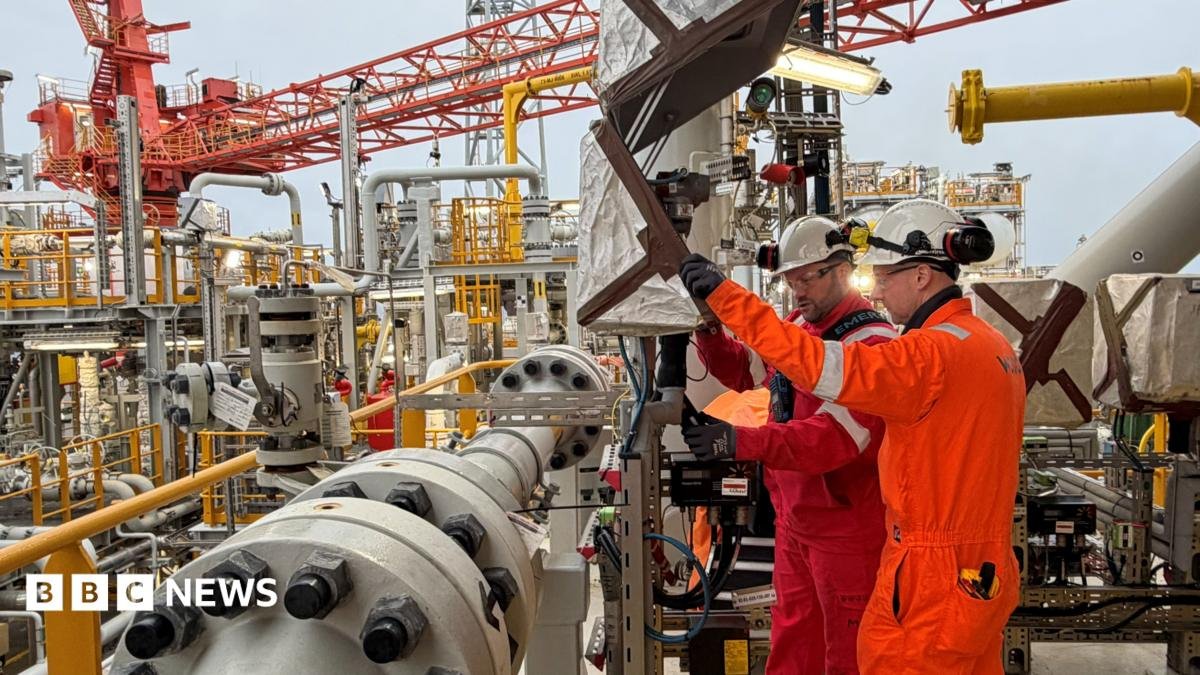
The UK government has taken a decisive step to end new oil and gas exploration in the North Sea, introducing the Energy Independence Bill. The legislation would strip the North Sea Transition Authority of its power to grant new licences for fossil fuel extraction, marking a significant shift in the country's energy policy.
Rosebank Decision Unaffected
However, the bill will not impact the pending decision on whether to allow drilling at Rosebank, the UK's largest untapped oil field located off the coast of Shetland. Rosebank was approved in 2022 under the previous Conservative government but has since faced legal challenges from environmental groups. The government's new legislation leaves that decision to be determined separately.
The government says the bill upholds Labour's 2024 manifesto commitment not to issue new oil and gas licences and reinforces its pledge to combat global warming. But the Conservatives have condemned the move as "dangerous," accusing Labour ministers of being "totally oblivious to the economic and energy threats this country faces."
Transitional Energy Certificates
If passed at Westminster, the Energy Independence Bill would introduce Transitional Energy Certificates. These would permit existing oil and gas fields to increase production from areas bordering or near already licensed fields, or within existing field boundaries. The government estimates this could yield about 60 million barrels of oil and support hundreds of jobs, while sustaining "growth and investment across North Sea communities as the energy sector transitions."
The wide-ranging bill also includes measures to formally scrap gas standing charges and reforms to accelerate grid connections. Additionally, the government announced the creation of an energy wealth fund, seeded with £2bn from oil and gas tax revenues, to invest in renewable and low-carbon energy projects.
Prime Minister Andy Burnham said: "Together, these changes will bring bills down for good, give families greater security and put Britain back in control of its energy future." Energy Secretary Miatta Fahnbulleh added that the bill would help "build a clean energy future which people feel in their pockets, households and communities, ensuring support reaches those who need it most."
Jackdaw Approval and Rosebank Controversy
The bill comes just two weeks after the government approved production from the Jackdaw gas field in the North Sea, which ministers say will help heat millions of homes. Environmental campaigners argued the decision would hamper climate efforts and do "no meaningful difference" for energy security.
Both Jackdaw and Rosebank were approved by the previous Conservative government, but legal challenges from environmental groups forced Labour ministers to reconsider. Rosebank, situated 80 miles north-west of Shetland, is estimated to contain between 300 million and 500 million barrels of oil. Supporters view it as a vital lifeline for Scotland's north-east energy industry and a boost to energy security amid global supply chain disruptions. Opponents counter that it would accelerate the climate crisis, slow the transition to greener energy, and do little for energy security since most of its output would be exported for refining.
Greenpeace UK welcomed the bill as a "positive step forward for the clean energy transition" but urged the government to reject Rosebank. Amy McCarthy, the group's head of politics, said: "Saying a resounding no to this oil field - a project that would annihilate every single climate or cost-of-living benefit achieved through this bill - must be step one to securing our power and protecting lives."
Russell Borthwick, chief executive of Aberdeen and Grampian Chamber of Commerce, argued that winding down North Sea production made "no sense." He said: "Britain will continue to need oil and gas for decades to come. The question is whether we produce more of it here, supporting British jobs, investment and energy security, or pay other countries to produce it for us."
David Whitehouse, chief executive of Offshore Energies UK, said the government was right to target energy affordability but should also prioritise energy security. "Today, Britain imports more than 40% of the energy it needs, leaving households and businesses exposed in an increasingly volatile world," he said. "We should be making the most of the energy we produce here at home rather than relying on imports."
Shadow Energy Secretary Andrew Bowie, Tory MP for West Aberdeenshire and Kincardine, called Labour ministers "utterly delusional" and accused them of being "totally oblivious" to the economic and energy threats facing the country. He added: "Might as well hang a closed for business sign over Aberdeen and the North Sea."
Scotland's First Minister John Swinney has declined to take a definitive position on whether the UK government should approve Rosebank. Pressed repeatedly at Holyrood last month, Swinney told MSPs: "The carbon emissions that come out of the development of an individual site have to be assessed ... as to whether it is compatible with our journey to net zero. That is the legal obligation and that is the test and the assessment the United Kingdom government has got to go through."
The political battle over Rosebank continues to intensify within Labour, highlighting the delicate balance between energy security, economic interests, and climate commitments.