In the quiet village of Bugiri District, eastern Uganda, Siama Nasirori and her husband, John Madise, have endured a parent's worst nightmare. In 2016, they welcomed a baby boy who was diagnosed with a congenital heart defect and Down syndrome. Four years later, the child died as the family was preparing for him to undergo surgery. The grief was immense, but life moved forward. Siama later gave birth to a healthy baby girl. Then, in 2021, she became pregnant again and delivered a boy, Josiah.
A Mother's Ordeal
When Josiah was 11 months old, his health began to deteriorate. He struggled to breathe and feed, leaving his parents increasingly worried. "At 11 months, he could hardly breathe. We took him to Whispers in Jinja, where we were advised to see a specialist. When the hospital tried to contact Dr Tenywa, he said he was away but advised that, in case of an emergency, we should take the baby to the Uganda Heart Institute at Mulago," Siama recalls.
As Josiah's condition worsened, the family rushed him to the Uganda Heart Institute (UHI) in Kampala. "Whenever he became upset or cried, his lips would turn purple, and he would struggle to breathe. We arrived at the hospital on a Saturday, and the following day, doctors examined him and diagnosed him with a hole in the heart," she says.
For Siama, watching her son struggle to breathe was agonising. He would cry and appear to be on the verge of losing consciousness. As a mother, she said, it was heartbreaking to watch him suffer, never knowing whether he would recover or return to his normal state.
At 11 months, doctors advised that Josiah needed surgery, although the family was initially told to wait until he turned two. When they returned to Jinja, Siama updated Dr Tenywa about the baby's condition. But the doctor emphasised that Josiah could not wait any longer and needed an operation. "He told me that I could not manage the baby's condition at home because he needed an operation. He immediately contacted Dr Oketcho, who said the doctors at Mulago could operate on him," she recalls.
Around April, the family received further communication about the possibility of surgery. In June, they learnt of a major surgical camp for children with heart conditions and were advised to bring Josiah. But despite being taken to the operating theatre, Josiah did not undergo surgery. "They even took him to the theatre but later brought him back. They told me, 'Mama, we are not going to operate on this boy.' I felt disappointed because all I wanted was for my son to get help," Siama says.
The family was advised to return home and wait for another appointment. Between June and July, however, Josiah's condition continued to deteriorate. Eventually, the family received the news they had been hoping for. "Today, we thank God because Josiah finally underwent surgery in July 2024. Doctors first inserted a temporary pacemaker, and we waited until September 10, when a permanent pacemaker was implanted," she says. Today, Josiah attends baby class, and his health has improved considerably. "He can now walk and talk," Siama says.
The Burden of Heart Disease Among Children
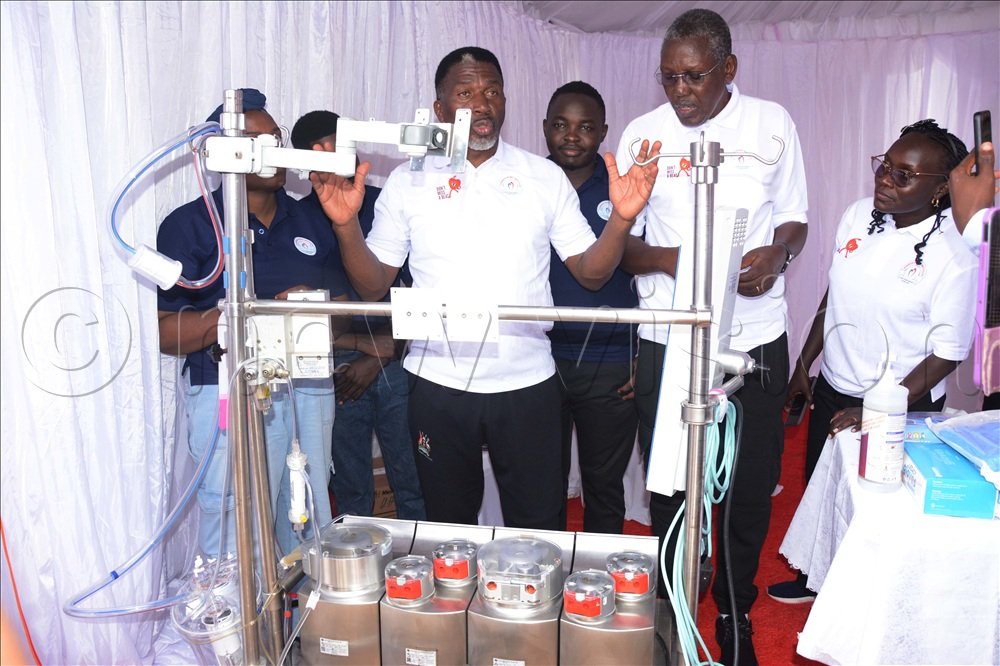
Josiah's experience reflects a wider challenge facing Uganda's health system: the growing number of children who need specialised cardiac care. The Uganda Heart Institute is expanding its capacity to perform heart surgeries and taking services closer to patients through outreach programmes at regional hospitals. Its executive director, Dr John Omagino, said the institute currently performs at least eight open-heart surgeries and nearly 10 closed-heart surgeries every week. "We are doing at least eight open-heart surgeries and almost 10 closed-heart surgeries every week. We are also extending these services to regional hospitals," Omagino said.
He said Uganda needed to prepare for approximately 8,000 babies requiring heart surgery every year. In the past, limited surgical capacity had left the institute struggling with long waiting lists. At one point, as many as 500 children were waiting for surgery. The situation has since improved, with the institute conducting operations routinely and extending services to regional facilities. "We have been to Mbarara, Jinja and Lira to perform these operations and prevent patients from having to travel to the centre," he said.
Omagino identified congenital heart disease, conditions present at birth, as the biggest burden among young patients. Uganda records approximately 1.6 million births annually, and about 1 per cent of babies are born with congenital heart defects. This translates into roughly 16,000 children each year. Beyond congenital conditions, school-going children also face the burden of rheumatic heart disease, which can develop following untreated or inadequately treated throat infections caused by streptococcal bacteria. Overcrowding can increase the risk of infections spreading among children.
New Hospital to Expand Surgical Capacity
Omagino said the new Uganda Heart Institute hospital, which is under construction, is expected to significantly improve the country's capacity to manage cardiovascular conditions and position Uganda as a destination for specialised medical treatment. The new facility will not only increase the number of operating theatres but also attract specialised personnel and reduce the backlog of patients awaiting surgery.
As Uganda strives to meet the growing demand for cardiac care, stories like Josiah's offer hope. But they also underscore the urgent need for investment in health infrastructure and trained personnel. For families like Siama's, the journey is fraught with anxiety and uncertainty. Yet, the resilience of parents and the dedication of medical staff provide a beacon of hope. With continued support and expansion of services, more children like Josiah can look forward to a healthier future.