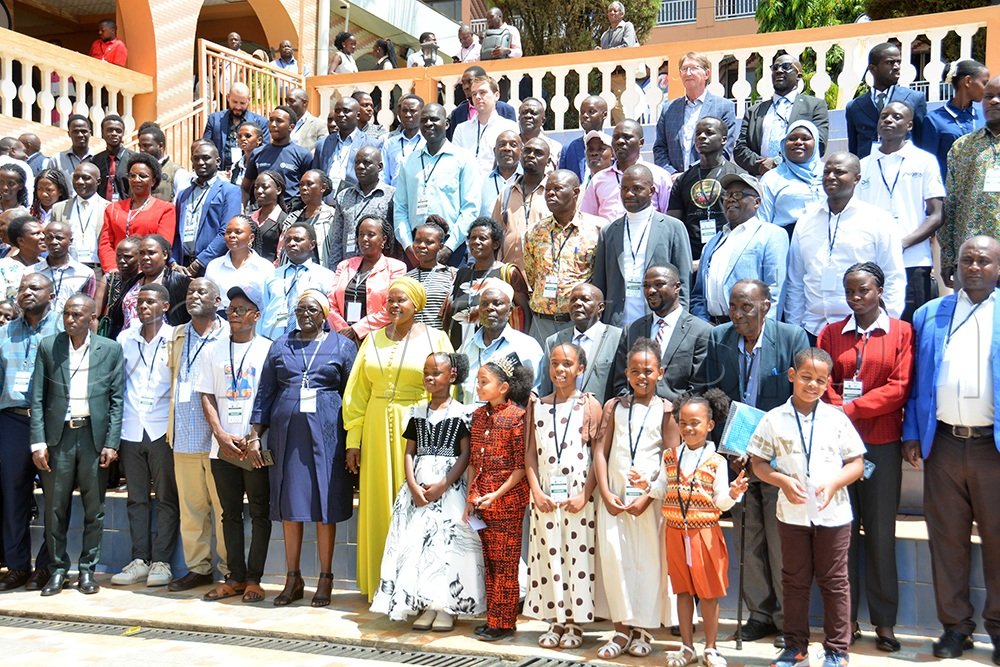
In a significant move to transform Uganda's agricultural sector, the government has reaffirmed its commitment to promoting organic farming as a means to create wealth and employment opportunities for its citizens. The Third Deputy Prime Minister, Rukia Nakadama, made this announcement during the opening of National Organic Week at Hotel Africana in Kampala on Wednesday, November 4, 2026.
Addressing delegates from Rwanda, Kenya, Uganda, Tanzania, and Europe, Nakadama emphasized the government's recognition of organic agriculture as a key driver for agricultural transformation, environmental sustainability, and wealth creation. She stated, "I wish to make one thing very clear: The Government, under the able leadership of His Excellency Yoweri Kaguta Museveni, recognises organic agriculture as an important pathway for Uganda's agricultural transformation, environmental sustainability and wealth creation."
Policy Framework and Regulatory Development
Nakadama highlighted that Uganda has had a National Organic Agriculture Policy in place since 2019, which demonstrates the government's acknowledgment of the sector's contribution to national development. She further revealed that the government is currently conducting consultations on the Regulatory Impact Assessment to strengthen the regulatory and institutional framework for organic agriculture. This process is expected to proceed to validation in the last week of November 2026, and she called upon all stakeholders to participate actively.
"We must establish a regulatory environment that stimulates increased production and guarantees safety and integrity of organic products, builds consumer confidence and supports farmers, exporters and investors," Nakadama stated. She underscored that the government's commitment extends beyond policy recognition to practical implementation, investment mobilization, institutional coordination, and market development.
The event also featured remarks from Chariton Namuwoza, Chief Executive Officer of NOGAMU (National Organic Agriculture Movement of Uganda), who addressed the participants. The gathering brought together stakeholders from across the region and Europe to discuss the future of organic farming in Uganda and beyond.
Economic and Environmental Benefits
Organic agriculture offers numerous benefits, including environmental conservation, improved soil health, and reduced dependence on synthetic inputs. For Uganda, a country heavily reliant on agriculture, the shift towards organic practices could open up new markets, particularly in Europe, where demand for organic products is high. This, in turn, could lead to increased export earnings and job creation, especially for smallholder farmers.
The government's focus on organic agriculture aligns with global trends towards sustainable food systems and could position Uganda as a leader in organic farming in Africa. With the validation of the regulatory framework expected soon, stakeholders are optimistic that the sector will attract more investment and support.
As the week-long celebrations continue, participants will engage in discussions, exhibitions, and networking sessions aimed at promoting organic agriculture and its potential to transform livelihoods. The government's pledge to support the sector is seen as a crucial step towards realizing this vision.
For Uganda, the commitment to organic agriculture is not just about farming; it is about building a resilient economy, protecting the environment, and ensuring a better future for generations to come.