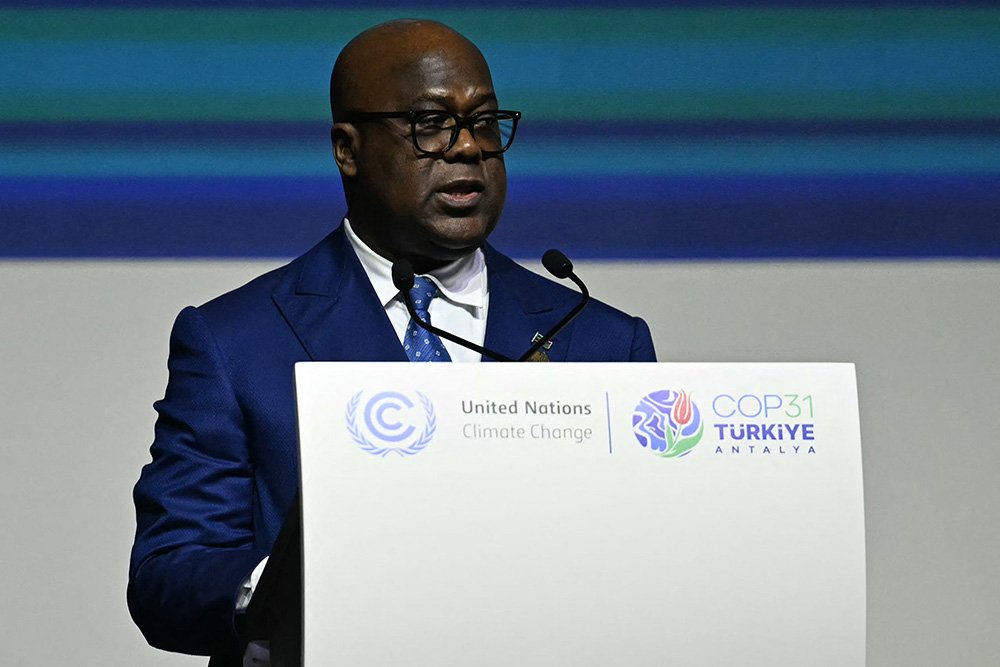
President Felix Tshisekedi of the Democratic Republic of Congo has signed into law a measure that loosens the requirements for holding a national referendum on constitutional amendments, a move that opposition figures say is designed to let him stay in power beyond his current mandate.
The presidential order was broadcast on state television overnight between Tuesday and Wednesday, roughly two years before the next scheduled national elections. Under the existing constitution, Tshisekedi, who took office in 2019, must leave power when his second five-year term ends in late 2028.
Opposition Sees a Bid to Cling to Power
Critics argue the new law removes procedural hurdles that previously made it difficult to call a referendum on changing the constitution. Jean-Baptiste Kasekwa, a member of the newly formed C64 coalition that unites the main opposition parties, said the legislation is intended to permit an unlimited number of presidential terms by unlocking key articles of the founding document.
"Tshisekedi openly declares that he wants to remain in power until someone strong enough can drive him out," Kasekwa told AFP.
The opposition has spent recent months building a united front against any constitutional revision that could allow the president to seek a third term. The C64 coalition has framed the effort as a defense of democratic limits on executive power.
A President Who Left the Door Open
At a rare news conference in early May, Tshisekedi said he had no personal plan to pursue a third term but added a caveat that left the possibility open. "If people want me to have a third term, I will accept," he said at the time.
The political stakes are heightened by the security situation in the country's east, where the reformed M23 armed group, now led by Tshisekedi's predecessor Joseph Kabila, has vowed to "put an end to tyranny," by force if necessary. The group's resurgence has added a volatile dimension to the national debate over power and legitimacy.
What Comes Next
The law does not by itself extend term limits, but it eases the path toward a referendum that could. Opposition leaders say they will resist any attempt to alter the constitutional framework, and the coming months are likely to see intensified political maneuvering ahead of the 2028 vote.
For now, the enactment marks a significant moment in DR Congo's political trajectory, one that will be watched closely by regional partners and international observers concerned about democratic stability in Central Africa.