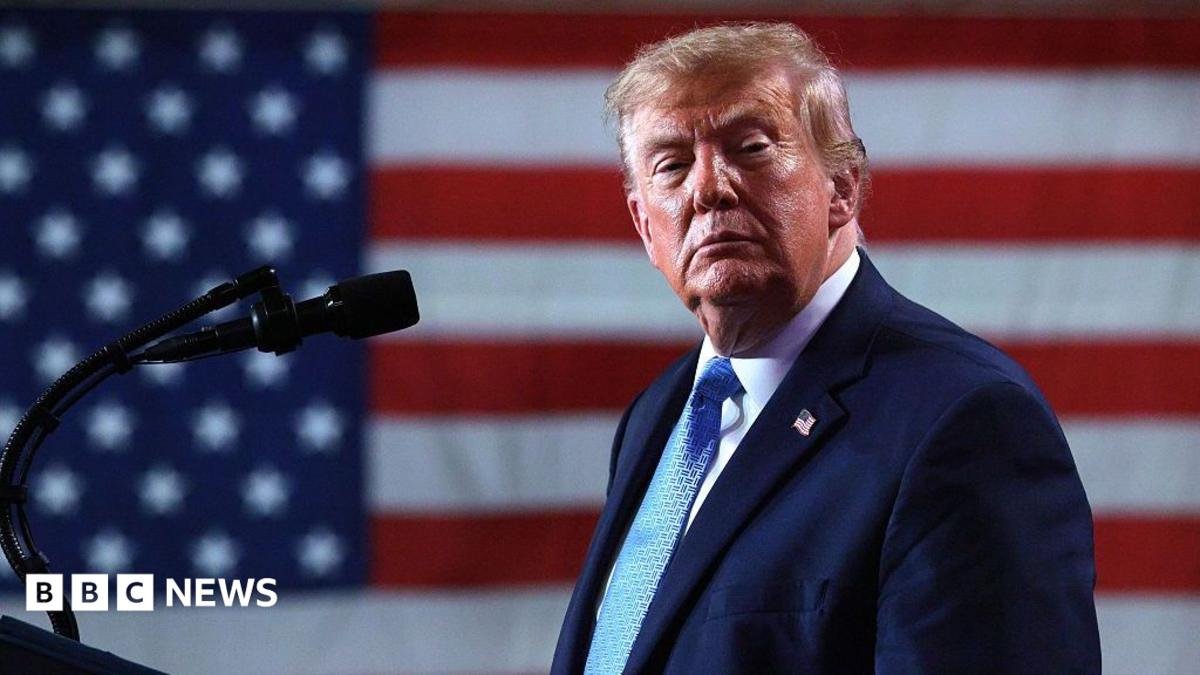
In a striking reversal, US President Donald Trump has cast doubt on the integrity of last week's midterm elections, just days after pledging to accept the outcome. The midterms saw Republicans suffer heavy losses, with Democrats seizing control of both the Senate and the House of Representatives.
On Monday, Trump took to his Truth Social platform to write: "Does anybody really believe that this 'Election' was honest. How could the Polls be so wrong?" The post appeared to contradict his election-night remarks to the New York Times, when he said he was "absolutely willing" to accept the results.
No Evidence of Widespread Fraud
State and local officials across the country have reported that voting was largely problem-free. Some key races, including Senate contests in Alaska and Mississippi, remain uncalled, but election experts say this is normal.
In his social media post, Trump made vague claims about polling, voting "dumps", and "machines" without offering any specific evidence of errors or wrongdoing. Charles Stewart III, a political scientist at MIT, said the reporting of vote counts on election night followed standard patterns. "We saw across the nation the standard patterns we see in terms of when the votes are reported," he said. Stewart noted that some states, like Florida and Georgia, report initial results quickly because they process early and mail ballots ahead of time.
Trump has a history of questioning election integrity when results don't go his way, despite no evidence of widespread fraud. He recently told CBS News, the BBC's US partner, "We would have won easily if I was on the ballot."
Democrats Secure Comfortable Majorities
As it stands, Democrats have won 54 Senate seats and 254 House seats, giving them comfortable majorities even as counting continues in some races. Networks have yet to call the Senate races in Alaska and Mississippi.
Ruth Greenwood, director of the Election Law Clinic at Harvard Law School, explained that delays are routine. "State laws and practicalities are such that some states will just take longer to count," she said. "That doesn't mean anything nefarious is occurring. We just need to trust local election officials to count every vote and tell us the results when they are done."
The outcome has been clear since election night. Trump told the New York Times then that he looked forward to working with Democrats, adding, "We'll probably work something out." He has also offered his own analysis of the Republican defeat, telling Fox News that the Iran war had contributed. "People agree with what I'm doing on Iran but they really probably weren't willing to do the short term consequences of paying more for gasoline - I understand that," he said. Vice-President JD Vance has similarly blamed the Iran war, which began in February and disrupted global oil and gas supplies, for the party's loss.
Preparations for Disputes
In the run-up to the midterms, Trump made claims about rampant voter fraud, despite evidence that it is extremely rare. He and his allies spent months alleging that the 2020 presidential election, which he lost to Joe Biden, was rigged. Courts repeatedly rejected those claims.
The justice department during his administration has made unprecedented attempts to exert more federal control over elections, a power primarily delegated to individual states by the Constitution. Days before the midterms, it filed controversial lawsuits challenging the count and certification of votes in states like California and Alaska, but judges ruled against them in nearly all instances.
Election law experts, state officials, and local elections offices told the BBC they had spent months preparing for a scenario in which the White House or election sceptics questioned the votes' legitimacy. Despite the intense focus on election integrity, top state and local election officials have reported a mostly smooth process for the 2026 midterms. Extreme weather forced some location closures, and a handful of administrative or technical issues slowed the process in some local jurisdictions.
Meanwhile, the Supreme Court rejected Trump's request to stop California from counting disputed votes, and a judge dismissed a Trump administration lawsuit over two Dan Sullivans in Alaska's election. These developments underscore the ongoing legal battles over election procedures.