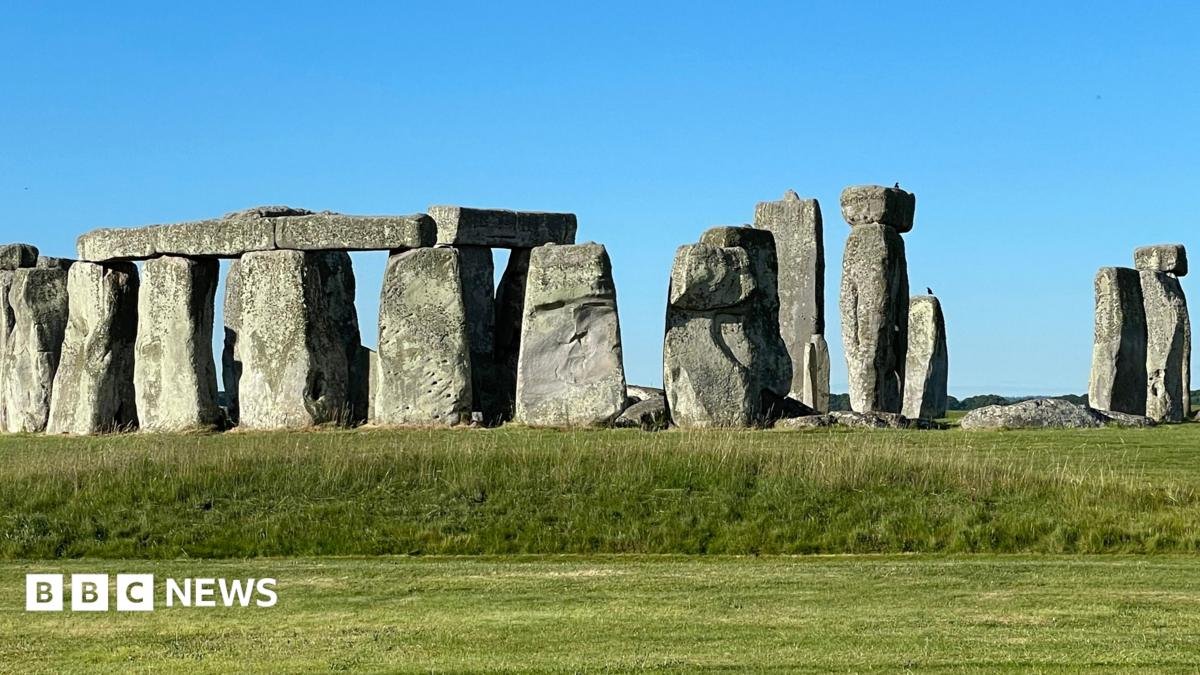
The mystery surrounding the origins of Stonehenge's six-tonne Altar Stone has taken a new twist, as a recent study has ruled out a theory that it came from Scotland. The 4.9-metre sandstone slab, which is now mostly buried, was initially believed to have originated in Wales, but a more recent study suggested it came from north east Scotland. However, scientific tests conducted in the Orcadian Basin area of Scotland have failed to find a location with the same characteristics as the stone.
Far Better Equipped to Focus on Likely Areas
Study lead Professor Duncan Pirrie from the University of South Wales said the latest investigation has left them "far better equipped to focus on the areas most likely to yield an answer." He added that his latest publication on the Altar Stone has "built the clearest picture yet" and was "the most comprehensive geological investigation of the Altar Stone ever undertaken."
Professor Nick Pearce from Aberystwyth University, who worked on the previous research, emphasized that "ruling out potential source areas is just as important as identifying new ones." He explained, "Every location eliminated narrows the search and brings us closer to discovering where the Altar Stone originated. The stone is unique among those at Stonehenge, and tracing its source would provide valuable new insights into its remarkable journey to Salisbury Plain thousands of years ago."
Not All Stones Are Local
The world-famous Wiltshire monument was constructed in multiple phases over thousands of years, between 3000 and 1600 BC. However, not all stones come from the area. The smaller bluestones travelled around 225km from west Wales, with research suggesting a few were taken directly from another circle. The Altar Stone, now mostly buried, has been analysed in the latest study, which combined new observations and looked at fragments of the stone in museum collections, examining structure, minerals and composition. The study has been published in the Journal of the Geological Society.
The search for the Altar Stone's origin continues, with each eliminated location bringing researchers closer to solving the mystery. As Professor Pearce noted, the stone's unique characteristics make it a valuable clue to understanding the monument's history and the journey of its components to Salisbury Plain.