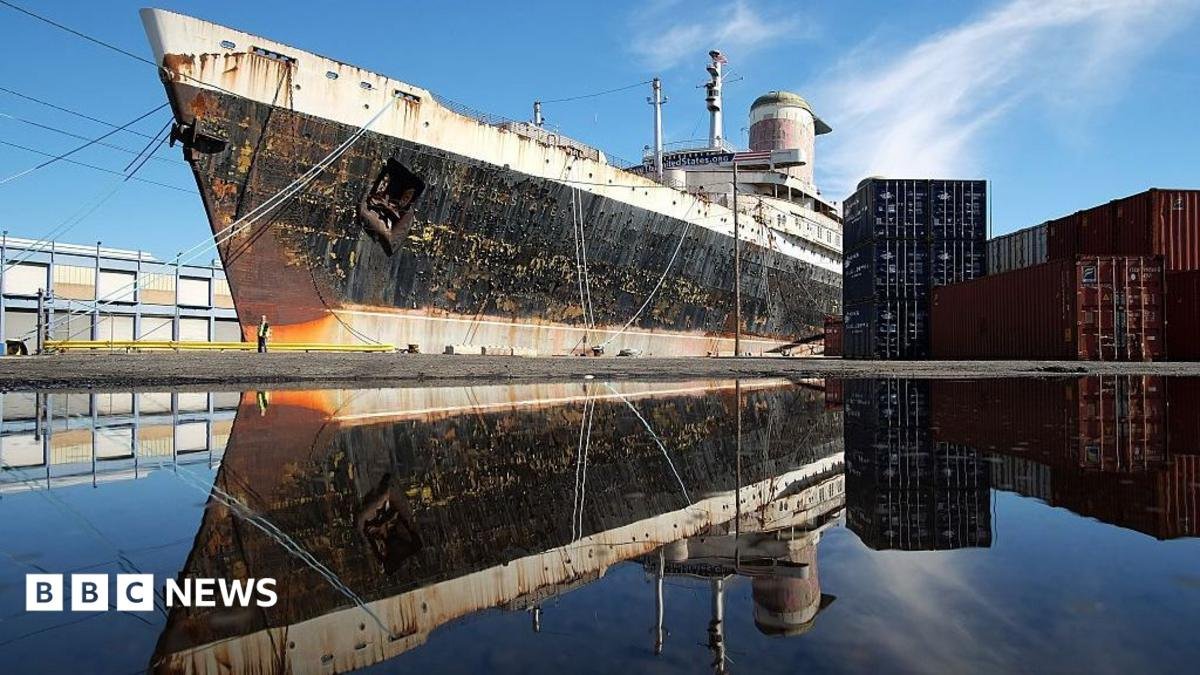
The legendary SS United States, once the fastest ocean liner in the world and longer than the Titanic, is set to embark on a new chapter as the world's largest artificial reef. After decades of uncertainty, the historic vessel will be sunk off the coast of Destin, Florida, on Wednesday in a precision operation that avoids explosives.
A Storied Past
From 1952 to 1969, the SS United States carried royalty, celebrities, and presidents across the Atlantic. Notable passengers included a young Bill Clinton, Harry Truman, Dwight Eisenhower, John F. Kennedy, Marlon Brando, Coco Chanel, Salvador Dali, and Walt Disney. The ship was renowned for its speed and luxury, capturing the imagination of the world.
From Philadelphia to Florida
For nearly 30 years, the ship sat docked in Philadelphia as preservationists fought to save it as a museum. Despite their efforts, the SS United States Conservancy was unable to secure a permanent home for the vessel. In a twist of fate, a Florida county purchased the ship, leading to its relocation to Alabama for cleaning and remediation before its final journey to Destin.
A New Life Beneath the Waves
Once sunk, the SS United States will become a thriving habitat for marine life and a premier diving attraction. A land-based museum is also planned to honor the ship's legacy. Susan Gibbs, president of the conservancy and granddaughter of the ship's designer, expressed mixed emotions: "[The ship] has always been this unabashedly American symbol that brings so many people together."
Environmental and Economic Impact
The artificial reef is expected to boost local tourism and support marine ecosystems. The precision sinking, without explosives, aims to minimize environmental disruption while creating a durable structure for coral and fish. This project joins dozens of other artificial reefs off Florida's coast, contributing to the state's reputation as a diver's paradise.
As the SS United States descends into the depths, it leaves behind a legacy of innovation and elegance, now transformed into a living monument beneath the sea.