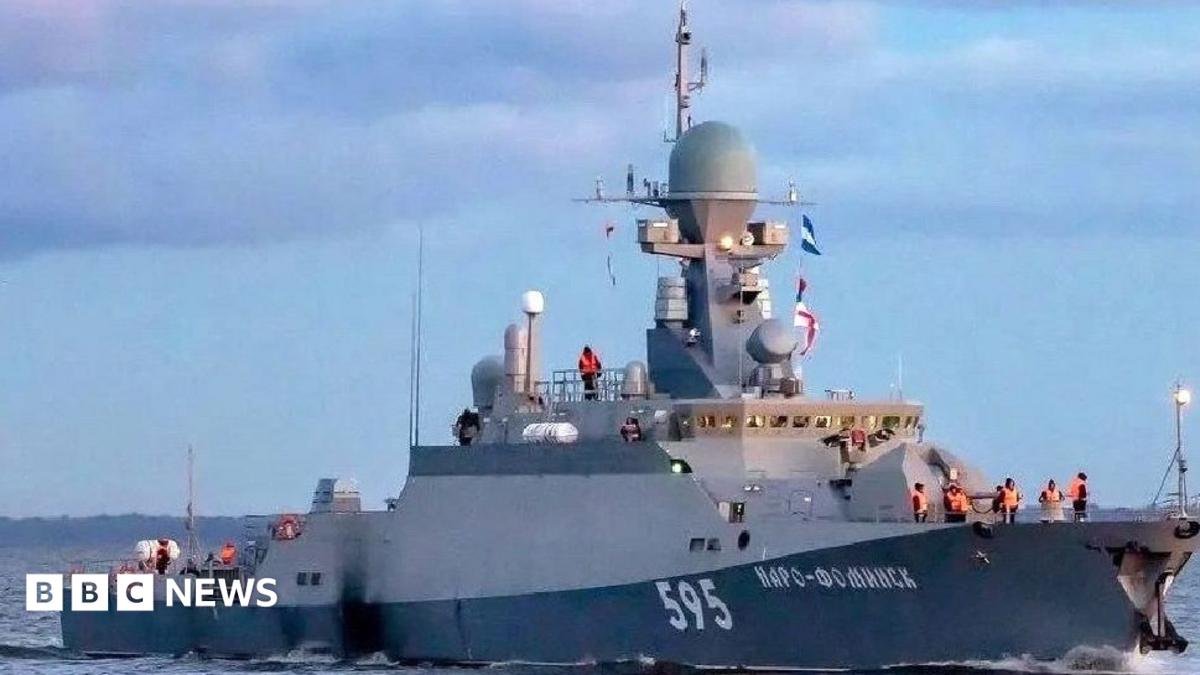
Finnish authorities have verified that a Russian warship was targeted in the Gulf of Finland on Wednesday, though details of the strike remain scarce. The vessel, identified as the Naro-Fominsk, is believed to have returned to its port in St Petersburg following the attack.
Ukraine's SBU security service claimed responsibility for the strike, stating it was part of a larger drone campaign against Russia's Ust-Luga oil export facility on the Baltic coast. This incident is thought to be the first time Ukrainian drones have targeted a Russian ship in a Baltic Sea area open to civilian maritime traffic, prompting speculation about whether Ukraine might broaden its offensive capabilities.
Finland Reaffirms Stability in the Baltic
Finland, a staunch ally of Kyiv, has characterized the attack as a direct consequence of Russia's ongoing full-scale war. Foreign Minister Elina Valtonen emphasized that the situation in the Baltic Sea remains stable and secure, with no threat to marine traffic. The Finnish military has released limited information, but the strike appears to have occurred in a narrow stretch some distance from the Finnish coast. Defence officials have reportedly stressed to Kyiv that the Gulf is a relatively narrow waterway used by oil tankers and civilian vessels, and is also home to critical subsea data cables.
According to the SBU, the Naro-Fominsk is a Buyan-M class small corvette capable of carrying Kalibr and Oniks cruise missiles. There have also been unconfirmed reports of Russian combat helicopters being destroyed in the operation.
Estonian Defence Minister Confirms Attack
Martin Herem, Estonia's defence minister, told public broadcaster ERR that the ship was hit at approximately 05:30 local time (03:30 GMT) on Wednesday, but did not specify the method of attack. "We know that smoke came from the ship afterwards. The ship itself went back towards St Petersburg," he said. The extent of casualties or damage to the Russian navy ship remains unclear, as Moscow rarely discloses such details.
Military analyst Emil Kastehelmi, co-founder of the Black Bird monitoring group, commented, "The Baltic Sea fleet has been untouched up to this point but there seemingly was a window of opportunity for Ukraine and they understandably tried to use it." While the strike on a ship in the Baltic is unprecedented, Kastehelmi told the BBC he does not view it as a serious escalation.
Drone Operations and Regional Tensions
Ukrainian drones are routinely launched into Russia from northern Ukraine. Several storage tanks at the Ust-Luga terminal are believed to have been hit overnight on Wednesday, with fires at the port visible from across the border in Estonia. Herem noted that Ukrainian drones attacked the Ust-Luga region from midnight until about 06:00, mostly flying close to the Estonian border but remaining in Russian airspace. He added that one drone briefly entered Estonian airspace from Latvia before heading towards Russia. NATO aircraft based in the Baltic states were airborne at the time, but Herem said it was not considered safe for them to destroy the drones.
Ukrainian foreign ministry spokesman Heorhiy Tykhyy later dismissed Moscow's allegations that Kyiv had used the airspace of Baltic states to attack Russia as "baseless," though he acknowledged that "incidents might occur when Russia diverts drones from its airspace using electronic warfare."