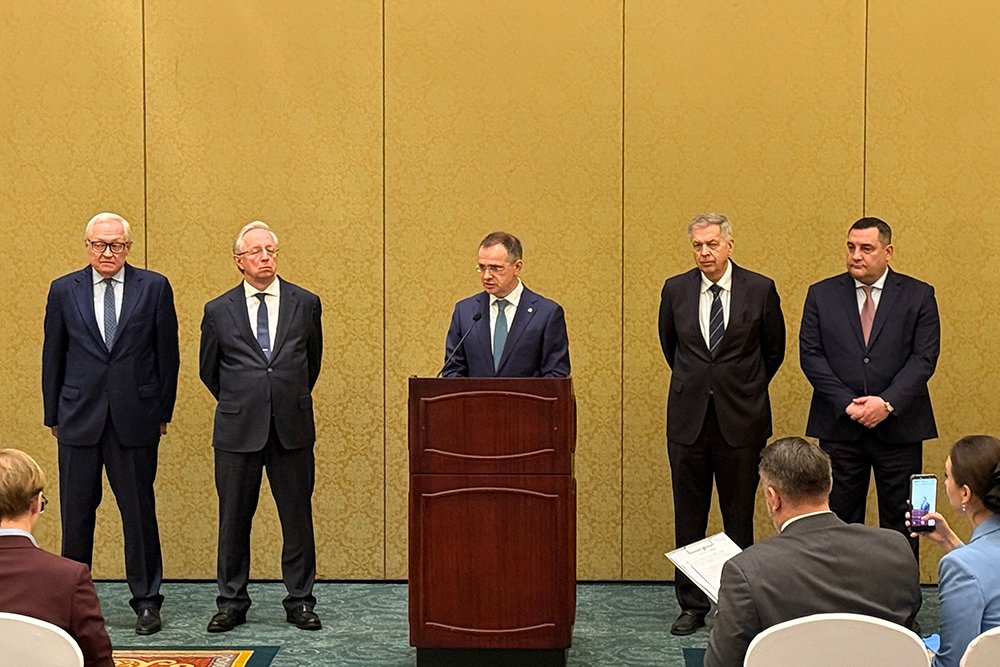
After a long pause, trilateral talks involving Russia, the United States, and Ukraine have reconvened in Abu Dhabi, the capital of the United Arab Emirates. The meeting, which began on Tuesday and continued into Wednesday, marks the first time the three countries have held trilateral discussions since February. The resumption of dialogue has sparked hopes for a diplomatic resolution to the conflict that has now dragged on for more than four years.
\n\nA Cautious Optimism
\nAnalysts suggest that the renewed talks could pave the way for progress on practical issues, particularly humanitarian cooperation. However, they remain cautious about the prospects for a comprehensive peace agreement, citing the absence of major breakthroughs in previous rounds and the deep-seated differences that continue to divide the parties.
\n\nKey Figures Return to the Table
\nThe delegations include several familiar faces from earlier negotiations. Russian presidential aide Vladimir Medinsky is representing Moscow, while U.S. special envoys Steve Witkoff and Jared Kushner are participating for Washington. Ukraine is represented by Rustem Umerov, head of the Foreign Intelligence Service, and Kyrylo Budanov, head of the Presidential Office.
\n\nThe first day of talks lasted nearly four hours. Ukrainian President Volodymyr Zelensky described the session as "constructive and quite substantive" in a post on social media platform X. He noted that discussions centered on security guarantees for Ukraine, mechanisms to ensure their long-term effectiveness, and steps toward de-escalation. "The main goal is to truly bring peace closer," Zelensky stated.
\n\nU.S. Secretary of State Marco Rubio, speaking at a press conference following the G7 foreign ministers' meeting in Paris, also characterized the first day of talks in Abu Dhabi as "very productive."
\n\nDiffering Expectations
\nDespite the positive assessments, statements from Moscow and Kiev ahead of the talks indicated that the two sides held different expectations for what the latest round of negotiations should achieve. This divergence underscores the challenges that remain in bridging the gap between the warring parties.
\n\nThe conflict, which began over four years ago, has caused immense human suffering and displaced millions. While the resumption of talks is a welcome development, the road to a lasting peace remains fraught with obstacles. The international community will be watching closely as the negotiations continue, hoping that this latest round will yield tangible results and bring an end to the violence.
\n\nAs the talks enter their second day, the world waits to see whether this renewed diplomatic effort can overcome the deep divisions and deliver on the promise of peace.