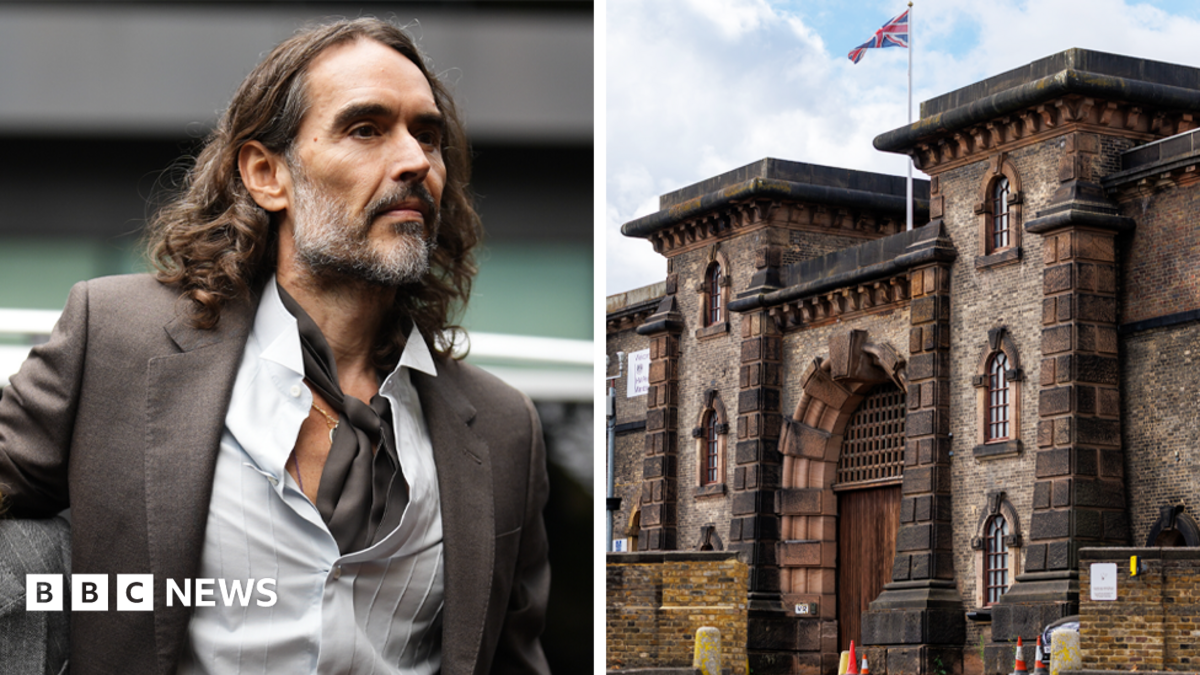
Russell Brand, the disgraced comedian and media personality, has been held at HMP Wandsworth in London for a week following his conviction on one count of rape and three counts of sexual assault. The 51-year-old was sentenced on Monday to 10 years and six months in prison.
A Stark New Reality
Chris Atkins, a former inmate who served eight months at Wandsworth for tax fraud, described the prison as "hell on earth." He warned that the first month behind bars is "hands-down the worst," adding: "The mental shock is absolutely colossal. It was colossal for me and it's going to be 10 times worse for him because of the nature of his offences and the height from which he's fallen." Atkins emphasized the psychological toll of being confined: "He has to come to terms with it and the pure physical shock of suddenly being trapped in a dungeon for weeks on end with nobody to talk to most of the time is ghastly."
Wandsworth, one of England's largest Victorian-era prisons, has a reputation for harsh conditions. A source close to Brand said he is doing "remarkably well considering the circumstances" and has been moved from isolation to a main wing. However, a staff member noted "much excitement" among inmates about his arrival: "Prisons are boring and Russell Brand being in their space has given them some fun - they've been slamming on cell doors and shouting out his name. He is a rapist, so there's also been some anger about what he's done."
Life Inside
Upon arrival, Brand's possessions, including his mobile phone, clothing, and valuables, were confiscated. He would have been issued a grey prison tracksuit, described by some as "itchy" and "often the wrong size." New inmates receive a night pack with biscuits, teabags, cereal, sugar, and milk to tide them over until they can buy goods from the prison shop.
Brand, who has recently positioned himself as a Christian influencer, could register for the weekly Sunday service in the prison chapel. Inmates say many sign up just to get out of their cells, and Brand might be able to secure regular time with the prison chaplain.
Inmates earn money through prison work or family support, but jobs in workshops, laundry rooms, and libraries are limited. Former prisoners say it is much harder for sex offenders to get work because their conviction makes them more vulnerable to assault from other inmates. Staff at other prisons warn that Brand's fame and offences could make him a target. One prison governor explained: "When a trial gets plenty of publicity it highlights the crimes the offender has committed. This in turn makes him vulnerable to the inmates' own 'justice' system of arbitrary beatings and assaults, especially where sex crimes are involved."
Bureaucratic Hurdles
Navigating prison paperwork is another challenge. Getting permission to make phone calls and filling out visitor requests can take a long time. Atkins said: "He won't have anyone set up on his visitor account - visitors need a series of checks. Phone numbers need to be approved. These checks are not quick and you need to know how to make these applications. There is often nobody there to tell you how this all works so you have to work it out." Atkins said it took five weeks to see his young son.
Brand's future remains uncertain. He may eventually be transferred to a prison with a less harsh regime and more modern facilities. Under current guidelines, offenders jailed for four years or more for serious violent or sexual offences are released at the two-thirds point of their sentence, which in Brand's case would be seven years.