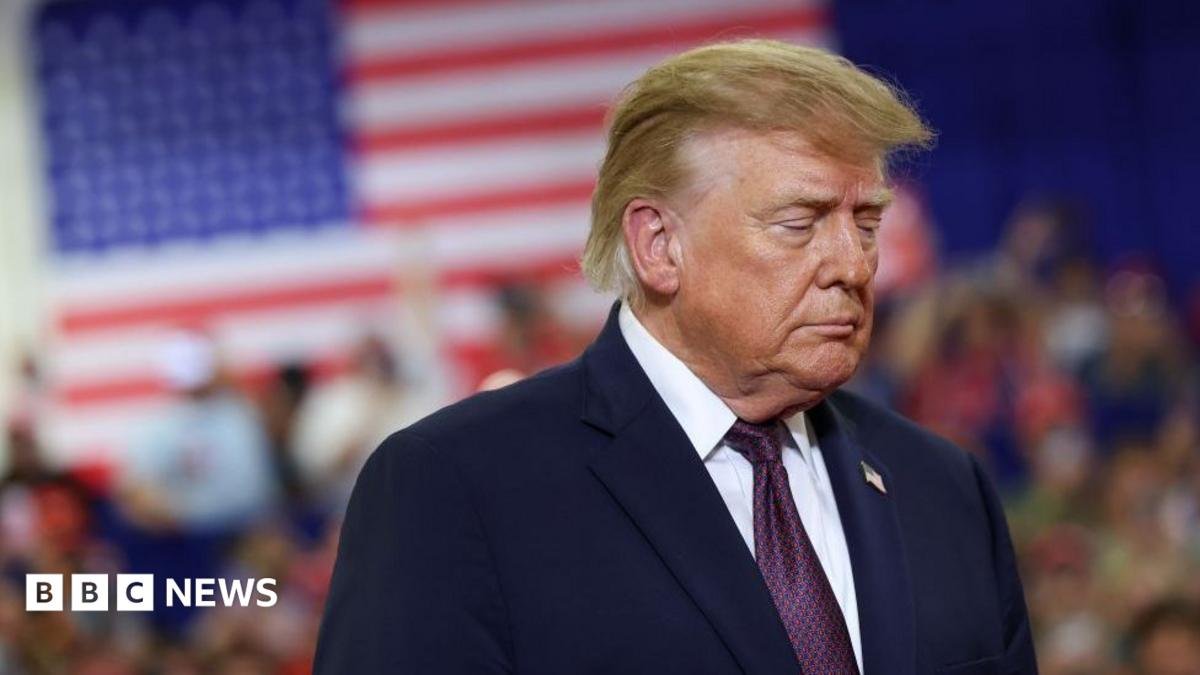
In the wake of a stunning midterm election defeat, Republicans are pointing fingers at President Donald Trump, blaming his divisive policies and unpopularity for the party's loss of Congress. The results, which saw Democrats win upset victories in traditionally red states like Texas, Kansas, and South Carolina, have sparked anger and introspection within the GOP.
A 'Total Rejection' of Trump
Bill Miller, a prominent Republican lobbyist in Texas, did not mince words when speaking to the BBC. "It's on him. It's not on anybody else. It's a total, complete rejection of President Trump," Miller said. "This is a disaster of the first magnitude. Nobody saw it coming like this."
While most Republicans anticipated losing the House, they had hoped to retain the Senate. However, Trump's low approval ratings and focus on personal legacy projects, such as construction in Washington, were cited as dragging down candidates across the country.
Policies and Scandals Take Their Toll
Gregg Peppin, a Republican strategist in Minnesota, lamented the string of mistakes. "It was just one mistake after another," he said. "Clearly, in state after state, people did not like the president's policies."
A White House ally described a "perfect storm" of public disapproval over the Iran war, tariffs, and immigration crackdown, with frustration within the party directed squarely at Trump. "Anger with Trump is extremely high," the person said.
The midterms have ushered in an uncertain phase for Trump's second term, with a motivated Democratic majority eager to investigate his administration and block his agenda. Trump, who was silent for much of election night, later posted on Truth Social: "I wasn't on the Ballot and if I was, we would have won IN A LANDSLIDE!" He also acknowledged being "a little bit surprised" by the results in an interview with Fox News.
Historical Context and Internal Criticism
Historically, the president's party typically loses seats in midterms. Since 1934, the White House party has gained seats only three times. While Democratic gains in 2026 were not record-breaking, they were significant, including Senate seats in states like Kansas (first since 1932) and Texas (first statewide win in over three decades).
Some Republicans argue it is unfair to blame Trump entirely, pointing to weak candidates in key races. Ken Paxton, the Republican Senate nominee in Texas, was criticized for running "the worst Senate campaign in the country," according to one Texas operative. Paxton lost to Democrat James Talarico, who was praised for running a smart campaign.
Others defended Trump's campaign schedule. Krish Mathrani, Michigan Republican Party's youth chair, said, "He's the president. He's not going to spend his time campaigning 24/7," adding that Trump's rallies helped drive enthusiasm.
Voter Rejection of Trump's Message
Voters rejected Trump's claims that the economy was thriving and that he was achieving his aims in the Iran war. His attempts to label Democrats as extreme socialists failed, as moderates like Roy Cooper in North Carolina won. "Trying to tag him as some socialist liberal, that wasn't going to fly," said a Cooper campaign official.
Trump's focus on personal projects, such as a UFC match at the White House on his 80th birthday, created the impression he was more interested in self-celebration than winning the midterms. He also downplayed rising gas costs, calling affordability a Democratic hoax.
A midterm convention in Dallas, intended to boost Republican candidates, instead became a Trump show. His rambling speech included a pledge to give $5,000 to anyone who voted Republican and an endorsement of Paxton that criticized the candidate's charisma and appearance. "Obviously, that's never helpful," said Robin Armstrong, Texas' Republican National Committeeman. "You're not going to stop what President Trump says. We just have to kind of live with that."
The convention failed to attract a large TV audience, and Democrats called it a failure. "It backfired for Republicans because nobody paid any attention to it," said Terri Burke, Texas Democratic Party's executive director.
White House Controversies
As Trump campaigned, the White House was embroiled in controversies, including the ousting of press secretary Katie Zacharia after just five days and the resignation of Ambassador Kimberly Guilfoyle over reports she asked a donor to pay her credit card debt. In October, Trump faced backlash for a deal to buy Russian diesel, which came weeks after signing sanctions on Russian oil.
Democrats used these scandals to argue for a change in Congress, and their message resonated.
Looking Ahead to 2028
With the loss, some Republicans are already looking to the future. "Whether that's JD Vance, or Marco Rubio, or Ted Cruz, we've got a pretty big bench," said Steve Scheffler, Iowa's Republican National Committeeman. "It'll be a wide open race."
Peppin added, "I sincerely hope that we've turned the page from the Trump era, and that we'll have new players, new issues and a new focus moving forward."