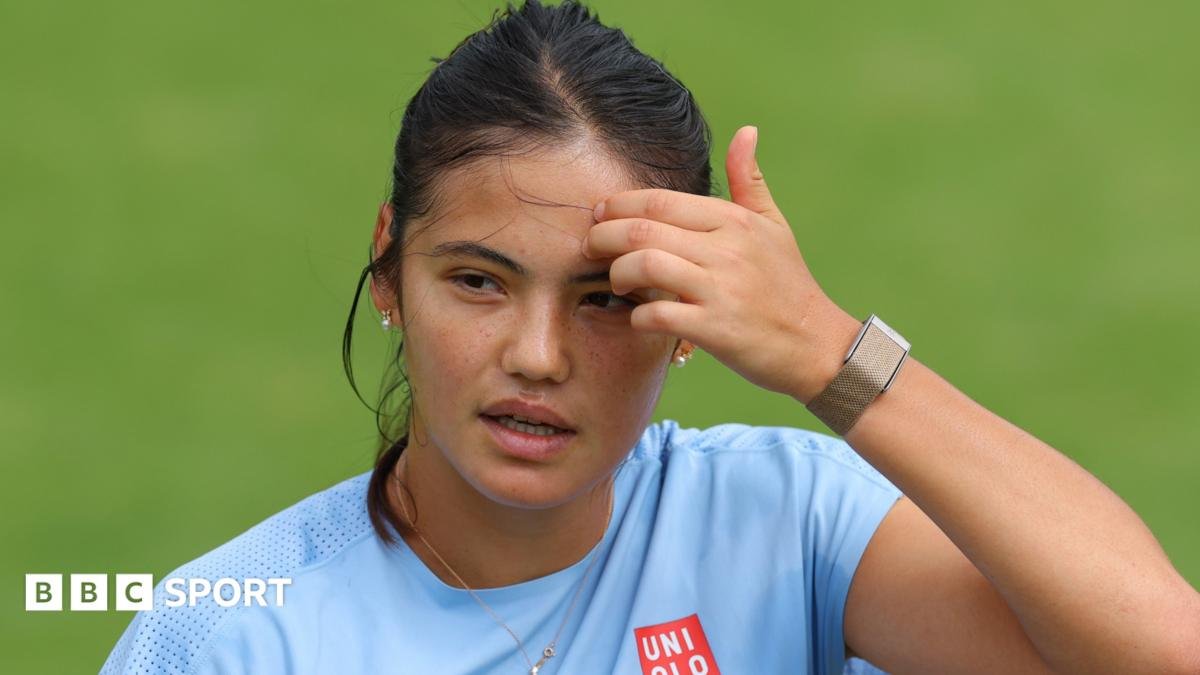
Emma Raducanu will make her long-awaited return to competitive tennis at the United Cup in Australia in the first week of January, after being sidelined since June with a stress fracture of the shin.
The 2021 US Open champion has not played since suffering the injury, which forced her to withdraw from Wimbledon on the eve of her opening match and also ruled her out of the US Open.
Special Ranking to Aid Comeback
Raducanu, who turned 24 this week, will benefit from a special ranking of 38, which is available to players who have been out for at least six months. This ranking reflects her position after Wimbledon, where she received prize money despite not playing. Her actual ranking of 107 would likely be too low to gain direct entry into the main draw of the Australian Open and most WTA Tour events. However, with the special ranking, she is assured of playing in Melbourne and the WTA 1000 events in Doha, Dubai, Indian Wells, and Miami. She can use the special ranking to enter eight events next year, including two Grand Slams and five WTA 1000 tournaments.
The entry deadline for the United Cup passed on Monday, shortly after Raducanu's application for a special ranking was approved. A ranking of 38 will make her the British number one for the event, giving her the chance to play alongside Arthur Fery in a competition featuring 18 national teams. Francesca Jones, Jan Choinski, and doubles players Neal Skupski and Olivia Nicholls complete the British team for the tournament, which takes place from 1-10 January. Britain will face Australia and France in their group matches in Sydney, and Raducanu can expect to face current top-40 players Talia Gibson and Diane Parry.
Gradual Return to Training
Raducanu made a gradual return to training in early September, and recent practice sessions in London with head coach Andrew Richardson and LTA national coach Alex Ward have been increasing in intensity, according to observers. She may not play any exhibitions before the end of the year, but a spell of warm-weather training is anticipated, with the Middle East a popular destination for players in the run-up to the Australian Open.
By the time Raducanu returns, she will have been on the sidelines for over six months. Playing a few tournaments in Asia would have helped her regain match sharpness, and perhaps allowed for a faster start to 2027. Her fellow Briton Sonay Kartal is a fine example, having enjoyed considerable success since returning from six months out with a stress fracture of the back in September. After reaching the third round of the China Open in her first WTA Tour event back, she beat world number six Elina Svitolina and then world number 12 Belinda Bencic on her way to the Wuhan Open final.
Kartal says there were "a lot of conversations" about where she should make a return. "I think I wanted to just go straight in. I trusted that I would be able to get my level back, I just didn't know how quickly," the 25-year-old said. "But I still think there is a long way to go. I can produce the level, but can I sustain it? Rehab is draining, and the body is not used to a lot of matches on the tour, so I do feel the aches and the pains from that."
Time Away from the Court
There will only be 24 candles on Raducanu's birthday cake later this week, but there is no escaping the amount of time she has missed since her stunning New York victory as a teenage qualifier. She has averaged just 31 matches a season in the five years since that triumph. Players with aspirations to be inside the world's top 20 would hope to play around twice that number. Elena Rybakina, for example, played 68 matches across 20 tournaments this year as she rose to the top of the world rankings for the first time. By contrast, Raducanu played just 21 matches, losing in the second round of the Australian Open and the first round at Roland Garros.
Last year, Raducanu contested a career-best 50 matches, and earlier this year rose to 23 in the rankings shortly after reaching the final in the Romanian city of Cluj. But her early preparation was affected by bone bruising of the foot, and she did not play for two months between March and May because of a post-viral illness picked up in Cluj. Raducanu said a stress fracture of the shin was only confirmed after a final scan on the night before Wimbledon. But in her desperation to play, she had continued to train at times in the run-up to the championships, when medical advice had suggested that might be unwise.
Now, with her return set for January, Raducanu will be hoping to put her injury troubles behind her and rediscover the form that made her a Grand Slam champion.