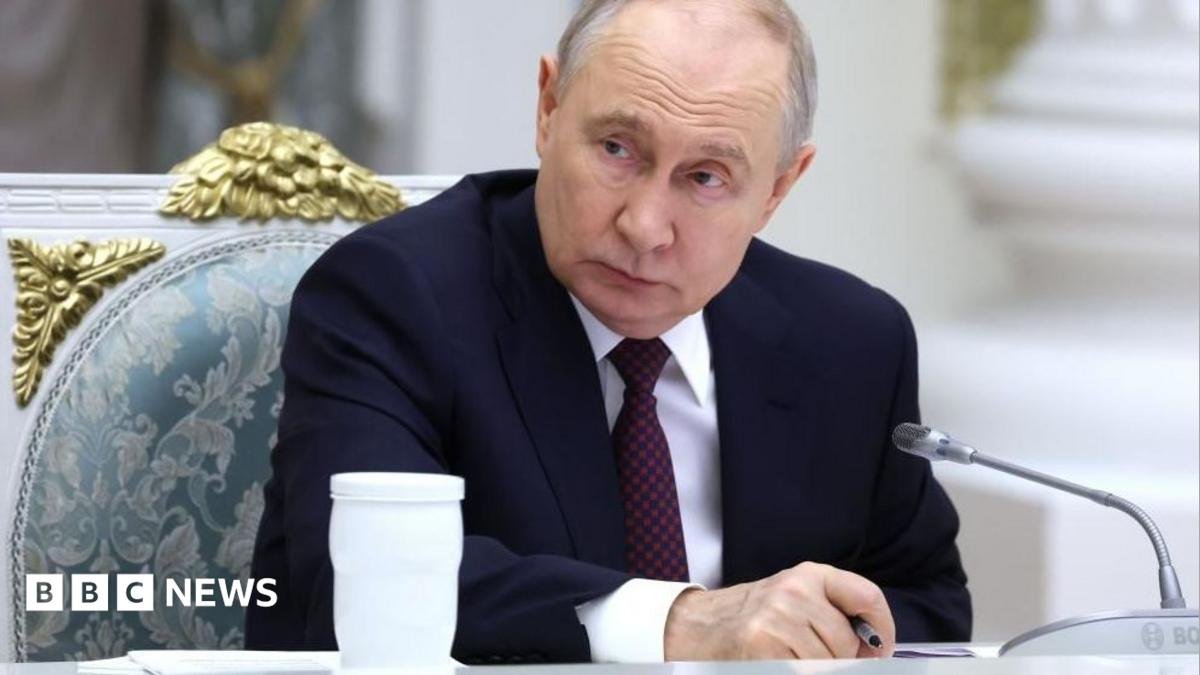
In a striking display of confidence, Russian President Vladimir Putin has articulated his vision for "eternal peace" with Ukraine, but his conditions reveal a far-reaching agenda: a fundamental restructuring of Europe's security architecture. The Kremlin's demands, reiterated during recent talks with US envoys Steve Witkoff and Jared Kushner, echo proposals first made in December 2021, just before Russia's full-scale invasion of Ukraine.
A Controversial Proposal Resurfaces
At the heart of Moscow's stance is the revival of the "draft treaties" with the US and NATO, which would prohibit NATO's eastward expansion and roll back military infrastructure in Central and Eastern Europe. Western leaders previously dismissed these demands as an unacceptable ultimatum. Now, with the geopolitical landscape altered by nearly five years of war, the Kremlin is reintroducing these ideas, signaling a potential shift in European security arrangements not seen since the Cold War's end.
Yuri Ushakov, Putin's foreign policy aide, hinted that Moscow might "add certain new considerations" to its demands, responding to Western efforts to inflict a "strategic defeat" on Russia. While Western governments are unlikely to accept such terms, the mere inclusion of European security in Ukraine talks is viewed in Moscow as a diplomatic victory.
Europe's Exclusion and the Sequencing Debate
The European Union's top diplomat, Kaja Kallas, has criticized Russia's push for a new security architecture as a "trap" to divert attention from a ceasefire. She emphasized the importance of sequencing: "The priority should be securing a ceasefire, followed by a peace agreement. Only then can there be discussions on Europe's wider security architecture."
Europe's absence from the negotiating table is a glaring issue. Moscow has shown little willingness to include European leaders, whom it accuses of prolonging the conflict through military support for Kyiv. This week's peace talks in Abu Dhabi involved Ukraine, Russia, and the US, but no European representatives. While Witkoff suggested Putin might agree to European participation in future rounds, the Kremlin has yet to commit, with spokesman Dmitry Peskov stating that a decision would depend on understanding Europe's "true intentions."
Putin's Confident Posture
Putin's confidence is palpable. The Americans are seeking a deal, and European leaders, including those from Norway and Finland, have recently reached out to him. Next week, on the sidelines of the Asia-Pacific Economic Co-operation summit in Shenzhen, China, Putin may meet separately with Donald Trump and Xi Jinping. Russian media are already drawing parallels to the "Big Three" of Stalin, Roosevelt, and Churchill, who met in 1945 to reshape post-war Europe.
Yet, despite nearly five years of war, Russia has suffered significant battlefield losses, and its economy is under strain from sanctions and Ukrainian drone strikes on oil refineries. These pressures have not deterred Putin from his maximalist objectives. As the Kremlin leader stands firm, the world watches to see whether his uncompromising stance will lead to a new security order or further isolation.