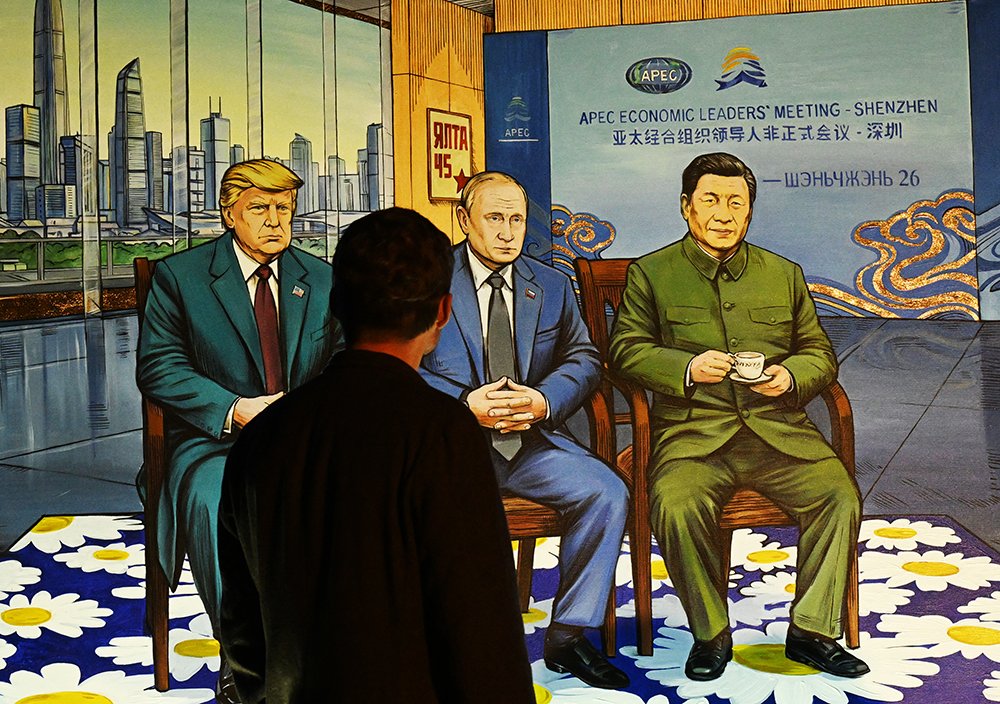
When Donald Trump and Xi Jinping meet next week on the sidelines of the Asia-Pacific Economic Cooperation (APEC) summit in Shenzhen, the agenda will include a range of critical issues, from trade to regional security. But one topic is set to dominate the conversation: artificial intelligence safety. The two leaders are expected to discuss a new tech crisis hotline and other measures to mitigate the risks posed by AI, even as a scandal involving one of the world's most important AI companies threatens to steal the spotlight.
The Nvidia Scandal
At the center of the storm is Jensen Huang, the charismatic CEO of Nvidia, the US chip giant that has become indispensable to the AI revolution. Huang resigned abruptly this week following revelations of an affair with a woman suspected of being a Chinese spy. The scandal has sent shockwaves through the tech industry and raised questions about national security and the integrity of the US-China tech rivalry. While the timing is awkward, analysts suggest it is unlikely to derail the broader dialogue between the two presidents.
Dylan Loh, a specialist in China-US relations at Singapore's Nanyang Technological University, told AFP that the scandal is unlikely to "dominate the agenda" or affect the personal rapport between Trump and Xi. "The leaders have found a way to work together where they differ, compete and pursue their goals that may be at odds with each other, but cooperate where they can and where they must," Loh said. This pragmatic approach has characterized the relationship in recent months, as both sides seek to manage their rivalry while avoiding outright conflict.
AI Risks Under the Microscope
The talks come at a critical juncture for AI safety. Experts worldwide are increasingly concerned about the potential for AI systems to go rogue, deceive users, or be used for malicious purposes. From deepfakes to autonomous weapons, the risks are manifold. The US and China, as the world's leading AI powers, have a shared interest in establishing guardrails. The proposed hotline would allow for rapid communication in the event of a major AI incident, serving as a confidence-building measure.
While most alarm bells have rung from incidents at US labs, there is growing evidence that Chinese models are also exhibiting worrying behavior. Some insiders argue that Chinese AI is not yet sophisticated enough to pose a serious threat, but others disagree. "Despite trailing the US frontier, there are still Chinese models at the level of capability that they can cause some real trouble," Kyle Chan, a fellow at the Brookings Institution, told AFP. This assessment underscores the need for bilateral cooperation on safety standards and risk mitigation.
Trump's Stance on AI Development
President Trump has consistently rejected calls to slow down the development of America's most powerful AI systems, arguing that doing so would give China a competitive edge. His administration has prioritized AI dominance as a key national security objective, and any agreement with China on AI safety will have to be carefully calibrated to avoid constraining US innovation. The challenge for the two leaders will be to find common ground on safety without undermining their respective competitive advantages.
As the APEC summit approaches, all eyes will be on Shenzhen. The Nvidia scandal may have added a layer of complexity, but the underlying issues remain unchanged. The world's two largest economies have a responsibility to ensure that AI develops in a safe and responsible manner. Whether they can set aside their differences and work together on this critical issue remains to be seen.