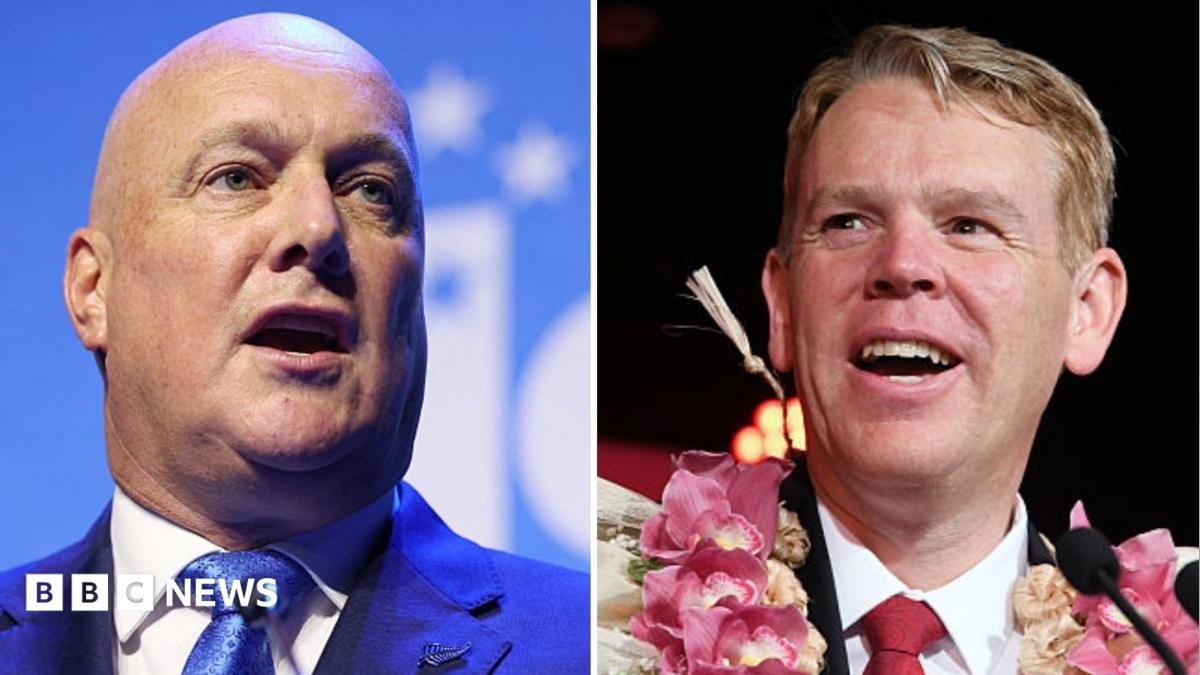
New Zealand's general election on Saturday ended in a dead heat, with neither of the two major parties securing a clear mandate to govern. Preliminary results show the centre-right National Party, led by Prime Minister Christopher Luxon, winning 42 seats, but falling 19 short of the 61 needed for a simple majority. The left-leaning Labour Party, under opposition leader Chris Hipkins, secured 36 seats. With no outright winner, both leaders are now preparing for coalition negotiations that could shape the country's political future.
A Fragmented Parliament
The results reveal a historically low combined vote share of around 60% for National and Labour, signalling growing voter disillusionment with the traditional duopoly. Smaller parties made significant gains: the Green Party, ACT, New Zealand First, Opportunity, and Te Pāti Māori all secured representation. Notably, the centrist Opportunity Party crossed the 5% threshold to enter parliament for the first time, emerging as a potential kingmaker. Its leader, Qiulae Wong, has indicated willingness to work with either major bloc but stressed that negotiations would begin with the party holding the most seats.
"We believe that we can change the way we do politics to focus on the future, on the next generation, and on finding common ground," Wong told supporters at the party's watch event. Professor Andrew Geddis, an election law expert at the University of Otago, described Opportunity as a "wildcard player" that could "determine which bloc of parties is able to govern." He cautioned that the final outcome may hinge on "very fine vote margins not just between the parties, but in individual electorates," with special votes still to be counted over the next three weeks.
Leaders Strike Conciliatory Tone
Despite the inconclusive result, both Luxon and Hipkins struck conciliatory notes. Luxon congratulated Hipkins on a "very hard-fought race" and told party colleagues: "Whatever the final count, we are incredibly proud of each and every one of you." Hipkins, showing no signs of conceding, remarked that "the people have spoken," adding that "it may take a bit longer to work out what they've said." He emphasised that the next parliament would require compromise and collaboration: "The next parliament is going to require all of us to compromise, to work together and to find a common ground."
The election campaign was dominated by cost of living and unemployment, issues that resonated strongly with voters. Julian McCrann, head of polling at Roy Morgan, noted that Luxon had promised three years ago to improve New Zealanders' lives and tackle economic challenges but had "not really delivered." With more than 99% of votes counted, the nation now faces a period of uncertainty as coalition talks begin.
What's Next?
New Zealand's mixed-member proportional voting system typically results in coalition governments, and the close result underscores the need for compromise. The official result will not be announced until 27 November, after special votes, including those from overseas, are processed. As the country awaits a final tally, the political landscape remains fluid, with the Opportunity Party's decision likely to tip the balance. For now, New Zealanders are left to ponder who will ultimately lead them through the challenging times ahead.