In a significant political shift, the ultra-Orthodox Jewish party United Torah Judaism (UTJ) has decided not to recommend Benjamin Netanyahu for prime minister, marking a departure from its longstanding support. The move comes as President Isaac Herzog continues consultations with political parties following the October 27 election, which produced no clear winner.
A Break from Tradition
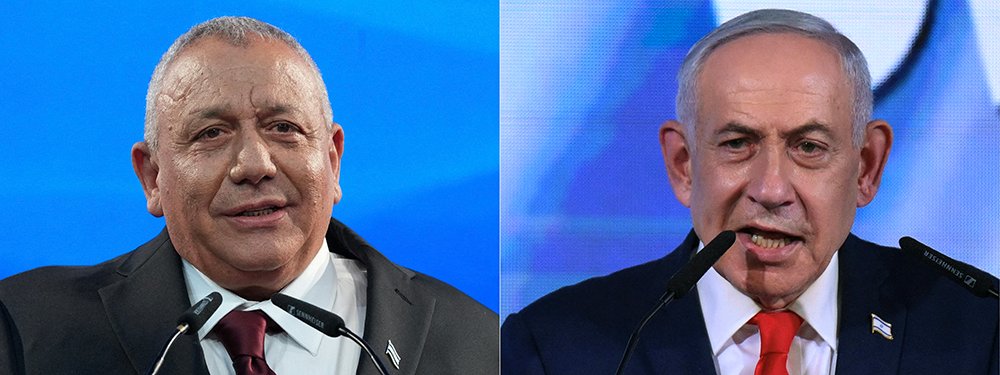
UTJ, which has backed Netanyahu in the last five elections, announced its decision on Thursday during a meeting with President Herzog. While the party declined to endorse Netanyahu, it also stopped short of recommending his rival, Gadi Eisenkot. This development signals growing uncertainty around Netanyahu's ability to form a coalition, despite his long tenure as a polarizing figure in Israeli politics.
The October 27 election saw neither Netanyahu nor Eisenkot, a former military chief, secure enough votes for a majority. President Herzog is now tasked with determining which candidate has the best chance of assembling a governing coalition. The president's consultations with party representatives are a crucial step in the government formation process.
Eisenkot's Rising Prospects
Gadi Eisenkot, who has emerged as a formidable challenger, is increasingly seen as the likely candidate to receive the first opportunity to form a government. His potential nomination would mark a significant shift in Israel's political landscape, which has been dominated by Netanyahu for over a decade. Eisenkot's appeal appears to be broadening, even as UTJ has not yet thrown its weight behind him.
The decision by UTJ not to recommend Netanyahu underscores the fragmentation within the right-wing bloc and the challenges Netanyahu faces in securing a majority. It also highlights the pivotal role of ultra-Orthodox parties in coalition negotiations, as they often serve as kingmakers in Israeli politics.
Next Steps in Government Formation
President Herzog is expected to conclude his consultations with all parties in the coming days before deciding whom to task with forming a government. The candidate will then have up to 42 days to build a coalition. If successful, they will become the next prime minister; if not, the president may grant an extension or turn to another candidate.
The political deadlock follows a closely contested election that reflected deep divisions within Israeli society. Netanyahu, who has led the country through three years of war, remains a polarizing figure, while Eisenkot positions himself as a unifying alternative. The outcome of the coalition talks will have far-reaching implications for Israel's domestic and foreign policies.
As the political drama unfolds, all eyes are on President Herzog and the party leaders whose decisions will shape the next government. The coming weeks will be critical in determining whether Israel can break the cycle of political instability that has plagued it in recent years.