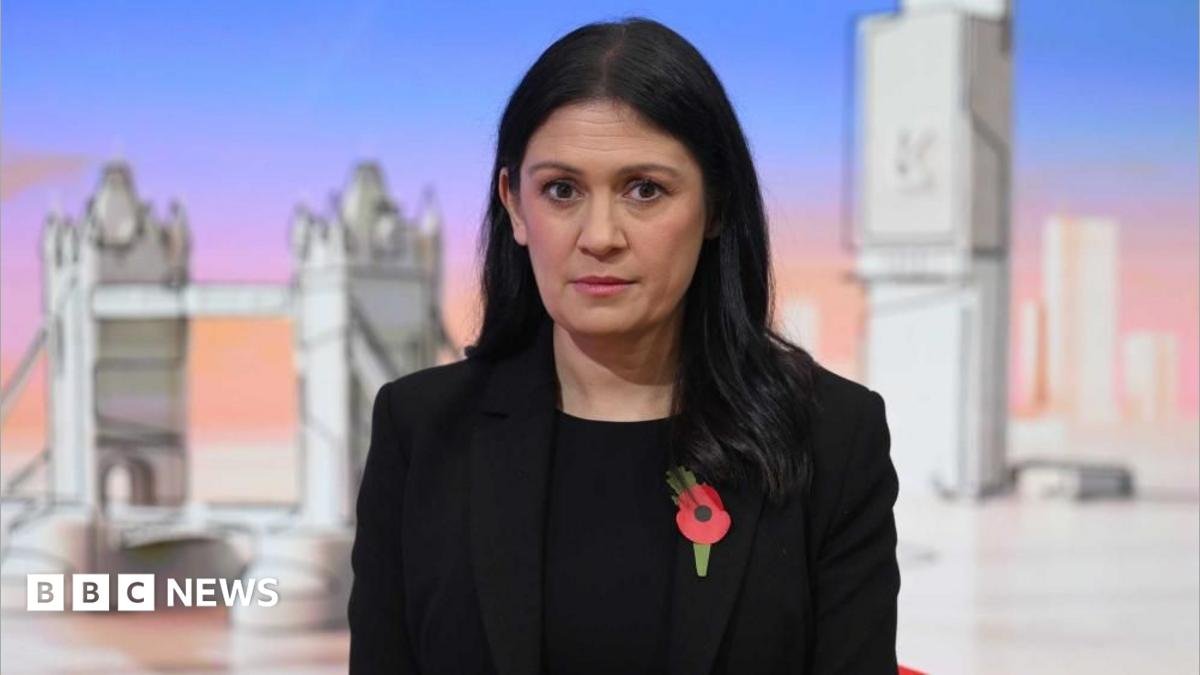
Culture Secretary Lisa Nandy has dismissed accusations that she politicised Remembrance Sunday by connecting the commemorations to the UK's return to the European Union's Erasmus+ programme. The controversy erupted after her department released a statement on Saturday night that framed the scheme as a way to honour wartime sacrifice.
In a press release, the Department for Culture, Media and Sport said: "As we mark Remembrance Sunday, Erasmus+ will give a new generation the chance to build connections across Europe." Nandy further commented: "As we remember the immense courage of those who served our country, we honour them by building the best opportunities for the next generation through closeness and collaboration with our allies."
The remarks drew immediate criticism from Conservative figures, who argued that Remembrance Sunday should remain focused on commemorating the fallen rather than advancing political agendas. Conservative Party chairman Kevin Hollinrake called the comments "tone deaf and frankly shameful" and urged Nandy to apologise. He emphasised that the bonds forged by veterans "run far deeper" than the Erasmus scheme, adding: "It is not a day for a Labour minister to try to make an EU membership pitch."
Reform leader Nigel Farage also weighed in, telling the BBC that using Remembrance Sunday to announce the Erasmus move was in "very, very poor taste." Peter Sharples, chief executive of the Veterans Institute, told The Telegraph that the day should be about honouring the fallen, not discussing "party political matters."
Appearing on the BBC's Sunday with Laura Kuenssberg programme, Nandy defended her position. She invoked Winston Churchill's post-war vision of extending "the hand of friendship across Europe" and said that since Brexit, opportunities for young people to understand the sacrifices of past generations had been closed off. "We closed off opportunities for young people from this country to understand not just the impact that generation made here in the UK, but the way in which they went off and fought for the freedom of people across Europe," she said.
When pressed on whether she was promoting the government's EU deal on Remembrance Sunday, Nandy insisted she was not choosing any day to promote a deal. She argued that linking the day to the cultural benefits of Erasmus+ was once considered common sense and should not be seen as political. "There was a time where that wouldn't have even raised an eyebrow as somehow political, it was just common sense - and it is common sense," she added.
The UK is set to rejoin the expanded Erasmus+ scheme in January, six years after leaving as part of the Brexit agreement. The government will pay £570 million to participate, which it describes as a 30% discount. The programme will offer free year-abroad placements for UK university students and their European counterparts, as well as cultural exchanges. Additionally, 18-year-olds will receive free train passes to visit EU countries with up to five friends, and youth groups will have opportunities for short exchanges, with a focus on regions previously less engaged with Erasmus, such as the north of England and the Midlands. Applications will open later this month.
Farage criticised Erasmus+ as a "terrible scheme" and "wildly expensive" compared to the Turing Scheme introduced in 2021. He also voiced opposition to ongoing negotiations for a new youth mobility scheme ahead of a major summit on 20 November. Prime Minister Andy Burnham has called for an "honest discussion" about the possibility of returning to free movement between the UK and the EU. However, the EU's former Brexit negotiator, Michel Barnier, has warned that the UK cannot "cherry pick" which elements of the single market it subscribes to.
Nandy acknowledged that most of the benefits promised from Brexit in 2016 "have not been realised" and that there are "trade-offs and choices to be made" regarding Britain's future relationship with the EU.