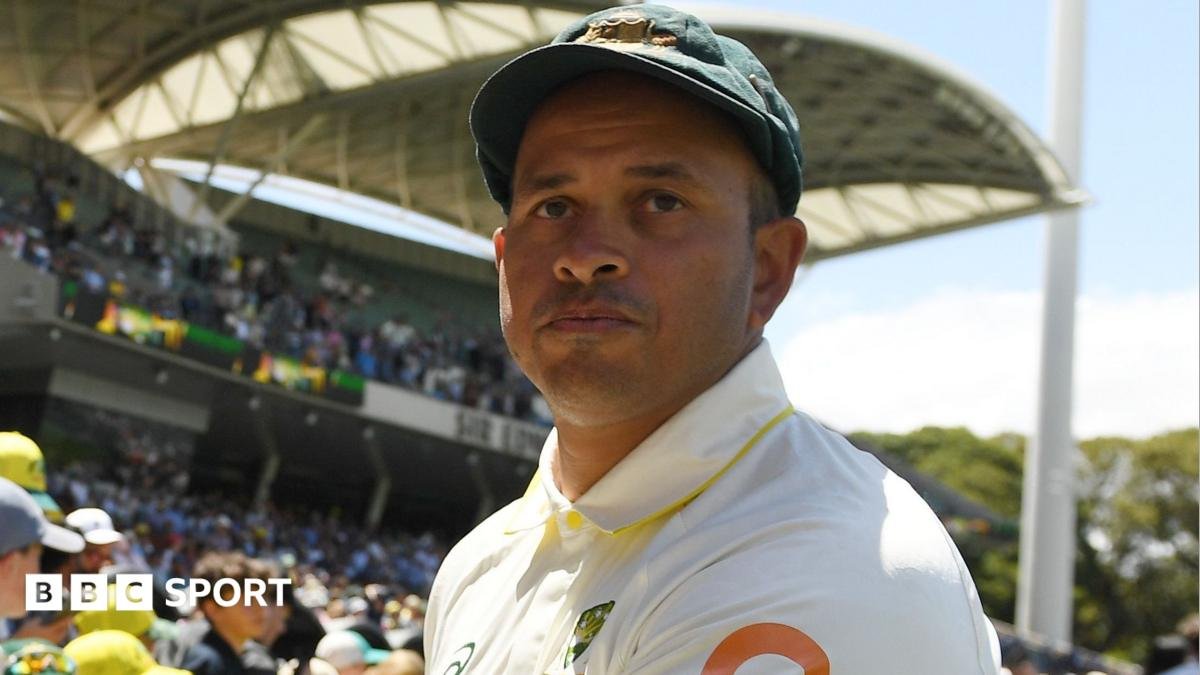
In a stunning revelation that has reignited one of cricket's darkest chapters, Usman Khawaja has claimed that the entire Australian team was aware of the sandpaper ball-tampering scheme during the 2018 Test series against South Africa. The former opening batter made the explosive allegation in his autobiography, Sabr, extracts of which were published in the Sydney Morning Herald.
Khawaja, who scored 6,229 runs in 88 Tests, insisted that the plan to use sandpaper to alter the condition of the ball was common knowledge within the dressing room, and that the tactic had also been employed in the Test preceding the infamous Cape Town match.
'It was all of us'
"It was all of us. Not the batters, not the bowlers, not the staff. All of us," Khawaja told the Sydney Morning Herald. The 39-year-old's comments directly contradict the long-standing denials of Australia's frontline bowlers, including current Test captain Pat Cummins, Mitchell Starc, Josh Hazlewood, and Nathan Lyon, who have consistently maintained they had no prior knowledge of the plan.
In 2021, the quartet issued a joint statement saying they "did not know a foreign substance was taken on to the field" until they saw images on the big screen at Newlands. They also pointed out that umpires Nigel Llong and Richard Illingworth inspected the ball and did not change it, as there was no sign of damage.
Khawaja, however, writes that discussions about tampering began during the second Test in Port Elizabeth (now Gqeberha), where sandpaper was discovered as an effective agent after open discussions in the dressing room at St George's Park. He claims that then-captain Steve Smith essentially threw his hands in the air and said he didn't want to know.
Investigation shock
The left-handed batter also expressed his shock at not being asked to provide evidence during Cricket Australia's investigation. "In an ideal world, I don't want to do this. I don't want to be the one who comes out and talks about the truth," he said. "The issue is that I genuinely thought after eight years the truth would have been out by now."
While Smith, vice-captain David Warner, and Cameron Bancroft were banned for their roles, there was never a satisfactory explanation for how the bowlers failed to notice the change in the ball's condition. In a 2021 interview with the Guardian, Bancroft hinted at their knowledge, saying "it's pretty probably self-explanatory."
Khawaja revealed that he argued for collective responsibility in the dressing room after the Cape Town Test. "I said: 'Take this as a team. We did this as a team. We knew what was going on, and we have to take it as a team'," he wrote. "Obviously, it didn't work that way, and those three guys got crucified."
He added that Smith, Warner, and Bancroft "deserve" the justice of collective blame, and that none of them want to be the first to speak out for fear of it being dismissed as hearsay. "They needed someone else to say something," Khawaja wrote. "But I'm not doing this for any other reason than I think it's the right thing to do."
Cummins, speaking before Australia's recent Test series in South Africa, said he had spoken to Khawaja about the book and had no concerns about potential revelations. "He didn't go into too much detail, just basically gave me the heads-up that he is doing a book and, as always, no worries," Cummins said. "Tell your story. It's fine. It's obviously a long time ago and all the investigations, everything was done back then and we answered every question a million times."
The scandal, which led to the resignation of coach Darren Lehmann and emotional apologies from Smith and Warner, remains a sensitive topic in Australian cricket. Khawaja's claims are sure to spark fresh debate about accountability and the culture that allowed the incident to occur.