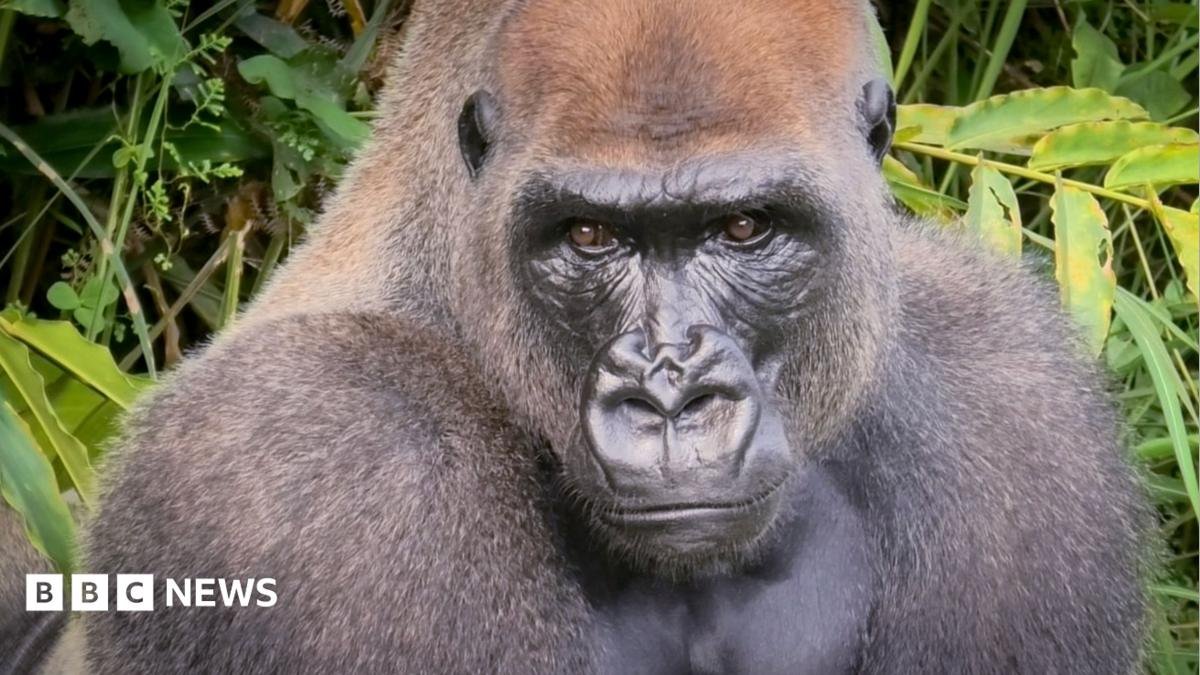
In the dense forests of Gabon, a young gorilla named Jojo took his first steps on grass in 2015. But this was no ordinary milestone. For the first 11 years of his life, Jojo had been confined to a tiny cage at a private zoo, a victim of the illegal wildlife trade. Poachers had killed his family and sold him as an infant. Now, Jojo resides at the Lekedi Foundation sanctuary, yet he remains alone, without any gorilla companions.
A Life of Isolation
Jojo's early years were marked by trauma. Taken from his mother before his first birthday, he was deprived of the social bonds that are crucial for gorillas. Most gorillas spend up to 19 years within a tight-knit family unit, but Jojo was kept isolated and put on public display. "He's probably the most extreme case of isolation I've ever seen in a great ape," says Professor Gillian Forrester from the University of Sussex, who is studying Jojo to understand trauma in apes.
Maxe Anaclet Makaba, head keeper at Lekedi, observes Jojo daily and notes his longing for interaction. "He definitely feels lonely - you can see it in his eyes," Makaba says. Jojo often gathers leaves to trade with humans for treats, and he calls out to familiar women when they leave, using vocalizations that wild silverback males use to summon females.
The Trauma of the Trade
Jojo is one of over 6,000 African primates estimated to have been bought or sold between 2000 and 2023. The Pan African Sanctuary Alliance reports that thousands more are trafficked illegally for exotic pets, bushmeat, and traditional medicine. Experts believe that baby apes taken from their groups suffer deep trauma. "If they're old enough to understand what happened, they lose the will to live," says conservationist Tony King of the Aspinall Foundation. "You see it in their eyes - the light goes out."
King recalls rescuing two infant sister gorillas who clung to each other for three days. "I think that's what kept them alive," he says. Such stories highlight the importance of social bonds for survival.
Signs of Chronic Stress
Forrester has used thermal imaging to study Jojo's stress levels. The images reveal a persistently cold nose, indicating a malfunctioning stress response. "Being connected to others is incredibly important to our psychology as great apes," Forrester explains. "Having another individual to share his life with would be so healing for him."
The Grace Center in Africa uses a "gorilla-led" rehabilitation approach, integrating rescued young gorillas into groups to learn social skills. But Jojo's case is unique because he is fully mature. Dr. Katie Fawcett of the Grace Center emphasizes that social relationships are essential for any potential release into the wild.
The Complexity of Gorilla Friendships
Gorilla society is built on strong social bonds. Dr. Robin Morrison from the University of Zurich studies mountain gorillas and has found that females seek out known companions, even after years apart. "A big part of a gorilla's normal social life is just sitting together quietly sharing space," she says. Jojo has never had that opportunity.
Introducing Jojo to another gorilla is fraught with challenges. Any introduction would need to be gradual, perhaps starting with scent exchange. Forrester has contacted accredited zoos to explore placing a companion with Jojo, but progress has stalled. "There aren't clear processes in place to do these kinds of translocations," she says. International regulations are designed for breeding programs, not for finding companions for lone gorillas.
A Solitary Life: Natural or Not?
Solitary living is not unheard of for adult male gorillas. Morrison notes that about a third of adult males are solitary, dispersing from their natal groups and sometimes failing to attract females. "If we think of loneliness in an evolutionary context, I suspect feeling lonely is part of the natural drive to attract females," she says. However, Jojo was forced into isolation as an infant, which likely compounded his trauma.
King believes that because Jojo is mature, it might be too late for him to bond with other gorillas. "He is probably best where he is," King says, cautioning that introductions could cause more stress. But Jojo's keepers remain hopeful. "It would be good for him to have a companion," Makaba says. "Being alone is like being cut off from the world - it's like being in prison."
For now, Jojo's future hangs in the balance. His story sheds light on the plight of countless primates victimized by the illegal wildlife trade and the complexities of rehabilitating them. As Forrester puts it, "Having another gorilla there would be a good thing for him."