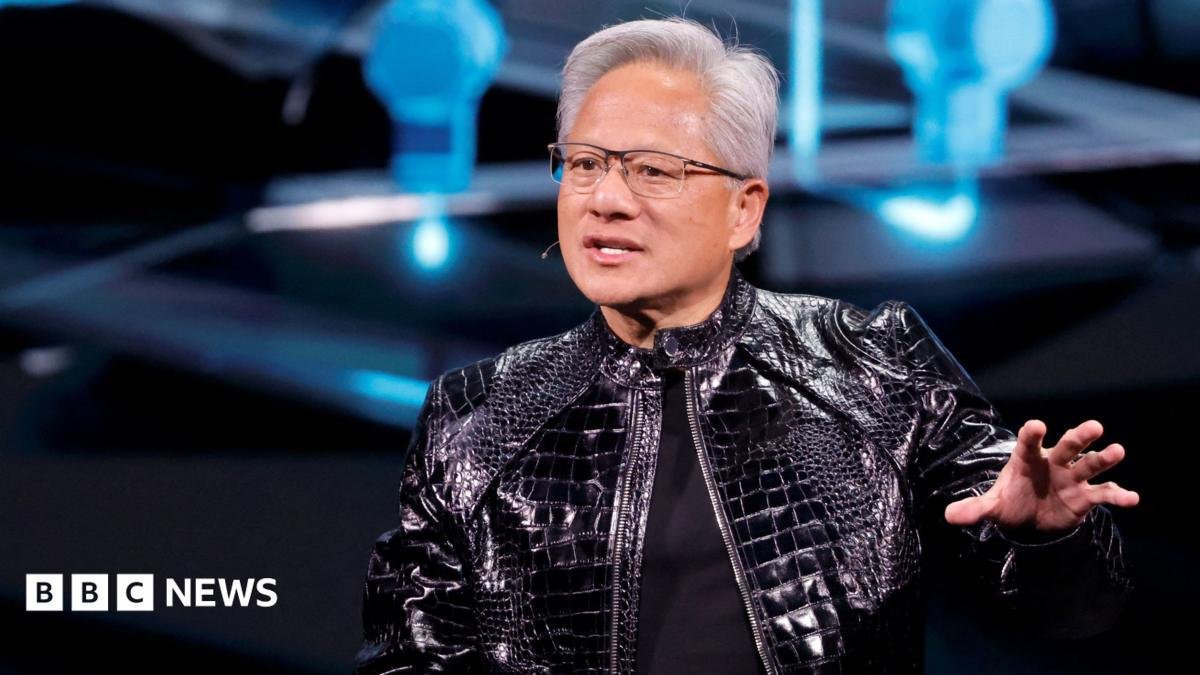
In the high-stakes world of artificial intelligence, few figures loom as large as Jensen Huang. The CEO of Nvidia, with his signature leather jacket and visionary zeal, has become the linchpin of the AI revolution. His company's microchips, bearing names like Gracehopper, Vera, and Rubin, are the silent engines powering the most advanced AI models that are reshaping industries and societies. But Huang's influence extends beyond the tech realm, into the complex geopolitics of US-China relations.
A Meeting of Minds
I had the opportunity to interview Huang during a pivotal moment: the state visit of former US President Donald Trump to the UK in September last year. At the time, Huang was actively lobbying the Trump administration to lift export bans on high-performance AI chips to China, specifically the H200. A ban on a less powerful chip had already been lifted, but Huang was pushing for more.
Huang's argument was compelling. He suggested that the advancement of human society is not a zero-sum game. In his view, both the US and China can prosper simultaneously. "President Trump is very clear. He wants America to win and President Xi wants China to win, and it's possible for both of them too," he told me. This perspective, however, is not universally shared in national security circles, where many see the AI race as inherently zero-sum.
The National Security Debate
Critics argue that the country that develops the most powerful AI systems will gain significant advantages in scientific development, economic growth, and cyber capabilities. They believe the West, led by the US, must take decisive action to curb China's technological advancement. Huang, on the other hand, contends that making the world dependent on American technology, including China, actually enhances US national security. He emphasized that President Trump is "very clear-eyed" about this, stating that "this computing technology is not a national security concern."
Huang further argued that any military would prefer to build its capabilities on indigenous technology rather than rely on an adversary. This view, however, is now under scrutiny as Huang faces an independent investigation over national security concerns and alleged Chinese espionage. The probe centers on his affair with a suspected Chinese spy, adding a new layer of complexity to the narrative.
The Stakes for Nvidia and the World
Despite the controversy, Nvidia remains the epicenter of the AI boom. With revenues around $400 billion this year and a market value exceeding $4 trillion, the company is a colossus. The recent 4% drop in its stock reflects the extraordinary risks at the intersection of technology and global politics, but Nvidia's fundamental strength is undeniable.
Huang's vision for AI is one of collaboration and shared progress. He believes that by spreading American technology, the US can maintain its leadership while fostering global stability. Yet, as the investigation unfolds, the world watches to see how this narrative will evolve. One thing is certain: Jensen Huang and Nvidia will continue to shape the future of AI, and by extension, the global order.