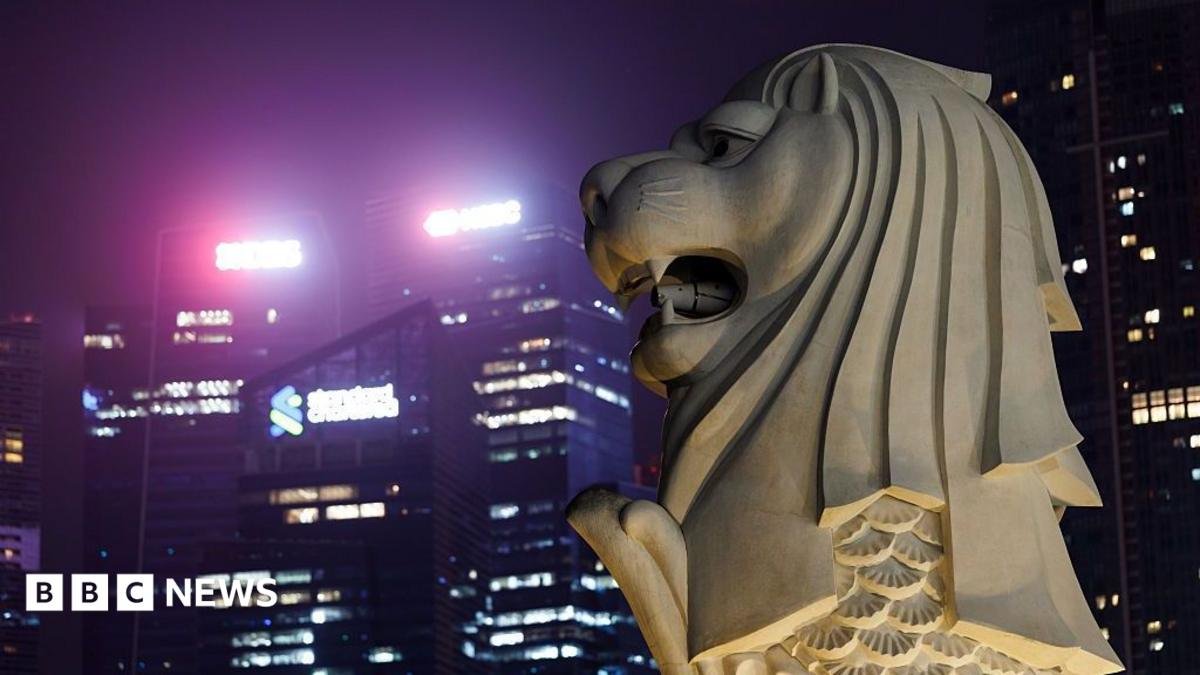
Singapore's carefully crafted image as a neutral, business-friendly hub is under scrutiny after a scandal involving Nvidia founder Jensen Huang and a suspected Chinese spy based in the city-state. The affair has cast a spotlight on Singapore's role as a global chip hub and its vulnerability to illicit trade.
A Reputation Built on Openness
For decades, Singapore has painstakingly cultivated a reputation as an open economy with easy access to both US and Chinese markets. With the AI boom, it has become a major trading hub for high-end semiconductor chips. Last year, Singapore was Nvidia's second-largest billing centre globally, accounting for nearly a fifth of the company's revenue. However, less than 1% of those earnings were for chips that actually entered Singapore; the island serves as a hub for Asian companies to place orders and route them elsewhere.
Since 2022, when the US restricted advanced American semiconductors from being exported to China or acquired by Chinese companies, US officials have worried that countries like Singapore could be used by Chinese firms to gain access to the chips. Megaspeed, a Singaporean data centre company, became the biggest buyer of Nvidia's chips in Southeast Asia and is suspected of providing backdoor access to Chinese companies via its data centres in Malaysia, Indonesia, and Thailand.
Investigations and Challenges
While Singapore does not prohibit the transfer of advanced AI chips to companies abroad, such moves can breach US export controls. Singapore has said it does not enforce "unilateral export controls imposed by other countries" but expects all companies in its jurisdiction to respect such regulations. The city-state has had some success in policing this, charging four companies and five individuals, including Chinese nationals, for various offences including fraud, following US concerns that Chinese AI company DeepSeek had been buying Nvidia chips from third parties in Singapore.
They also tried to probe Megaspeed but faced numerous difficulties. In a statement on Thursday, the government said that since February 2025, they had been looking into whether Megaspeed and other firms had made false declarations about data servers purchased and exported through Singapore. The companies stated the equipment would end up in neighbouring Malaysia, but Singapore authorities suspect the final destinations were elsewhere.
Singapore said it sought assistance from US authorities several times to get more information from one of the investigated companies, Supermicro, a US-based company which the BBC understands was supplying computer servers to Megaspeed. But "despite these repeated requests, Singapore has to date received limited information or assistance," it said. The BBC has sought comment from the US State Department.
Singapore authorities also investigated Alice Huang, not for espionage, but for any possible role in Megaspeed's suspected fraud. In the end, they found "insufficient evidence" of a crime and let her leave Singapore in February this year, after holding her passport for several months. Since launching their probe nearly two years ago, Singapore has yet to bring any charges against Megaspeed or any companies and individuals linked to the case. Singapore and US investigations into Megaspeed are still ongoing.
In 2024, US officials visited a Malaysian data centre owned by Megaspeed and saw Nvidia technology still in its boxes, raising concerns that Megaspeed was shipping high-end chips elsewhere, according to a report by the New York Times. Last year, Megaspeed appeared to have imported 50,000 more chips than Nvidia could account for, according to Bloomberg. Nvidia later adjusted its figures after visiting more warehouses. Megaspeed has maintained it has always acted lawfully and that previous inspections by authorities found no evidence of illegal activity. On Thursday, the company said it "welcomes appropriate government scrutiny" and that it is "committed to working constructively and transparently with the US government." China has long refuted accusations that its companies and institutions are illegally obtaining high-end US chips.
The Singapore-Washing Phenomenon
How Megaspeed and Alice Huang came to Singapore highlights other vulnerabilities stemming from the city-state's openness. In recent years, Singapore has become a prime destination for Chinese companies, with tech firms such as TikTok and Manus making it their global headquarters. Besides Singapore's ease of doing business, it has a population that is mostly ethnically Chinese and largely views China positively. For a Chinese firm, Singapore offers a base near the mainland and a "neutral address" that global customers and investors accept, said Winston Ma, adjunct professor at New York University's School of Law.
But critics say this has given rise to "Singapore-washing," where Chinese companies use the city-state's clean image to obscure their origins, reduce suspicions, and even cover up dubious activities. Washington-based security analysis group C4ADS told the BBC they had assessed Alice Huang's setup of Megaspeed to be such a case. BBC checks of corporate records in China, Hong Kong, and Singapore found that in 2019, Huang sold a gaming company and its subsidiaries to Chinese gaming firm 7Road. In March 2023, a 7Road subsidiary in Singapore named Huang as its executive director. The next day it changed its name to Megaspeed. Huang was in charge for eight months before she transferred the company to a Singaporean man.
During this period, Megaspeed went through "a critical period of corporate restructuring and regional expansion," and her corporate relationships raised questions about whether "Megaspeed's Singaporean identity is genuine or effectively Chinese-controlled," according to C4ADS. Even after she transferred Megaspeed, C4ADS assessed that she was still "practically in control" of the company, based on her links to Megaspeed via another company as well as LinkedIn posts where she continued to identify herself as Megaspeed's "chairwoman" at conferences. Megaspeed has not answered BBC queries regarding the company's and Alice Huang's links to China and the Chinese government.
A Tightrope Walk
All this reinforces the dilemma faced by Singapore. "For the longest time, Singapore has managed to enjoy the best of both worlds with excellent relations with US and China," Nanyang Technological University politics and international studies lecturer Dylan Loh said. Singapore has long positioned itself as a neutral party between the two superpowers. Its prime minister Lawrence Wong has insisted that his country is neither pro-China nor pro-America, but "pro-Singapore." But Loh says this balancing act "has now fast become very difficult to manage and sometimes quite fraught too" with the US-China dispute over chips.
With the Megaspeed case, the tightrope Singapore has walked is set to get even narrower, according to analysts. Beijing may ask why Singapore is investigating issues pertaining to US restrictions and whether they are siding with US interests, says Chong Ja Ian, a Singaporean political scientist and non-resident scholar with Carnegie China. Washington, in turn, might read Singapore's latest statement as "pushing blame" on the US, which could lead to backlash from the White House, he said. "Singapore has made a policy position not to take sides. But by not choosing a side, they run the risk of being seen as complicit" in either side's agenda, he said.
But Benjamin Ho, an assistant professor and China expert at Singapore's S Rajaratnam School of International Studies, noted that this was "not the first or last time Singapore will be caught between the US and China." "This is the price that an open economy has to grapple with - you get caught in the middle when things turn sour."