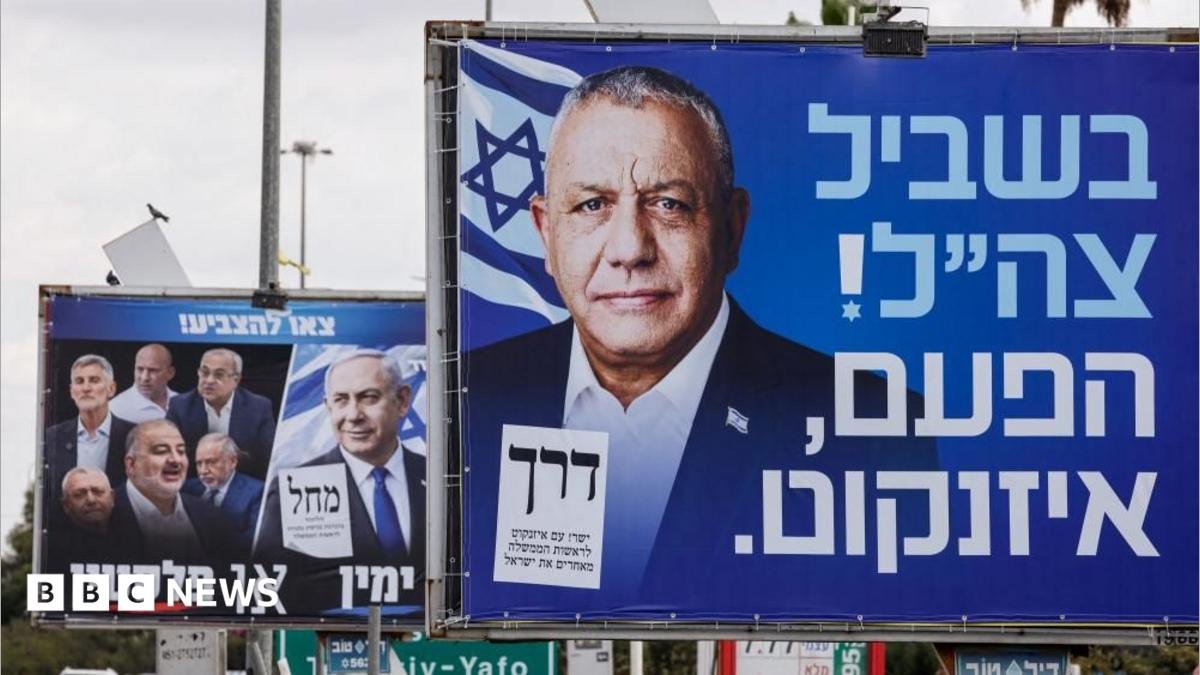
Israel's newly elected parliament, the Knesset, was sworn in on Tuesday, marking the start of a critical phase in the country's political landscape. The ceremony comes as opposition leader Gadi Eisenkot, a former army chief, seeks to unseat caretaker Prime Minister Benjamin Netanyahu and form a new government.
A Divided Parliament
The 120-seat Knesset is deeply divided, with neither Eisenkot nor Netanyahu commanding a clear majority. Eisenkot's bloc of four parties secured 48 seats in last month's election, while Netanyahu's bloc won 53. However, Eisenkot received the backing of 67 lawmakers, compared to 46 for Netanyahu, leading President Isaac Herzog to task him with forming a government on Sunday.
Eisenkot now has 28 days to assemble a coalition, with the possibility of a two-week extension. The task is formidable, as he must bridge deep ideological divides and navigate the complex web of Israeli politics.
The Arab Parties' Unprecedented Role
One of the most striking outcomes of the election was the strong showing of Arab-led parties. The United Arab List and the Joint List together won 19 seats, an unprecedented number, following a surge in Arab voter turnout. This gives the Arab parties significant leverage, potentially holding the balance of power.
However, Netanyahu has ruled out governing with them, and three parties in Eisenkot's bloc have opposed including them in a coalition. The Arab parties' support could be crucial for Eisenkot, but it comes with contentious conditions.
Eisenkot's Four Principles
In a speech at the president's residence, Eisenkot called for a "national emergency government" and outlined four principles that any party or lawmaker must accept to join his coalition:
- Recognition of Israel as a Jewish and democratic state.
- Acceptance of the values of the Declaration of Independence.
- Support for mandatory military, national, or civilian service for all, including communities currently exempt.
- Recognition of Hamas as a terrorist organization and commitment to dismantling its military and governing capabilities.
These principles present significant hurdles. The ultra-Orthodox parties, United Torah Judaism and Shas, which hold 13 seats, fiercely oppose changes to the military draft exemption for ultra-Orthodox men. Meanwhile, the Arab parties emphasize equal rights for Arab citizens and have not publicly recognized Hamas as a terrorist group.
Potential Paths to a Coalition
Despite the obstacles, there are possible routes to a government. The United Arab List has expressed willingness to join an Eisenkot-led coalition, while the Joint List has offered outside parliamentary support. Such an arrangement would still require Eisenkot to persuade other parties in his bloc, notably Avigdor Lieberman's Yisrael Beiteinu, which has refused to join a minority government reliant on Arab lawmakers.
Alternatively, Eisenkot could seek support from the ultra-Orthodox parties, but they would likely demand concessions on military conscription that may be unacceptable to his bloc.
Netanyahu's Counteroffer
Netanyahu, Israel's longest-serving leader, has reiterated his call for a national unity government, which he insists he would lead. In a video message on Monday, he said any Zionist party, including opposition parties, would be eligible. He warned against a government relying on "the Islamists," referring to Arab parties, and stated, "You cannot form a government with Hamas supporters."
The coming weeks will be crucial as Eisenkot attempts to build a coalition, with the future of Israeli governance hanging in the balance. The outcome will have far-reaching implications for the country's domestic and foreign policies.