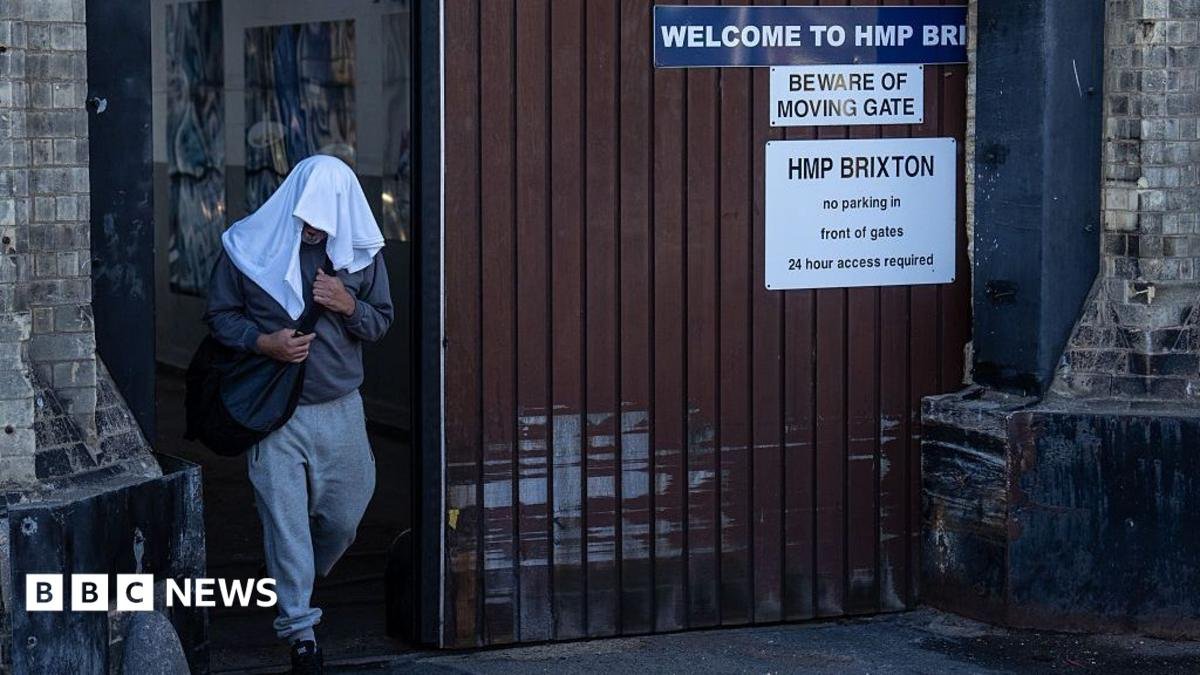
On Tuesday, approximately 650 additional offenders are set to be released from prisons in England and Wales as part of the government's ongoing strategy to alleviate overcrowding in the prison system. This marks the third phase of a plan that has already seen at least 1,350 inmates released early since its inception on 1 October.
Expanding Eligibility
The latest group includes individuals serving sentences of up to three years and two months. Under the revised rules, these offenders will be released after serving only a third of their sentence, as opposed to the traditional half. This progressive approach will continue, with subsequent phases gradually including those with longer sentences, culminating next June with offenders serving over 12 years.
Among those eligible for release in this phase are individuals convicted of affray, burglary, and fraud. Some violent offenders, including those convicted of wounding, grievous bodily harm with intent, or lower-level firearms offenses, may also be considered. However, certain serious offenses such as manslaughter, rape, sexual offenses, and grooming are explicitly excluded from the scheme, as are those serving life sentences.
Impact on Prison Population
Recent weekly statistics indicate that the early release program is beginning to ease the pressure on prisons. As of Monday, the prison population stood at 86,982, with spare capacity for an additional 2,076 inmates if necessary. This represents an increase of 500 available cells compared to the period just before the program commenced in October.
Despite this, concerns have been raised by victims' groups and support organizations. Refuge, a charity supporting survivors of domestic abuse, highlighted that perpetrators of such abuse are among those being released. Typically, released offenders are subject to electronic tagging and other monitoring conditions for the second third of their sentence. Probation officers will oversee them, ensuring compliance with licence conditions, which may include restrictions on travel and contact with victims.
Rehabilitation and Recall
The government has not yet disclosed data on the rate of recalls for breaches of licence conditions. The most recent figures show that between April and June, 12,338 offenders were returned to prison for such violations, a 12% increase from the previous year but a decrease from the first quarter. Rehabilitation experts note that recalls are often due to missed appointments or failure to reside at a specified address, with about a fifth involving new offenses.
The probation union, Napo, has warned that the early releases are placing immense strain on its members. A ballot on potential strike action over pay and conditions concluded recently, with results expected on Friday. The Ministry of Justice has offered a 5% pay rise, while the union has demanded 12%. The government maintains that its offer is fair and has been accepted by two other unions, alongside a £700m investment in probation services to recruit 1,300 additional officers and implement AI tools to reduce workloads.
Conservative leader Kemi Badenoch has criticized the scheme, expressing concerns about releasing dangerous individuals who have not served their full sentences or been rehabilitated. The previous Conservative government also implemented an early release program, which saw over 10,000 prisoners freed early between October 2023 and September 2024.
As the scheme continues, its effectiveness in managing the prison population crisis while ensuring public safety remains a topic of intense debate.