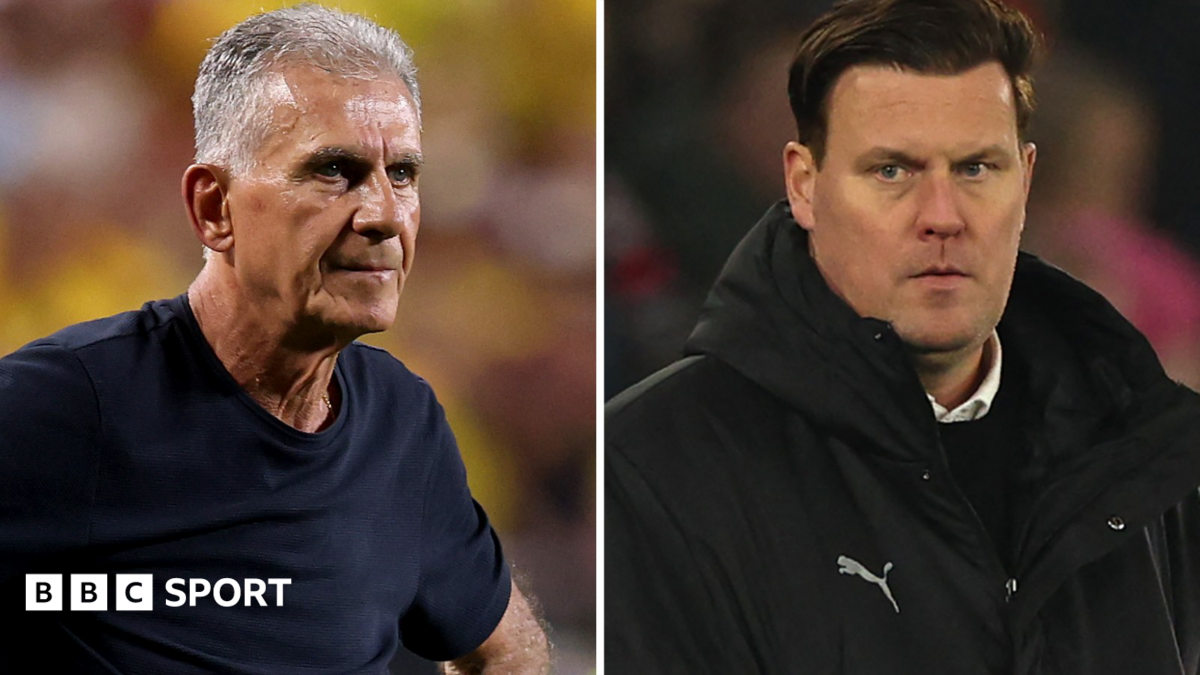
Former Ghana coach Chris Hughton has pointed to chronic instability in the Black Stars' dugout as a key factor behind the team's recent struggles. His comments come as the West Africans prepare for two crucial 2027 Africa Cup of Nations qualifiers against Somalia, with women's team coach Kim Bjorkegren temporarily in charge.
A Pattern of Uncertainty
Ghana's campaign has stumbled early, with defeats to Ivory Coast and The Gambia leaving them with zero points from two Group C matches. Those results led to the swift departure of Carlos Queiroz, whose second spell in charge lasted less than a month. The Portuguese coach had initially taken the team to the last 32 of the World Cup, where they held England to a goalless draw before exiting against Colombia. His reappointment in September was hailed by the Ghana Football Association for his vast international experience, but back-to-back losses sealed his fate.
Hughton, who himself managed the Black Stars for less than a year before being dismissed in January 2024, told BBC Sport Africa that constant changes at the helm are damaging. "When you have inconsistency in the amount of time when a manager is staying, it's never good," he said. "You want that consistency in the players and the players want that consistency in what they see in the manager."
The 67-year-old also acknowledged that frequent sackings can foster a negative attitude within the squad, as players come to expect that a coach will be shown the door if results don't go his way.
A Troubling Trend
Hughton is one of five men to have taken charge of Ghana in the past six years, alongside Charles Akonnor, Milovan Rajevac, Otto Addo and Queiroz. Addo himself had two separate spells during that period. The last coach to last more than three years was Kwesi Appiah, whose second stint ran from April 2017 to January 2020. Before that, you have to go back to the late 1970s and early 1980s, when Fred Osam-Duodu led the team to Afcon glory.
That lack of continuity has coincided with a decline in fortunes. Ghana have failed to progress beyond the group stage at the last two Afcon tournaments and did not even qualify for the 2025 edition. With the team now in real danger of missing out on a second successive finals, Hughton believes under-investment and the rise of other African nations have compounded the problem.
Call for Investment
"Many years ago Ghana were at a level that was, if not the best team in Africa, certainly right up there," he said. "You've seen the emergence of so many other good African nations that have made the competition levels that much higher. Some of these countries have so many other problems, but I do think that there needs to be an injection of government money into the structure and into the system."
Hughton also lamented the decline of the local game, which he says used to produce a steady stream of talent. "In Ghana, the local game that used to produce so many good players, the support level is not there," he added. "They're playing on pitches that are not of a great level and the supporters are not coming. The supporters in Ghana love the Black Stars most, first and foremost, and of course the Premier League is massive there, but there isn't that support for the local game that there used to be. I think the government needs to do more as regards putting money into the infrastructure."
While the World Cup record remains strong, with five qualifications in the last six editions, the Afcon drought weighs heavily. Hughton hopes the player withdrawals that plagued Queiroz's brief tenure, including the absence of key men like Antoine Semenyo, Mohammed Kudus, Jordan Ayew and Baba Rahman, are not repeated. "You always want your best players and it's always a concern to the level of the group when you have so many players pull out," he said. "There isn't too much you can do about that and you have to work around that."
For now, all eyes are on Bjorkegren, the Swede who has been in charge of the women's team since January 2025, as he attempts to steady the ship. But as Ghana's long wait for a first continental title since 1982 drags on, finding long-term stability in the coaching set-up might be the most important step of all.