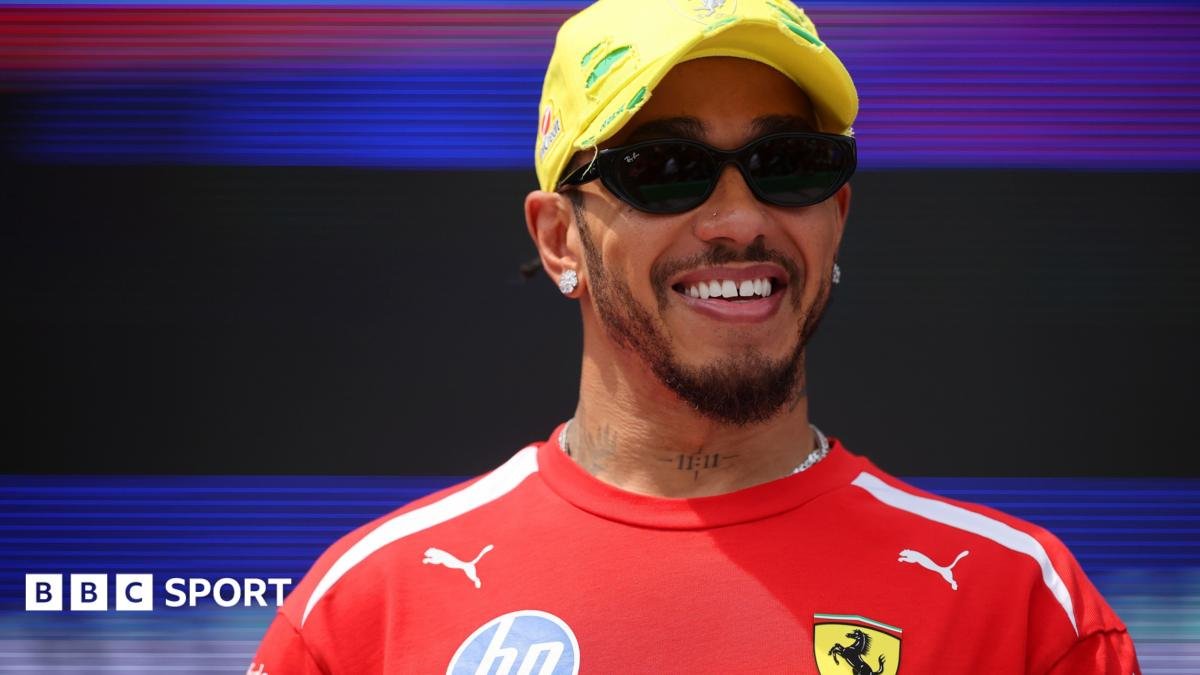
Lewis Hamilton recently marked his 400th Formula 1 grand prix, a milestone that has sparked fresh debate about his place among the sport's all-time greats and how much longer he can compete at the highest level. The seven-time world champion, now 41, remains a polarizing figure despite his extraordinary achievements.
Statistical Greatness
Hamilton's resume is unmatched: the most race wins and pole positions in F1 history, and a record-tying seven championships. Many argue he should have an eighth, given the controversial ending to the 2021 season. Beyond the numbers, his performances in races like the 2008 British Grand Prix and the 2021 Brazilian Grand Prix are etched in F1 lore.
However, Hamilton's recent form has raised questions. From 2022 to 2025, during the ground-effect era, he struggled relative to teammates George Russell and Charles Leclerc. Critics wondered if age was finally catching up with a driver once praised for his adaptability. Hamilton, though, bristles at the suggestion. "I still have the pace, I still have the speed," he insisted after his 400th race. "That number is kind of irrelevant."
With the new cars this year, Hamilton appears rejuvenated, going toe-to-toe with Leclerc. His longevity may depend on his desire to continue. He has expressed a wish to race until F1 returns to Africa, which is not expected before 2030. That would require at least one more contract, as his current Ferrari deal is believed to end next year. If Fernando Alonso, 45, can still perform at a high level, there is no reason Hamilton cannot do the same.
The End of Yo-Yo Racing?
Early this season, fans witnessed frequent position swaps, dubbed "yo-yo racing," caused by the new power units that are energy-starved and feature overtake and boost modes. This phenomenon has diminished recently for two reasons: recent tracks are less energy-starved, and teams have learned to manage energy better. Rule changes, such as energy limits at certain circuits, have also helped. From next year, the energy split will shift to 60-40 by 2028, which should reduce overtaking further but make cars more predictable to drive.
Why Stay as a Reserve Driver?
When Esteban Ocon lost his Haas seat for next year, he insisted his F1 career was not over. Staying as a reserve driver keeps him in the paddock, familiar with current machinery through simulator work, and ready to step in if needed. Racing elsewhere, like IndyCar or Formula E, risks being forgotten. For Ocon, the reserve role is a strategic hold.
Lawson's Uncertain Future
Liam Lawson's impressive performances have not yet secured him a 2027 seat. The decision rests with Red Bull's shareholders, who are weighing whether to retain Lawson alongside Arvid Lindblad or promote F2 prospect Nikola Tsolov. Racing Bulls boss Alan Permane advocates patience: "We're trying to apply a little bit of science... We want to get it right." The old regime might have made a snap call, but the new approach favors a more measured evaluation.
Preserving Classic Circuits
F1 faces a balancing act between global expansion, exciting racing, and revenue. Classic tracks like Monaco, Silverstone, Spa, and Suzuka often reside in countries unable or unwilling to pay hefty fees, unlike newer venues in autocracies seeking prestige. F1 compromises to keep some classics, even if not annually, and works to make new tracks challenging. Las Vegas, for instance, lacks driving challenge but compensates with spectacle. Future circuits in Saudi Arabia and Rwanda, designed by Alex Wurz, aim to be both thrilling and financially viable.
As Hamilton continues to defy expectations, the debate over his greatness and longevity will rage on. For now, he remains a force to be reckoned with, proving that age is just a number.