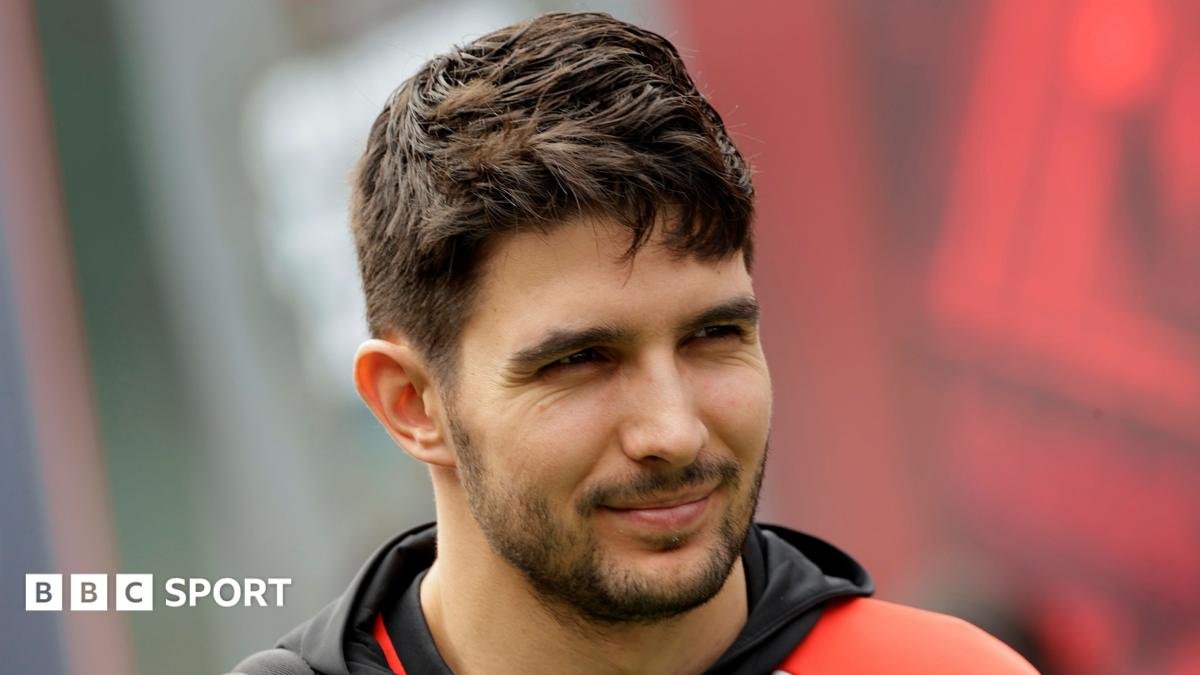
Esteban Ocon's tenure as a Formula 1 race driver has come to an abrupt halt, at least for the immediate future, following a heated dispute with Haas that resulted in his dismissal for the remainder of the season. The Frenchman, who has competed in 198 grands prix since his debut in 2016, was already set to part ways with Haas at the end of the year, with limited opportunities for a seat next season. However, the acrimonious events in Mexico City last weekend accelerated his departure by a few races.
A Familiar Situation
This is not the first time Ocon has faced a year on the sidelines. In 2019, he lost his drive at Force India after the team was acquired by Canadian billionaire Lawrence Stroll, who replaced him with his son, Lance. That setback saw Ocon take on a reserve driver role with Mercedes, eventually working his way back to the grid with Renault in 2020. Yet, this time feels different. Ten years into his F1 career, Ocon's competitive level and approach are well known throughout the paddock. His career has not been particularly stellar, and he has developed a reputation for falling out with teams and teammates. Moreover, a new generation of drivers, led by newly crowned world champion Kimi Antonelli, is rapidly emerging.
The Mexico City Incident
The catalyst for Ocon's departure was a confrontation with Haas team principal Ayao Komatsu after Friday practice in Mexico City. The exact details remain unclear, with no one speaking publicly and lawyers now involved. What is known is that Ocon objected over team radio to being instructed by his engineer, Laura Mueller, to switch from soft to medium tyres for his race-simulation run. He protested, saying, "No, no. I wanted the soft. Don't do that to me. Come on." The argument reportedly continued after the session with Komatsu, leading to the announcement on Saturday morning that Ocon would be dropped for the weekend.
Later that day, Ocon released a statement on social media acknowledging "a difference in viewpoints led to a discussion with the parties involved" but categorically rejected any reports or allegations suggesting that physical violence was used to resolve differences. This followed a report in France's L'Equipe newspaper claiming that a meeting between Komatsu and Ocon "ended abruptly, perhaps even physically." Haas remained silent over the weekend but on Tuesday evening confirmed that Ocon would not drive for the team again.
A Pattern of Conflict
Haas had already grown impatient with Ocon long before Mexico City, but whatever transpired there was serious enough for Komatsu to end the relationship immediately. Ocon's time at Haas has mirrored previous experiences. He was outperformed by teammate Oliver Bearman over his two seasons with the team, just as he was by Pierre Gasly and Fernando Alonso at Alpine, and by Daniel Ricciardo at Renault. When Haas signed Ocon, many were surprised, but Komatsu believed he could make it work. However, the team noticed a pattern: when struggling, Ocon would become defensive and blame the team and car, leading to rising tensions and a perceived lack of accountability.
There were also clashes with teammates, such as in Monaco practice when they impeded each other and Bearman called Ocon "an idiot" over the radio. They also collided towards the end of last year's British Grand Prix. Competitive tensions between teammates are common in F1, as a teammate is also a driver's biggest rival, the only one with the same equipment. The need to work together for the team's overall benefit can be uncomfortable, as seen with Lewis Hamilton and Charles Leclerc at Ferrari.
Reputation and Relationships
Over the years, Ocon has built an unenviable reputation for both his competitiveness and his conflicts. To outsiders, this may be surprising, as he is charming with the media. He and Gasly, childhood friends before falling out nearly 20 years ago, crashed twice together at Alpine. Alonso and Ocon also fell out, with the Spanish icon not hiding his distaste for his teammate's behaviour. Ocon had on-track clashes and radio disputes with Sergio Perez at Force India. Alpine saw the same pattern, as did Haas more recently, regarding self-awareness and accountability.
One notable incident: Alonso's stellar wet qualifying performance in Canada in 2022, where he put his Alpine on the front row alongside Max Verstappen's Red Bull, was 1.6 seconds faster than Ocon's. Team insiders say Ocon simply could not accept being that much slower and insisted for several races that something must have been wrong with his car. The team checked repeatedly and found nothing wrong; it was simply Alonso performing at his best.
All drivers complain; it is part of their makeup. Their motivation comes from believing they can be the best, and finding weaknesses in the car and improving them is their job. The better they are, the more acceptable that complaining is. Verstappen, for example, constantly complains about gearshifts or balance, and Red Bull accepts it because he delivers on track at a high level consistently. Ocon's issue is a different pattern: on average, he has been slower than his teammates in recent years.
Mercedes Connection and Career Trajectory
Ocon is managed by Mercedes and came through their young driver programme. When he lost his Force India seat, Mercedes took him on as reserve driver in 2019. At one point, team principal Toto Wolff considered putting Ocon in the race team alongside Hamilton but decided against it, fearing their characters would clash and the relationship would be too combustible. Valtteri Bottas was retained for 2020. Meanwhile, George Russell, the next Mercedes protégé, was excelling for Williams, and Mercedes concluded from the data that Russell was their future, not Ocon.
That effectively ended Ocon's career as a potential candidate for a top team, but Mercedes helped him back onto the grid with a drive at Renault in 2020, before the team was rebranded Alpine in 2021. It was for them that Ocon took his sole victory at the 2021 Hungarian Grand Prix. He drove well, but the win owed much to fortune. The start was wet, and a multi-car pile-up took out Bottas and both Red Bulls. Ocon emerged second behind Hamilton. The race was red-flagged, and by the restart, the track was drying. At the end of the formation lap, every car pitted for slick tyres except Hamilton, who stayed out on wets. He had to stop the next lap, falling to the back. That put Ocon into the lead ahead of Sebastian Vettel's Aston Martin, a car of similar performance on a track where overtaking is difficult. Ocon and Alpine managed the race well to stay ahead of the four-time champion.
Hamilton fought back, and his pace was so superior that he appeared likely to win. However, he caught Alonso, who had been delayed by the first-lap crash and was running fourth, close behind Ocon, Vettel, and Carlos Sainz's Ferrari. Alonso knew that if Hamilton passed him quickly, the Briton would almost certainly win. He also knew what a win would mean for Alpine. The team's last victory had been in 2013 when they were known as Lotus under different owners. Renault's most recent win was secured by Alonso at the 2008 Japanese Grand Prix. Alonso won his two world titles for Renault and had been brought back to F1 by Renault after a two-year break. He fought as hard as he could to keep Hamilton at bay for 10 laps. When Hamilton finally passed Alonso, there were only five laps to go. Within two, he was past Sainz but ran out of time to make further progress. Ocon and Alonso celebrated together with the team after the win.
Yet little more than a year later, relations had deteriorated to the point that, after a clash at the 2022 Brazilian Grand Prix, shortly before Alonso left for Aston Martin, the Spaniard sarcastically referred to Ocon as "our friend" over the radio. Asked whether he would speak to Ocon about the incident, he said, "I don't need to. One more race. Then it's over, finally."
For Ocon, it is now over at Haas too. Finding a way back onto the grid will not be easy.