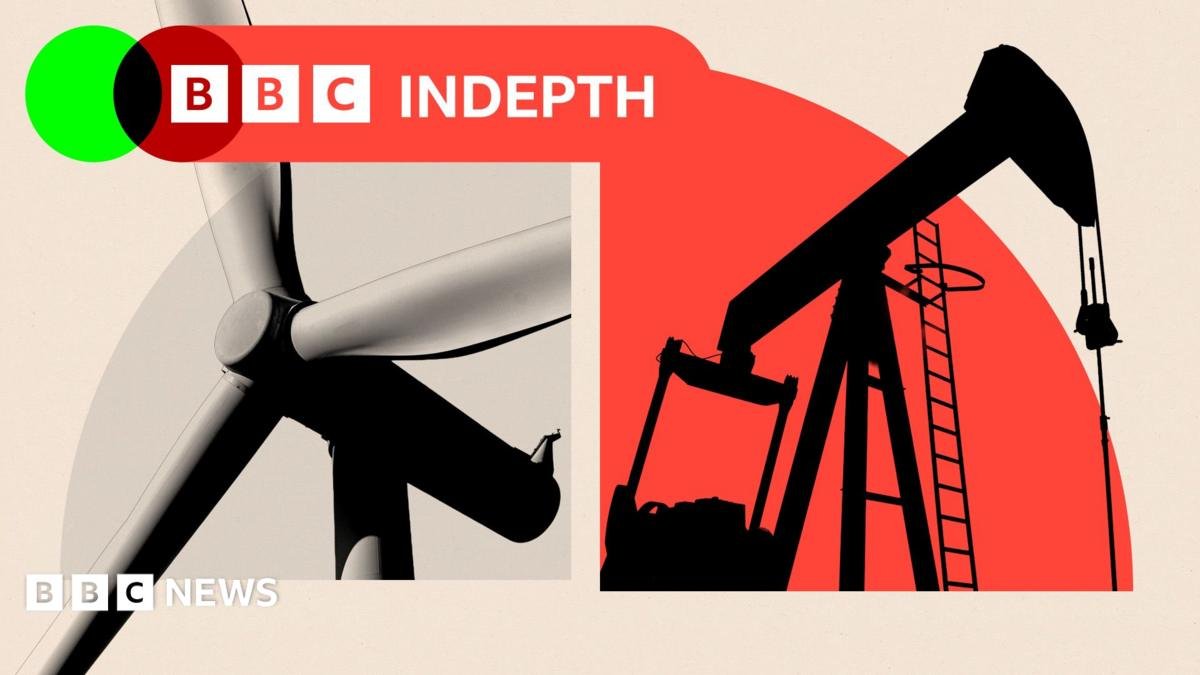
As the world grapples with the twin challenges of climate change and energy security, a fierce battle is underway between the two energy superpowers: the United States and China. The outcome will not only shape the global energy landscape but also determine how much you pay for heating and electricity.
The Stakes for UK Households
In the UK, energy bills are forecast to jump by more than a quarter in January, adding around £460 a year to the typical household bill, according to major suppliers British Gas, EDF, and E.ON. This surge is partly driven by geopolitical tensions: since US and Israeli strikes on Iran in February effectively closed the Strait of Hormuz, oil and gas prices have soared. Europe's winter gas stores are at their lowest since records began in 2011, and demand is rising.
But there is a larger threat looming: the warming climate. Cutting carbon emissions is essential to avoid the most catastrophic effects of climate change, yet keeping bills affordable while doing so is proving difficult, not just for the UK but worldwide.
A Tale of Two Strategies
As leaders gather in Antalya, Turkey, for the COP31 UN climate summit, the tension between energy security and climate action is palpable. The United States is betting on fossil fuels, pumping record volumes of oil and gas and urging allies to buy them. China, meanwhile, is betting on renewables, flooding the global market with solar panels, batteries, and electric vehicles.
Which bet wins will determine not only energy prices but also the pace of emissions reductions. The UK, which imports nearly a quarter of its gas from the US and much of its clean energy technology from China, finds itself pulled in both directions.
The UK's Dilemma
On the Moray Firth near Inverness, a proposed £1.5bn wind turbine factory by Chinese company Ming Yang was blocked by the UK government in March over national security concerns. In contrast, a new North Sea gas field, Jackdaw, was approved last month. This decision reflects the UK's struggle to balance energy security, affordability, and climate goals.
Energy Secretary Miatta Fahnbulleh told the BBC that affordability is her "overriding objective" as the cost of living bites. She argues that homegrown clean energy is the solution to reduce exposure to volatile global markets. However, the government faces a tough choice over whether to approve Rosebank, the UK's largest undeveloped oil field, which would produce mostly oil and significantly more emissions than Jackdaw.
Critics argue that approving new oil and gas fields sends a dangerous signal about the UK's climate commitments, especially after the country's hottest summer on record. But proponents, including Conservative leader Kemi Badenoch and Reform UK's Richard Tice, claim that drilling for domestic gas would bring bills down. Fahnbulleh counters that oil and gas are sold on global markets, so increased production would not necessarily lower prices.
The Renewable Path
The government's climate advisers, the Climate Change Committee, estimate that a future price shock like the one in 2022 would push household energy bills up by 59% if the UK stays on a high-carbon path, but only by 4% if it shifts to renewables. The cost of power from new solar farms fell by 90% between 2010 and 2024, and from onshore wind by 70%, according to the International Renewable Energy Agency. However, recent global inflation and higher interest rates have pushed initial costs back up. The Danish developer Ørsted scrapped plans for a giant wind farm off the Yorkshire coast last year, citing soaring supply chain costs.
Moreover, Britain needs expensive new electricity networks to bring renewable power to where it is needed, and gas-fired stations still often set wholesale power prices, meaning savings are not always passed on to consumers.
China's Clean Tech Dominance
China dominates the production of clean technologies, making the vast majority of the world's solar panels and batteries, and around two-thirds of its electric cars. In March, its exports of solar panels, batteries, and electric cars hit a record, up 70% on a year earlier, according to the think tank Ember. The UK wants to escape fossil fuels but is increasingly reluctant to depend on China for clean tech. Fahnbulleh acknowledged that Britain is swapping dependence on petrostates for dependence on Beijing, but she wants more of the kit made in the UK.
Yet UK-built turbines were exactly what Ming Yang was offering. The government cited national security risks for blocking the factory but has never publicly explained what those risks were. Two days before Jackdaw's approval, Japan's Sumitomo Electric opened Britain's first HVDC subsea cable factory at Nigg, creating up to 250 jobs, showing that foreign investment is welcome, just not from China.
Global Climate Politics
The United States formally left the Paris climate agreement earlier this year and is not expected to send a delegation to COP31. Without American pressure, other nations have less incentive to make bold promises. National pledges now add up to a cut in global emissions of just 6% by 2035, the UN says, a tenth of what scientists say is needed to limit warming to 1.5C.
China is beginning to fill the void. Li Shuo of the Asia Society Policy Institute calls it a "role reversal." Once a conservative player at climate talks, China now sees pushing the global climate agenda as serving its national interest. It aims to get 35% of its energy from electricity by 2030, five years earlier than planned. And increasingly, it is Chinese companies, rather than governments' promises, that are driving the transition. "It's really just a China story," Li Shuo says.
What It Means for Your Bills
For UK households, the stakes are clear. The battle between fossil fuels and renewables will determine whether bills continue to spike with every global crisis or stabilise as homegrown clean energy scales up. The government's decisions on Rosebank, renewables, and foreign investment will shape the country's energy future for decades. As Fahnbulleh puts it, "We are far too exposed to global markets we have no control over." The solution, she insists, is homegrown clean energy. But with hard choices ahead and household budgets stretched thin, the path to affordable, secure, and sustainable energy is anything but straightforward.