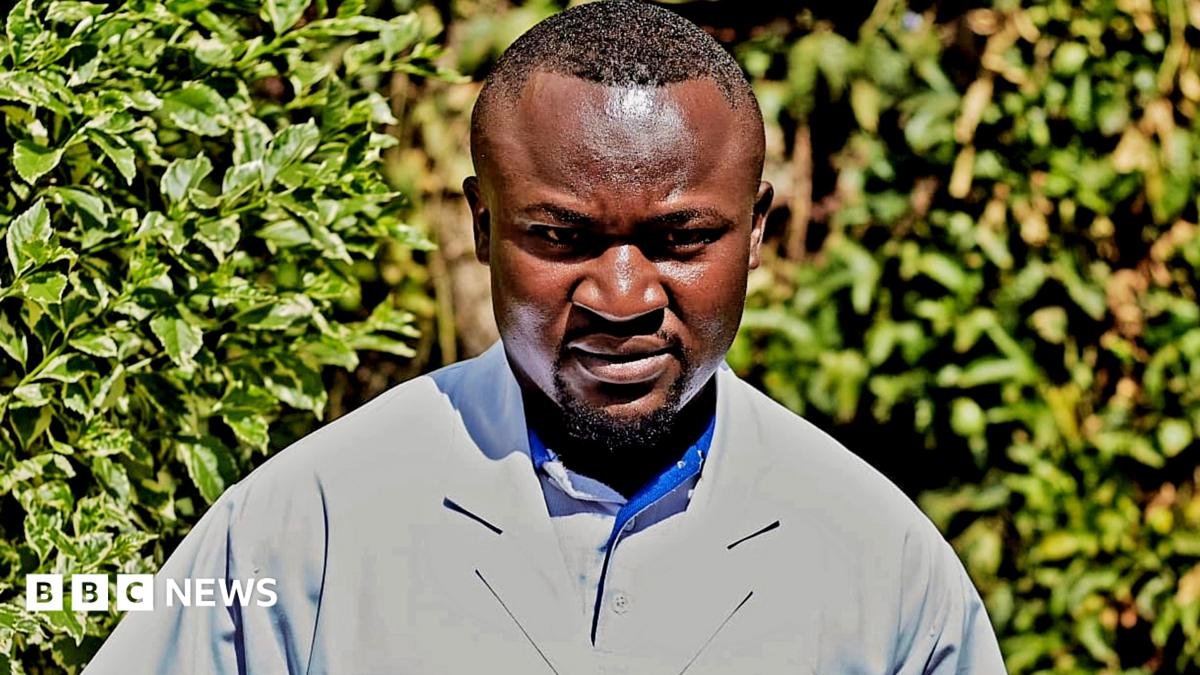
When Dr. Raymond Kasereka Kamwanga informed his family that he suspected he had Ebola and was going to a treatment center in Butembo, eastern Democratic Republic of Congo, their reaction was one of horror. They saw the specialized unit as a 'death house' because few patients recover, especially those admitted late. His 50-year-old mother, Masika Ndungo, was in tears, begging him not to go. 'Why are you choosing to die at the Ebola treatment center?' she asked. But as a doctor at Butembo's Katwa Hospital, he knew that staying home would likely mean death.
This was in July, two months after the World Health Organization (WHO) declared the Ebola outbreak in DR Congo a public health emergency of international concern. Since then, 5,400 people have died and 11,000 have been infected, making it the second-deadliest outbreak on record. Butembo, in North Kivu province, is the epicenter, with the highest number of cases, according to the Congolese health ministry.
Dr. Kamwanga is one of 3,031 survivors and is passionate about sharing his story to help stop the spread of infections devastating his community. After facing death and overcoming ostracization, he has even started writing a book about his experience. 'As someone who has recovered, I am living proof that the disease exists, but also that it is possible to recover from it,' he told the BBC outside Katwa Hospital, where he still works.
The 30-year-old medic believes he contracted the virus through contact with a patient in a setting where protective measures are not always adequate. The first symptoms appeared gradually: a bitter taste in his mouth, headaches, and a general feeling of malaise. He contacted the Ebola response team. After an initial consultation and tests, he returned home, but his condition did not improve.
Butembo lacks the equipment to quickly test for Ebola, so samples must be sent to Beni, 54km (33 miles) north. This delays diagnosis because the condition of roads in this war-torn and underdeveloped part of DR Congo means it can take between 48 and 72 hours to travel even this relatively short distance. After three days at home, Kamwanga felt extremely weak and experienced muscle pain. On the fourth day, he began vomiting and had diarrhea.
That is when he gathered his family members, including his mother, to tell them he had to go to the Ebola treatment center. 'She had started crying, along with my sisters. I told them everything would be alright, that I was a doctor and that I was confident. But they weren't reassured,' he says.
Around 18:00, he set off on foot to the nearby center but refused to use the main entrance. He called his colleagues and asked them to put on their protective gear before they approached him and isolated him. The virus spreads from one person to another by contact with infected bodily fluids.
The current outbreak is caused by the Bundibugyo species of the virus, for which there is no approved vaccine or treatment. 'The treatment given to Ebola patients is symptomatic - meaning that doctors treat the symptoms the patient presents,' says Kamwanga, explaining that in his case it was severe vomiting and diarrhea. In some patients, these symptoms can lead to organ failure, and some develop internal and external bleeding.
Kamwanga lost a lot of fluid and struggled to stay hydrated; he was terrified. 'I was afraid for myself. Every day, patients were dying right before my eyes. But I stayed positive,' he explains. Over 13 days lying in his hospital bed, he tried to keep his spirits up by watching movies and TV shows on his phone, reading, and scrolling through TikTok.
The day he learned he had recovered, Kamwanga felt immense relief. He thanked the healthcare workers who had cared for him. However, even a certificate showing he was Ebola-free did not initially dispel the unease those around him felt after he was discharged.
'We welcomed him home warmly. But because of our fear, we didn't get close to him any more,' Ndungo, his mother, tells the BBC. For 21 days, the incubation period of the virus, the doctor lived separately in another part of the family home, which was crowded at the time with at least 18 people living there, including several children and people displaced by recent fighting in the region. He would only see them from afar when he went to pick up his meal, while other family members kept their distance.
Neighbor Kavugho Sifa shared these concerns. 'We were really afraid, but we prayed to God to protect him at the treatment center. With God's help and the doctors' efforts, we saw him return in good health,' she tells the BBC. They all agree the experience changed their perception of Ebola. Some do not believe the disease even exists; Ndungo says that witnessing Ebola firsthand helped to dispel some of that misinformation.
After his recovery, Kamwanga threw himself into community outreach, sharing his story as a way of combating rumors and mistrust. 'I started writing my book, The Price of Saving Lives, one week after recovering and leaving the hospital,' he says. 'However, it is not finished yet. What I currently use during my awareness-raising activities is the draft, and it is already making a significant impact.' During these sessions, he also distributes photos taken while he was sick to help convince residents that Ebola is real.
But in Butembo, this mission remains difficult. Kamwanga explains that some people view awareness campaigns as a way for humanitarian organizations to profit from donor funding. Such mistrust, which is also leveled at healthcare professionals, is often fueled by poverty and trauma related to years of armed conflict, he says. 'Ebola has come alongside the war,' he says, explaining that some even interpret it as a way for those in authority to threaten a vulnerable population 'to finish off those whom the war failed to exterminate.' He also believes that the number of deaths observed during epidemics, compared to recoveries, which are sometimes less visible, reinforce fear and suspicion.
But putting himself on the front line also comes with risks, and Kamwanga says he receives death threats on his phone. Some residents accuse him of being paid to spread information about Ebola. He also reports that outreach workers have been attacked by members of the community. He feels the authorities do not work effectively to address all these problems: 'Our government is taking things lightly.' He agrees too with the recent report by Médecins Sans Frontières (MSF) that Ebola funds are going missing. 'The money allocated to the Ebola response is being misappropriated by the government. We do not have enough protective equipment,' the medic says.
The BBC has asked the Congolese government for comment. Despite the intimidation and the obstacles he and other medics face, he remains determined; his goal is to help put an end to the disease. 'Should we give up the fight against Ebola? No. We continue to do what we can with the resources available to us, which are unfortunately very limited.'